We offer a wide collection of free, high-quality printable coloring pages for kids and adults. From cute animals to intricate mandalas, our designs bring creativity and relaxation to everyone. Download, print, and start coloring today!

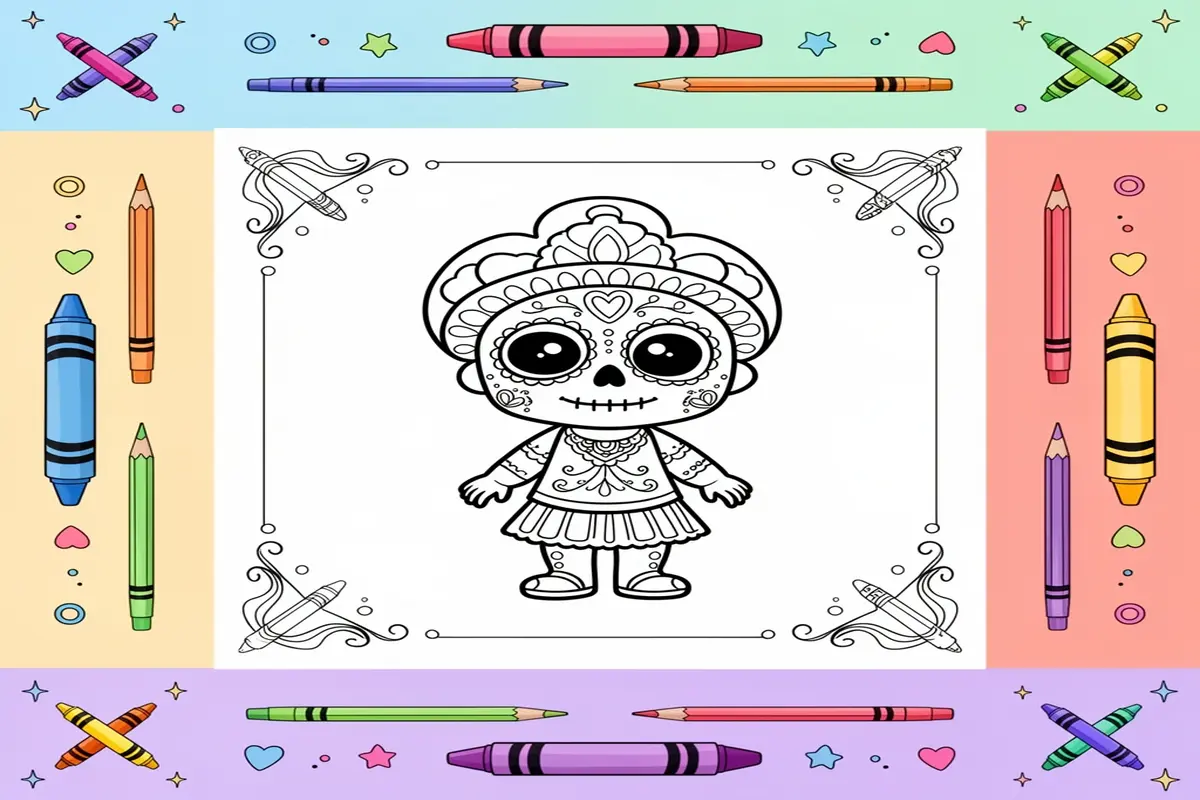
In a world of fleeting digital distractions, the simple act of coloring offers a profound sanctuary for young minds. It’s a tactile, imaginative space where focus is forged and creativity blossoms. When this universal activity intertwines with a rich cultural tradition, it transforms into a powerful educational tool. This is the unique magic of day of the dead coloring pages for kids. Far from being somber, these pages are a joyful explosion of life, color, and memory, designed to captivate children while opening a window to a beautiful celebration. Introducing children to this tradition through art fosters cultural appreciation, fine motor skills, and meaningful conversations about heritage and remembrance. It’s a wonderful complement to exploring other thematic worlds, like the serene depths found in our free whale coloring pages. As we delve into the allure of these intricate designs, we discover that day of the dead coloring pages for kids are more than just an art project—they are a vibrant, engaging journey into history, art, and emotion.
The Psychology & Cultural Allure: More Than Meets the Eye
What is it about these specific pages that captivates both the young and the young at heart? The appeal is a sophisticated blend of psychological comfort and cultural intrigue, making day of the dead coloring pages for kids a uniquely enriching experience.
The Mindful Art of Focus and Color
At its core, coloring is a mindfulness exercise. The defined lines of a calavera (skull) or an elaborate marigold pattern provide a structured container for a child’s boundless energy, guiding them into a state of calm concentration. This focused engagement is a welcome respite from overstimulation, allowing for emotional regulation and a quiet sense of accomplishment. The vibrant color palette traditionally associated with Día de los Muertos—fiery oranges, radiant pinks, and lush purples—invites joyful expression, encouraging kids to make bold, celebratory choices that contrast with more everyday subjects.
A Living History: Symbols That Tell a Story
Every element on a Day of the Dead coloring page is a storyteller. Unlike generic patterns, these designs are a cultural canvas brimming with meaning. As children color smiling skulls adorned with floral crowns, they are introduced to the central philosophy of the holiday: that death is a natural part of life to be acknowledged with love and humor. They encounter ofrendas (altars), marigold petals, and whimsical skeletons, each a gateway to discussing family, memory, and diverse global traditions. This contextual learning elevates the activity from simple pastime to an immersive cultural experience.
Designed for All Hands: From Beginner to Budding Artist
The beauty of this theme lies in its incredible versatility. Day of the dead coloring pages for kids are thoughtfully curated to meet a spectrum of abilities. Younger children can delight in larger, simpler designs of friendly calaveras or basic sugar skull shapes, perfect for practicing grip and color recognition. Older kids and even adults can find challenge and satisfaction in highly detailed pages featuring complex mandala-like patterns, intricate lacework, and scenes of festive gatherings. This inclusivity ensures that every child, regardless of skill level, can participate, learn, and create something personally meaningful, connecting them to a tradition that honors every individual’s story.
Part 2: Essential Materials for Stunning day of the dead coloring pages for kids
To transform your day of the dead coloring pages for kids from a simple activity into a vibrant, lasting piece of art, the right materials are crucial. Proper preparation not only enhances the final result but also makes the coloring experience more enjoyable and developmentally beneficial for children. This guide outlines the professional-grade supplies and setup that will help young artists do justice to the intricate details of calaveras and marigolds.
The Foundation: Premium Paper for day of the dead coloring pages for kids
The paper you choose is the single most important factor in coloring success. Standard printer paper (20-24 lb/75-90 GSM) is prone to bleeding and buckling with wet media. For day of the dead coloring pages for kids, which often feature bold, solid areas and fine linework, upgrade to a heavier paper. Look for “marker paper” (around 70-80 lb/104-118 GSM) which has a smooth surface to prevent feathering, or a heavyweight multi-media paper (100+ lb/160+ GSM) for mixed media. For a truly authentic feel, consider printing on off-white or cream-colored cardstock, which provides a beautiful, warm base reminiscent of traditional papel picado and allows colors to pop with greater contrast.
Best Coloring Tools: Markers vs. Pencils for Vibrancy and Detail
Choosing between markers and colored pencils—or using both—depends on the desired effect.
Alcohol-Based Markers (e.g., Copic, Ohuhu, or Blick Studio): These are ideal for achieving the smooth, vibrant, and seamless gradients that bring sugar skull designs to life. They blend beautifully and dry quickly, preventing smudges. However, they require the heavier paper mentioned above to prevent bleed-through. They are perfect for large areas like backgrounds and clothing.
Colored Pencils (Wax or Oil-Based): Prismacolor Premier or Faber-Castell Polychromos offer superior control for the intricate patterns and delicate filigree common in these pages. They allow for detailed shading and layering. For a richer result, teach children to layer colors and use varying pressure. A high-quality pencil sharpener is non-negotiable for maintaining fine points.
Hybrid Approach: Many artists start with markers for base colors and large areas, then use colored pencils on top to add intricate patterns, textures, and precise shading, creating stunning depth.
Finishing Touches: Gel Pens, Metallic Inks, and Highlights
The magic of day of the dead coloring pages for kids is often in the dazzling details. No toolkit is complete without specialty tools for accents.
Gel Pens & Metallic Markers: White and silver gel pens are perfect for adding tiny dots, lace-like patterns, and highlights to skulls and flowers. Gold and copper metallic pens can embellish altars, jewelry, and candle flames. They write smoothly over both pencil and marker.
Fine Liners: A set of archival ink pens (sizes 005 to 05) allows children to redefine any lines that may have been colored over, making the artwork crisp. They can also be used to add new patterns.
Consider exploring our abstract coloring pages for kids to practice color theory and blending techniques that can be brilliantly applied to Día de Muertos artwork.
Perfect Workspace: Optimizing Lighting and Ergonomics
A proper workspace prevents fatigue and lets colors shine true.
Lighting: Natural daylight is best for color accuracy. If that’s not possible, use a high-CRI (Color Rendering Index) LED desk lamp to reduce eye strain and ensure your child sees the true hues of their pigments.
Surface & Posture: Provide a hard, flat surface. A simple clipboard can offer portability and stability. Ensure the child’s feet are flat on the floor and the table is at elbow height to promote good posture during extended, focused coloring sessions.
Organization: Use cups or trays to organize markers, pencils, and pens. This keeps the workspace tidy, prevents tools from rolling away, and encourages a mindful, organized approach to the creative process.
Transforming Tradition: Advanced Techniques for day of the dead coloring pages for kids
Ready to take your child’s Dia de los Muertos artwork from simple to stunning? Moving beyond basic coloring, these advanced techniques will help them create vibrant, dimensional masterpieces that truly honor the spirit of the celebration. Mastering day of the dead coloring pages for kids is about more than staying inside the lines; it’s about bringing the intricate sugar skulls and marigolds to life with depth and emotion.
Harmonious Palets: Color Theory for day of the dead coloring pages for kids
The traditional palette of Dia de los Muertos is a vibrant symphony. Teach young artists to use complementary colors (opposites on the color wheel) to make elements pop. For example, placing bright orange marigolds against a deep blue background creates electric energy. For a more harmonious, calming feel on a detailed sugar skull, guide them toward analogous colors—like using various shades of pink, red, and purple together in the floral patterns. This approach is similar to the nuanced shading found in our realistic lion coloring pages free printable, where color families build form.
From Flat to 3D: Mastering Shading and Depth
Shading transforms a flat skull into a rounded calavera. Demonstrate a simple step-by-step method:
1. Identify Your Light Source: Decide where the “sun” is (e.g., top-left corner).
2. Lay a Base Color: Color the entire area with your main, medium hue.
3. Add Shadows: Using a slightly darker shade of the same color, apply gentle pressure along the sides opposite the light source (e.g., the right and bottom edges of the skull).
4. Add Highlights: Leave small areas white or use a very light yellow/pink where the light would hit directly.
This technique adds incredible volume, making flowers look petaled and eyes look deep-set.
Adding Life: Creating Texture and Detail
Texture tells a story. For the filigree on a sugar skull, use tight, small circles or dots to mimic intricate icing. For the petals of a marigold (cempasúchil), use short, directional strokes radiating from the center. To create a velvety look on a monarch butterfly’s wing, layer colors smoothly and add tiny white dots. For clothing or banners, try cross-hatching (crisscrossing lines) to suggest fabric weave. Exploring different textures can start with simpler subjects, like the smooth shell and detailed legs in our crabs coloring pages free printable, before tackling more complex Dia de los Muertos designs.
The Art of Correction: Gracefully Fixing Coloring Mistakes
Mistakes are part of the creative process! If color goes outside a fine line, don’t panic. Turn the error into a design feature—a tiny glow or shadow around the shape. For small smudges, use the white of the paper and a sharp colored pencil to carefully “draw” over the mistake. If an area becomes too dark, gently layer a lighter, complementary color on top to neutralize and modify it (e.g., a light yellow can brighten a too-dark green). The key is to stay patient and creative, remembering that day of the dead coloring pages for kids are a joyful exploration, not a perfect product.
Showcasing Your Day of the Dead Coloring Pages for Kids: Creative Display Ideas
Once your young artists have brought their vibrant sugar skulls and marigolds to life, it’s time to celebrate their work! Displaying their finished Day of the Dead coloring pages for kids transforms a simple activity into a meaningful family tradition and a beautiful tribute.
Preserving Your Masterpiece: Archival Tips
To ensure these special creations last, consider simple preservation methods. For a professional touch, use acid-free spray fixative to prevent crayon or pastel smudging. Laminating sheets are perfect for making placemats or durable ornaments. Alternatively, press the pages in a heavy book to flatten them before framing. Storing them in a dedicated portfolio keeps the collection safe and allows you to revisit the artwork year after year.
Beyond Display: Creative DIY Projects
Turn those colored pages into heartfelt keepsakes and gifts. Cut out sugar skulls to create unique greeting cards, festive gift tags, or decorative bookmarks laminated for strength. You can also decoupage them onto a wooden box to make a special ofrenda (offering) container. For a collaborative family project, assemble everyone’s pages into a handmade banner or a colorful table runner for your Día de los Muertos celebration.
Your Day of the Dead Coloring Pages for Kids Questions Answered
What is the Day of the Dead for kids?
For children, Día de los Muertos is a joyful Mexican holiday to remember and celebrate loved ones who have passed away. It’s not scary; it’s a vibrant festival with music, food, and beautiful decorations. Families build colorful altars (ofrendas) with photos, favorite foods, and marigolds to welcome the spirits back for a happy visit. Using Day of the Dead coloring pages for kids is a wonderful, hands-on way to introduce this cultural tradition.
How do you explain Day of the Dead to a child?
Explain it as a special “family memory day.” We talk about people we love who aren’t with us anymore, sharing happy stories and celebrating their lives. We use bright colors, music, and their favorite things to make it a happy party. It’s about love and memory, not fear. Coloring a sugar skull together opens the door for these gentle, important conversations in a creative, comfortable way.
What do the colors mean on a sugar skull?
Each color on a sugar skull (or calavera) is symbolic. Purple represents mourning and grief. Pink signifies celebration and joy. White is for purity and hope. Orange (like marigolds) is for the sun and its guiding light. Red symbolizes blood and life. When kids color their Day of the Dead coloring pages for kids, they’re not just decorating—they’re telling a story with every hue they choose.
What are the symbols of the Day of the Dead?
Key symbols include sugar skulls (calaveras), representing the souls of the departed in a sweet, non-frightening way. Marigolds (cempasúchil) are the “flower of the dead,” whose bright color and scent guide spirits home. Monarch butterflies symbolize the returning souls. Other symbols are papel picado (cut paper banners), skeletons (calacas*) shown enjoying life, and the offerings of food and drink on the altar.
How to draw a sugar skull for kids?
Start with a simple oval for the head. Draw two large circles for eyes and a smaller one for the nose. Add a big, smiling mouth. Now, the fun part: decorate! Swirls, flowers, and hearts can fill the eyes. Add teardrops, hearts, or zig-zags around the mouth. Place more floral designs on the forehead and cheeks. Remember, symmetry is key, but creativity rules! For an easier start, use our printable Day of the Dead coloring pages for kids as a template.
Final Thoughts: Your Day of the Dead Coloring Pages for Kids Journey Begins
Embarking on this colorful journey with Day of the Dead coloring pages for kids is about so much more than staying inside the lines. It’s a gateway to understanding a beautiful cultural tradition, a moment for family connection, and a creative outlet that celebrates life and memory. Each page colored is a story told, a symbol explored, and a memory honored. The vibrant artwork your children create becomes a personal part of your family’s story, fostering creativity, cultural appreciation, and meaningful conversation.
We hope this guide inspires you to create, display, and discuss these wonderful traditions. Remember, every masterpiece begins with a single stroke of color. Ready for your next adventure? Explore our cute butterfly coloring pages for another burst of creative, joyful art!