We offer a wide collection of free, high-quality printable coloring pages for kids and adults. From cute animals to intricate mandalas, our designs bring creativity and relaxation to everyone. Download, print, and start coloring today!

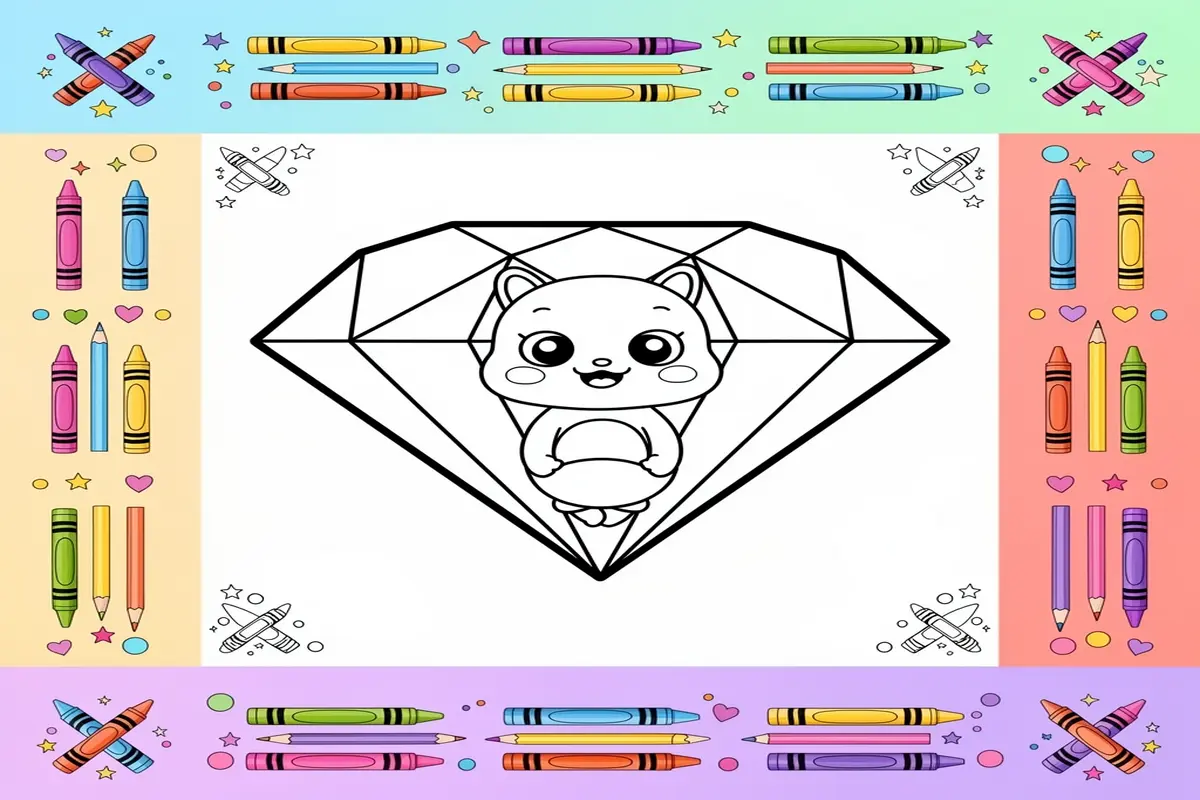
In a world saturated with digital distractions, the simple act of coloring offers a sanctuary of focus and tangible joy. It is a timeless gateway to imagination, where a blank page transforms into a universe of possibility. For young artists, diamond coloring pages for kids elevate this experience, merging the meditative process of coloring with the dazzling allure of gemstones. These aren’t just ordinary outlines; they are intricate canvases waiting to be illuminated with every hue of the rainbow, teaching patience, precision, and the breathtaking results of seeing a project through to its glittering completion. The journey through a diamond coloring pages for kids collection is akin to a treasure hunt, where each finished section reveals more of the brilliant, multifaceted whole. It’s a fantastic way to complement other thematic explorations, like the serene beauty found in our free dolphin coloring pages, offering a different but equally engaging creative challenge.
The Allure of the Gem: Psychology & Enduring Appeal
The Mindfulness of a Million Facets
At its core, engaging with diamond coloring pages for kids is an exercise in mindfulness. The complex, geometric patterns require a level of concentration that gently pushes aside anxious or scattered thoughts, anchoring the child in the present moment. This focused activity, often referred to as a “flow state,” reduces stress and fosters a sense of calm accomplishment. As children choose colors for each tiny segment, they make deliberate decisions, building cognitive skills and fine motor control. The slow, steady reveal of a sparkling final image provides a powerful visual reward for their patience, reinforcing the value of dedicated effort.
A Stone Through Time: Symbolism and Story
The diamond is far more than a mineral; it is a cultural icon loaded with meaning. Historically, diamonds have symbolized unbreakable strength, purity, and eternal light. Introducing children to diamond coloring pages for kids opens a door to these rich narratives. Parents and educators can weave tales of ancient treasures, geological wonders formed under immense pressure, and the diamond’s journey from deep within the Earth to a symbol of celebration. This contextual layer transforms a coloring activity into an interdisciplinary adventure, connecting art with science, history, and mythology in a uniquely accessible way.
Designed for Discovery: From Novice to Virtuoso
The beauty of this theme lies in its inherent scalability. Simple, bold diamond shapes are perfect for younger children learning to stay within lines, allowing them to experiment with color blocking and shiny crayons. For older kids and even adults seeking a creative outlet, highly detailed mandala-style diamonds with intricate facets offer hours of immersive, challenging engagement. This range ensures that diamond coloring pages for kids are not a one-size-fits-all resource but a curated creative journey. Every child, regardless of skill level, can find a page that meets them where they are, building confidence as they progress to more complex designs and develop their personal artistic voice.
Professional Materials & Preparation for diamond coloring pages for kids
To ensure a smooth and enjoyable coloring session, proper preparation is key. Having the right materials on hand will help children fully engage with the intricate patterns and facets found in diamond coloring pages for kids, transforming a simple activity into a rich, creative experience. This guide outlines the essential toolkit for parents and educators.
The Foundation: Selecting Premium Paper for diamond coloring pages for kids
The paper you choose directly impacts the final result. For detailed diamond coloring pages for kids, standard printer paper often leads to bleed-through and buckling. Opt for a heavier paper stock, such as cardstock or mixed-media paper with a weight of 120-160 GSM (grams per square meter). This thickness provides a sturdy surface that can handle multiple layers of color, erasing, and blending without tearing. A smooth to medium-tooth (texture) finish is ideal, allowing for precise line work with fine liners and smooth blending with colored pencils, ensuring the geometric brilliance of each diamond design shines through.
Best Coloring Mediums: Markers, Pencils, and Crayons Compared
The choice of coloring tool defines the artistic outcome.
Colored Pencils: The premier choice for detail. Artist-quality pencils with soft, pigmented cores (like wax- or oil-based) allow for excellent layering, shading, and blending—perfect for creating the luminous facets and depth of a diamond. They offer superior control for small, intricate sections.
Markers: Provide vibrant, solid blocks of color. Alcohol-based markers (like Copic or similar) blend seamlessly and won’t warp heavy paper, but can be costly. Water-based markers are more child-friendly but require bleed-resistant paper. For a bold, graphic look on diamond coloring pages for kids, markers are excellent.
Crayons: A classic, tactile option for younger children. While less precise, they encourage a different kind of creativity and can produce beautiful textured effects. For a project exploring varied textures, consider pairing them with other mediums.
Finishing Touches: Gel Pens, Highlights, and Fine Liners
Elevate the artwork with specialized tools for detail and sparkle. Metallic or glitter gel pens are perfect for adding dazzling highlights to mimic a diamond’s reflective quality. White gel pens can be used to create bright spots or correct small over-coloring errors. A set of fine-line black pens (e.g., 0.1, 0.3, 0.5 mm) is invaluable for redefining outlines that may get lost during coloring or for adding intricate patterns within the diamond shapes themselves. These tools empower young artists to add professional-level details.
Creating the Ideal Workspace: Ergonomics and Lighting
A well-prepared environment prevents fatigue and fosters focus. Ensure the coloring surface is stable and at an appropriate height to prevent slouching. Natural daylight is the best lighting for accurate color perception; if unavailable, a bright, white LED desk lamp will reduce eye strain. Keep all materials—pencils, sharpeners, erasers—within easy reach in containers. Placing a scrap sheet of paper under the child’s hand can prevent smudging, especially when working on large areas. For a fun thematic connection, you might inspire young artists by showing them our abstract coloring pages for kids, which also play with geometric shapes and patterns. Finally, remember that the goal is creative exploration; the process of engaging with diamond coloring pages for kids is just as valuable as the finished masterpiece.
Part 3: Transforming diamond coloring pages for kids with Pro-Level Techniques
Ready to see your child’s artwork go from simple to spectacular? This section moves beyond basic filling-in to explore professional techniques that add depth, realism, and creativity to diamond coloring pages for kids. These methods not only produce stunning results but also teach valuable art fundamentals. For more foundational practice with clean lines and shapes, our alphabet coloring pages for kids are a perfect starting point.
Harmonious Palettes: Color Theory for Sparkling Gems
Understanding basic color relationships can transform a diamond page from chaotic to cohesive. Teach your young artist these two simple concepts:
Complementary Colors: These are colors opposite each other on the color wheel (like blue & orange or purple & yellow). Using them in small amounts next to each other makes each color “pop.” Imagine a purple diamond with tiny yellow sparkles—the contrast is eye-catching!
Analogous Colors: These are colors that sit next to each other on the wheel (like blue, teal, and green). This scheme creates a harmonious and serene feeling. A diamond colored in shades of blue, from light sky to deep ocean, will look beautifully unified and gem-like.
From Flat to Faceted: Mastering Shading for Dimension
The secret to making a diamond look real is shading. Here’s a simple step-by-step approach:
1. Identify Your Light Source: Decide where the light is coming from (e.g., the top-left corner). Every shading decision follows this rule.
2. Layer Lightly: Start with your base color applied very gently. The white of the paper should still slightly show through.
3. Build Shadows: On the facets farthest from your imaginary light, add a second, slightly darker layer of the same color. For a blue diamond, use a navy or cobalt on the bottom-right edges.
4. Add Highlights: Leave the facets closest to the light source the lightest. You can even use a white crayon or colored pencil to reserve these spots before coloring, or gently erase tiny areas afterward.
Adding Realism: Texturing the Sparkle
Diamonds aren’t just shiny; they have a specific crystalline texture. To achieve this:
For Sharp Sparkle: Use a very sharp pencil to create tiny, intersecting scratch-like lines within individual facets. This mimics the way light scatters inside a real gem.
For Smooth Gloss: Use a blending tool (a colorless blender pencil, a cotton swab, or even careful finger-smudging) to create smooth gradients between your shaded areas. This technique is also fantastic for rendering the sleek skin of creatures like dolphins, found in our free dolphin coloring pages.
For a Jeweled Setting: If the diamond is in a ring or crown, use tight, circular strokes for a brushed-metal look or small dots to simulate a bejeweled texture.
The Art of Correction: Gracefully Fixing Coloring Errors
Mistakes are part of the process! Here’s how to handle common issues:
Colored Outside the Lines? Turn it into a design feature! Use a darker color to neatly outline the shape, creating a intentional “glow” or shadow effect around the diamond.
Color Too Dark or Muddy? Gently lift color with a sticky tack or the edge of a white eraser. You can often lighten an area enough to layer a new color on top.
* Unhappy with a Color Choice? Layer over it! Colored pencils are translucent. Try coloring over an unwanted orange with a light pink to create a beautiful peach tone. This “mistake” might lead to a more unique and beautiful result.
By practicing these techniques, children do more than just color—they learn to see like artists, understanding how light, color, and texture interact to create beauty on the page.
Showcasing Your Diamond Coloring Pages for Kids: Creative Display Ideas
Once your young artist has created their sparkling masterpieces, it’s time to celebrate their work! Moving beyond the coloring book, displaying their art boosts confidence and transforms their effort into home decor.
Preserving Your Masterpiece: Archival Tips
To ensure those dazzling diamonds stay vibrant, consider simple preservation methods. For long-term keepsakes, use acid-free sheet protectors in a binder or have special pieces laminated. Framing a finished page behind glass not only protects it from dust and sunlight but also gives it a gallery-worthy feel. This teaches kids to value their creative efforts.
Beyond Display: Creative DIY Projects
Turn completed diamond coloring pages for kids into functional art and heartfelt gifts. Carefully cut out colored diamonds to create unique gift tags, bookmarks, or even decoupage them onto a trinket box. For a festive touch, string several cut-outs together to make a sparkling garland. These projects extend the creative fun and make wonderful presents for family members, blending craft time with the joy of giving. For more creative inspiration, explore our crown coloring pages to add some royal flair to your next project.
Your Sparkling Questions on Diamond Coloring Pages for Kids Answered
How do you draw a diamond step by step?
Start by drawing a vertical line. At the top, draw a “V” shape to create the top point. From the ends of the “V,” draw two diagonal lines going downward and outward. Connect these with a flat, inverted “V” at the bottom. Finally, add horizontal lines across the middle to create the diamond’s facets, making it ready for your diamond coloring pages for kids.
How do you color a diamond to make it look real?
Use light pressure with a gray or light blue pencil for a base. Leave small, strategic white spaces for sparkle. Then, using a sharp pencil, add darker shades of gray, blue, or even soft yellow along the edges of the facets. Blend gently. The key is high contrast between very light and dark areas to mimic refraction and depth.
What are the benefits of coloring for kids?
Coloring enhances fine motor skills and hand-eye coordination. It fosters creativity, color recognition, and focus. As a calming, screen-free activity, it also promotes emotional expression and provides a sense of accomplishment, building confidence with every page they complete.
How do you make a diamond sparkle on paper?
To create sparkle, leave tiny, unpainted white spots or dots, especially where facets meet. Use a white gel pen over your colors to add sharp highlight lines. Adding a touch of light blue or silver in the white areas can enhance the icy, reflective look, making your gem appear to catch the light.
What colors are real diamonds?
While we often picture clear, colorless stones, natural diamonds come in a spectrum! They are most commonly colorless or near-colorless (appearing white). Fancy diamonds can be yellow, brown, blue, pink, and even very rarely red or green. This makes diamond coloring pages for kids a perfect opportunity to explore imaginative and natural color palettes.
Final Thoughts: Your Diamond Coloring Pages for Kids Journey Begins
The journey with diamond coloring pages for kids is about so much more than filling in a shape. It’s a gateway to learning about geometry, light, and nature’s treasures, all while developing essential creative skills. Each finished page is a testament to your child’s growing focus, patience, and artistic vision. We hope these ideas for display, DIY projects, and coloring techniques have inspired you to see every diamond as a potential masterpiece. Remember, the true value lies in the joyful, focused time spent creating together.
Ready for your next adventure? Explore our abstract coloring pages for kids for a whole new world of creative possibilities!