We offer a wide collection of free, high-quality printable coloring pages for kids and adults. From cute animals to intricate mandalas, our designs bring creativity and relaxation to everyone. Download, print, and start coloring today!

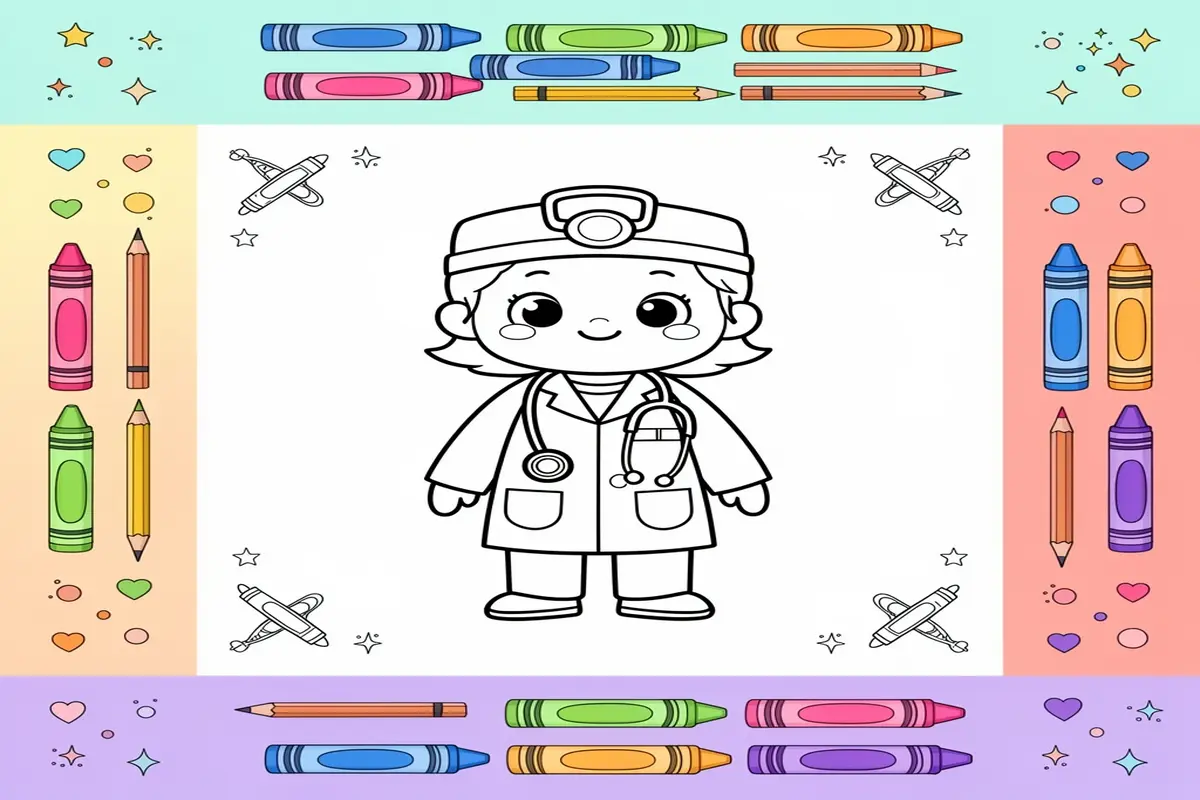
In a world where a child’s imagination is their most powerful tool, coloring pages serve as a blank canvas for dreams, aspirations, and understanding. Among the vast universe of themes, from the majestic creatures of the savanna to the whimsical world of cute bunnies, there exists a uniquely impactful niche: doctor coloring pages for kids. These aren’t just simple drawings; they are gateways. They transform the often intimidating world of medicine into a friendly, approachable, and colorful adventure. By engaging with doctor coloring pages for kids, young minds can process medical experiences, conquer fears of check-ups, and perhaps even ignite a lifelong passion for helping others. This creative journey does more than fill time—it builds empathy, demystifies the white coat, and empowers children through art and narrative.
The White Coat Canvas: More Than Just Coloring
At first glance, a coloring page featuring a doctor might seem straightforward. Yet, this simple activity is layered with profound psychological and developmental benefits, making doctor coloring pages for kids a powerful tool in a parent’s or educator’s arsenal.
Coloring as Cognitive Therapy: Building Bridges to Understanding
The act of coloring is a known mindfulness exercise, promoting focus and reducing anxiety. When applied to medical themes, this calming effect is strategically directed. For a child nervous about an upcoming doctor’s visit, coloring a friendly pediatrician scene allows them to role-play the scenario in a safe, controlled environment. They assign colors to the stethoscope, the smile, the exam room—slowly reconstructing their perception from one of potential fear to one of familiarity and care. This process of creative control is a subtle form of cognitive behavioral play, helping to build positive associations and resilience.
From Scribbles to Stethoscopes: A Historical Lens on Professions
Children have always learned about societal roles through play and art. Historically, professions like farmers, blacksmiths, and teachers were depicted in primers and toys. Today, doctor coloring pages for kids continue this tradition, reflecting the modern heroes of our community. They serve as an accessible introduction to the STEM fields, showcasing not just the figure of a doctor, but often the tools, symbols, and environments associated with healthcare. This visual vocabulary helps normalize these concepts, making them a natural part of a child’s expanding worldview and potentially planting the seed for future career exploration in science and medicine.
Universally Designed for Growth: Who Benefits Most?
The beauty of these resources lies in their universal appeal and adaptability. Toddlers can practice gross motor skills by scribbling within the lines of a doctor’s coat, while older children can engage in detailed storytelling, imagining complex medical rescues or innovative cures. They are particularly valuable for children who have frequent medical interactions, providing a therapeutic outlet for expression. Furthermore, educators in preschool and early elementary settings find doctor coloring pages for kids invaluable for “Community Helpers” units, fostering discussions about health, safety, and gratitude. From the anxious preschooler to the curious future surgeon, this theme offers a scalable, engaging, and educational experience for every young learner.
Part 2: Essential Materials & Professional Preparation for doctor coloring pages for kids
To ensure a successful and enjoyable coloring session, having the right materials is as important as the activity itself. Proper preparation for doctor coloring pages for kids can transform a simple pastime into a rich, educational, and skill-building experience. This section details the professional-grade supplies and setup that will help children get the most out of their medical-themed creative adventures.
The Foundation: Selecting Premium Paper for doctor coloring pages for kids
The paper you choose is the literal canvas for creativity and directly impacts the final result. For standard printing of doctor coloring pages for kids, a bright white, smooth-finish paper with a weight of 80-100 GSM (grams per square meter) is ideal. This weight prevents bleed-through from markers and provides a sturdy surface for repeated pencil shading. For a more artistic endeavor, consider upgrading to a 120 GSM mixed-media paper, which can handle light washes of watercolor if your child wants to add background effects. Always print a test page to check your printer’s alignment and ink saturation before proceeding with the full set.
Professional Coloring Mediums: A Detailed Comparison
The choice between markers, colored pencils, and crayons defines the coloring experience and outcome.
Colored Pencils (Recommended): The premier choice for detail-oriented work. Wax-based pencils offer smooth application and are excellent for blending skin tones on doctors or soft gradients on scrubs. Oil-based pencils provide richer pigmentation and are superb for defining sharp lines on medical instruments. Look for pencils with high pigment concentration for vibrant results without excessive pressure.
Markers: Provide bold, flat areas of color perfect for uniforms and large backgrounds. Alcohol-based markers (like those used by illustrators) offer seamless blending but will bleed through standard printer paper; always use a bleed-proof marker pad underneath. Water-based markers are a safer, less messy option for younger children but offer less blending capability.
Crayons: Excellent for developing grip strength in younger children. While less precise, they encourage bold, expressive strokes and can be used to create texture on stethoscopes or hospital blankets.
Precision Tools for Intricate Details and Highlights
Once the base colors are down, these tools elevate the artwork. Fine-line gel pens in white, silver, and gold are perfect for adding tiny details like stitching on a doctor’s coat, reflections on a syringe, or highlights on a pair of glasses. A quality white gel pen can also correct minor slips outside the lines. For children working on more advanced pages, a set of blending stumps (tortillons) allows for professional-grade shading and smoothing of colored pencil work, adding depth and realism to their creations. For a fun, thematic link, consider exploring our anatomy coloring pages for kids to complement the medical theme with more detailed biological subjects.
Ergonomic Workspace Setup for Optimal Focus
A proper environment prevents fatigue and fosters concentration. Ensure the coloring area is well-lit with natural light or a daylight-simulating lamp to reduce eye strain and allow for accurate color perception. The seating should support good posture; feet should rest flat on the floor or a stool, with the table at elbow height. Keep supplies organized in cups or trays within easy reach to maintain workflow. Having a dedicated, tidy space signals that the activity is valued and helps children engage more deeply with their doctor coloring pages for kids. For younger artists, consider taping the page to the table to prevent slipping and frustration.
Part 3: Elevating Your Art: Professional Techniques for doctor coloring pages for kids
Ready to transform those simple outlines into vibrant, textured masterpieces? Moving beyond basic filling, these professional techniques will help kids (and adults!) add depth, realism, and a personal touch to their doctor coloring pages for kids. This guide focuses on actionable methods to achieve impressive results.
Harmonious Palettes: Color Theory for Medical Scenes
Understanding basic color relationships can make a scene pop. For doctor coloring pages for kids, consider these schemes:
Complementary Colors: Use opposites on the color wheel for high contrast and energy. Think a doctor’s blue scrubs against warm, orange-tinted skin tones, or a red cross on a green first-aid bag.
Analogous Colors: For a calming, cohesive look, use colors next to each other. This is perfect for creating a soothing hospital room using soft blues, greens, and purples.
Realistic Skin Tones: Avoid using a single peach or brown crayon. Layer! Start with a light base, then add subtle pinks, yellows, or light browns in the cheeks, knuckles, and under the chin. Explore our cute black girl coloring pages for inspiration on representing diverse and beautiful skin tones with depth.
From Flat to 3D: Mastering Light and Shadow
Shading is what turns a flat circle into a spherical stethoscope chestpiece. Teach this simple step-by-step method:
1. Choose Your Light Source: Decide where the light is coming from (e.g., the top-left corner). Every shadow will be opposite this.
2. Apply Base Color: Color the entire object evenly with your main color.
3. Add Core Shadow: On the side away from the light, apply a heavier layer of the same color or a slightly darker hue (e.g., use a darker blue on the side of a scrub top).
4. Highlight: Leave a tiny strip or area closest to the light source slightly lighter, or gently add a white colored pencil or crayon on top.
5. Cast Shadow: Add a soft, elongated shadow on the ground or table next to the object, using a gray or a muted color.
Adding Realism: Texture Techniques for Tools and Fabrics
Different materials in a doctor’s world require different strokes:
Metallic Tools (Scissors, Scalpels): Use smooth, even shading with sharp highlights. Leave a stark white streak to mimic a shiny, reflective surface.
Fabric (Lab Coats, Scrubs, Masks): Use short, directional strokes or small, soft circles to suggest the weave of the cloth. Shadows in the folds should be soft, not harsh lines.
Glass (Medicine Bottles, Vials): Color lightly, leave large white spaces for reflections, and outline the liquid inside with a darker tone. The key is transparency.
Fur or Hair (on a clinic pet or patient): Instead of coloring in one direction, use quick, short, overlapping strokes that follow the shape of the body. For more animal texture practice, our realistic lion coloring pages free printable offer excellent study in fur direction and depth.
The Art of Correction: Gracefully Fixing Coloring Mistakes
Even pros make mistakes! Here’s how to fix them gracefully:
Waxy Crayon Blunders: Gently scrape off excess wax with a blunt edge (like a butter knife), then place a blank paper over the area and iron on low heat. The wax will transfer to the top sheet. You can then re-color.
Colored Pencil Smudges or Going Outside Lines: Use a white eraser before adding other colors nearby. For small overruns, incorporate the stray mark into a shadow or background element.
“Too Dark” Recovery: If an area is colored too heavily and looks waxy or dark, use a lighter color (like white, cream, or light gray) to gently color over it. This can create interesting new tints and lighten the area.
Embrace It: Sometimes, a “mistake” is a creative opportunity. Turn an accidental mark into a button on the coat, a pattern on the scrubs, or a new piece of equipment in the background. The goal is joyful creation, not perfection.
Showcasing Your doctor coloring pages for kids: Creative Display Ideas
Once your child has transformed their doctor coloring pages into vibrant masterpieces, it’s time to celebrate their work! Moving beyond the coloring book, creative display and DIY projects extend the fun and reinforce their sense of accomplishment. Here are inspiring ways to honor their artistic journey.
Preserving Your Masterpiece: Archival Tips
Before displaying, consider protecting the artwork. For pieces you want to last, use acid-free glue or photo corners to mount them on sturdy cardstock. A simple, inexpensive frame can turn any page into gallery-worthy art for a bedroom or playroom. For a more casual look, create a rotating “art gallery” on the refrigerator or a dedicated string with clothespins. Laminating pages makes them durable for play, allowing kids to handle their “medical charts” without worry.
Beyond Display: Creative DIY Projects
Transform completed coloring pages into meaningful projects. Help your child create thank-you cards for your real-life pediatrician by cutting out colored tools and pasting them onto folded cardstock. Smaller elements can become unique bookmarks when laminated. For a fun group activity, combine several pages into a “Community Helpers” storybook, stapling them together. You can even use them as personalized gift wrap for small presents, making the gift-giving experience extra special. For more creative inspiration, explore our wide variety of animal coloring pages for kids to build themed projects.
Your doctor coloring pages for kids Questions Answered
What are the benefits of coloring for children?
Coloring boosts fine motor skills and hand-eye coordination as children learn to control crayons and stay within lines. It’s a powerful tool for emotional expression and stress relief, providing a calm, focused activity. It also stimulates creativity, color recognition, and can serve as a quiet-time exercise that builds concentration and patience, making doctor coloring pages for kids both educational and therapeutic.
How do I help my child not be afraid of the doctor?
Role-playing with doctor coloring pages for kids is an excellent strategy. Color the pages together and use them to act out a check-up, letting your child be the doctor. This demystifies tools like stethoscopes. Read children’s books about doctor visits and always use positive, honest language. A pretend play kit, complemented by their own colored pages, builds familiarity and reduces anxiety through controlled, fun exposure.
Where can I find free printable coloring pages?
Numerous educational and parenting websites offer free, high-quality printables. Look for sites dedicated to kids’ activities, teacher resources, or official pages of children’s programs. Libraries and community centers sometimes provide free downloads. For a vast, safe selection, specialized sites like ours offer themed categories, ensuring you find the perfect doctor coloring pages for kids and many other topics quickly and easily.
Why is it important to learn about community helpers?
Learning about community helpers like doctors, firefighters, and teachers helps children understand how society functions and fosters a sense of safety and community. It builds respect for different professions and can spark early career interests. Coloring these figures makes the learning tangible and personal, helping kids see these helpers as friendly and approachable, which is crucial for their social development.
What are the tools in a doctor’s bag?
A doctor’s bag commonly contains a stethoscope (for listening to the heart and lungs), a thermometer, a blood pressure cuff, a reflex hammer, an otoscope (for looking in ears), a tongue depressor, and a penlight. Exploring these tools through doctor coloring pages for kids allows children to learn their names and purposes in a non-threatening way, turning unfamiliar objects into interesting learning tools.
Final Thoughts: Your doctor coloring pages for kids Journey Begins
The simple act of coloring a doctor’s scene opens a door to so much more than just art. It’s a bridge to understanding, a tool for overcoming fears, and a canvas for developing essential skills. By engaging with doctor coloring pages for kids, you’re not just keeping little hands busy—you’re nurturing empathy, curiosity, and confidence. Each colored stethoscope or friendly doctor figure helps build a positive framework for real-world experiences, transforming potential anxiety into anticipation and learning.
We hope this guide inspires you to display, create, and discuss with joy. Remember, every page completed is a step in your child’s growth. Now that you’ve explored the world of community helpers, where will your coloring adventures take you next?
Ready for your next adventure? Explore our dinosaur coloring pages for kids for a journey back in time!