We offer a wide collection of free, high-quality printable coloring pages for kids and adults. From cute animals to intricate mandalas, our designs bring creativity and relaxation to everyone. Download, print, and start coloring today!

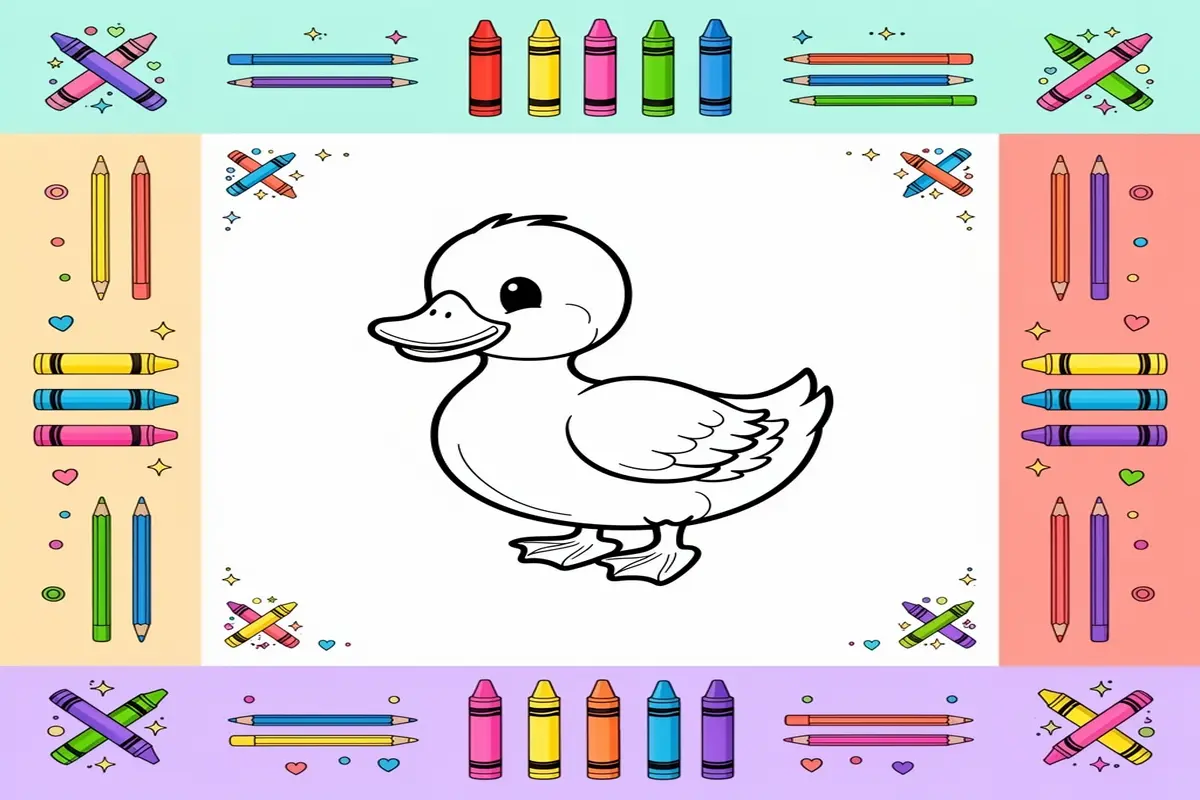
In a world saturated with digital screens, the simple act of coloring offers a profound return to tactile, imaginative play. It’s a quiet space where focus blossoms and creativity takes flight, one deliberate stroke at a time. For young artists, there’s a particular charm in bringing the natural world to life, and few subjects are as universally delightful and accessible as our feathered friends. This is where duck coloring pages for kids truly shine, offering a gateway to artistic expression, fine motor skill development, and a gentle introduction to wildlife. From fluffy ducklings following their mother to majestic mallards gliding on a pond, these scenes captivate children’s hearts and minds. They provide a perfect canvas for exploring color, texture, and story, making them a staple resource for parents and educators seeking engaging, screen-free activities. If your child is fascinated by creatures of the water, our collection of free dolphin coloring pages offers another wonderful aquatic adventure to explore alongside these charming duck coloring pages for kids.
The Gentle Quack: Psychology & Universal Appeal of Avorian Art
Why do children gravitate towards certain subjects? The appeal of duck coloring pages for kids is multifaceted, rooted in familiarity, whimsy, and the soothing rhythms of nature they represent.
The Calm of the Pond: Mindfulness in Every Stroke
Coloring is more than a pastime; it’s an exercise in mindfulness. The repetitive motion of filling in spaces, the focus required to stay within lines, and the conscious choice of colors all work to quiet a busy mind. For a child, the act of coloring a serene pond scene with a duck family naturally encourages a state of calm concentration. This meditative quality helps reduce anxiety and improves focus, providing a valuable tool for emotional regulation. The friendly, non-threatening nature of ducks makes them an ideal subject for this peaceful practice.
From Farmyard to Fairy Tale: A Cultural and Literary Muse
Ducks hold a cherished place in our cultural landscape, from classic children’s literature and nursery rhymes to beloved cartoon characters. This inherent familiarity makes them a comforting and exciting subject to color. When a child picks up a crayon to color a duck, they aren’t just filling an outline; they are engaging with a character that has sparked imaginations for generations. This connection transforms the activity from a simple task into a form of storytelling, where the child becomes the author of the duck’s world, deciding if it’s a realistic mallard or a fantastical creature with rainbow feathers.
Designed for Growing Talents: Accessibility Meets Challenge
The best duck coloring pages for kids are curated to meet a spectrum of abilities. For the youngest artists, simple, bold outlines of a single duckling build confidence and mastery. As skills develop, more complex scenes featuring detailed feathers, water ripples, and pond-side environments offer an engaging challenge. This scalability ensures that every child, from toddler to pre-teen, can find a page that feels just right—neither too frustrating nor too simple—fostering a lasting love for art and a sense of accomplishment with every finished masterpiece.
Professional Materials & Preparation for duck coloring pages for kids
To ensure a successful and enjoyable coloring session, proper preparation is key. The right materials can elevate the experience of duck coloring pages for kids, transforming a simple activity into an opportunity for skill development and artistic expression. This guide outlines the essential toolkit and setup for parents and educators.
The Foundation: Selecting Premium Paper for duck coloring pages for kids
The paper you choose is the canvas for your child’s creativity. For standard crayon or colored pencil work, a good-quality printer paper (80-100 GSM) is sufficient for casual use. However, if you plan to use markers, wet mediums like watercolor pencils, or if you want to preserve the artwork, upgrading to heavyweight paper (120-160 GSM) or cardstock is highly recommended. Heavier paper prevents bleed-through from markers and can handle more layering and blending without tearing. When printing your duck coloring pages for kids, ensure your printer settings are adjusted for the thicker paper type to avoid jams and ensure crisp lines.
Best Coloring Tools: A Detailed Medium Comparison
The choice of coloring tool dramatically affects the final outcome and the child’s experience.
Colored Pencils: Ideal for developing fine motor control and detail work, such as shading the feathers on a duck. Look for pencils with soft, pigmented cores that blend easily. Student-grade sets offer excellent value and performance for young artists.
Wax Crayons: A classic choice for younger children, crayons are durable and provide bold, opaque color. They are perfect for filling large areas but offer less precision for intricate details.
Markers: Broad-tip markers are great for vibrant, quick coverage, while fine-tip markers are essential for outlining and small details. Opt for water-based markers to minimize stains and odor. For a no-bleed guarantee, use them specifically with marker paper.
Watercolor Pencils/Paints: These offer a fantastic gateway into painting techniques. Children can color normally with the pencils and then use a wet brush to blend and create beautiful washes, perfect for depicting water or soft sky backgrounds on scenes featuring other animals, like those found in our free dolphin coloring pages.
Finishing Touches: Gel Pens, Blenders, and Erasers
Beyond the primary tools, a few specialty items can add polish and fun.
Gel Pens and Metallic Markers: These are perfect for adding sparkling highlights to water droplets, a glint in the duck’s eye, or creating decorative borders. They write smoothly over most pencil and crayon layers.
Colorless Blender Pencils/Markers: A professional secret for colored pencil artists, a blender pencil smooths out strokes and helps merge colors seamlessly, allowing for realistic shading on animal fur and feathers.
High-Quality Eraser: A good, soft kneaded or vinyl eraser is crucial for cleaning up stray pencil marks outside the lines without damaging the paper, ensuring a neat final presentation of the duck coloring pages for kids.
Perfect Workspace: Optimizing Lighting and Ergonomics
A well-prepared environment prevents fatigue and fosters focus.
Lighting: Ensure the workspace is brightly and evenly lit to reduce eye strain. Natural light is ideal, but a good desk lamp with a daylight LED bulb is an excellent alternative, providing clear, shadow-free illumination on the coloring page.
Surface & Posture: Provide a hard, flat surface for coloring. A table or desk at an appropriate height encourages good posture. For younger children, ensure their feet can rest flat on the floor or a stool.
Organization: Use cups or trays to organize coloring tools. This not only keeps the area tidy but also empowers the child to make independent choices about colors and mediums. Having all materials within reach before starting the duck coloring pages for kids minimizes distractions and keeps the creative flow uninterrupted.
Part 3: Elevating Your Art: Advanced Techniques for duck coloring pages for kids
Ready to transform those simple outlines into vibrant works of art? Moving beyond basic filling, these professional techniques will help you and your young artists add depth, realism, and creativity to every duck coloring pages for kids project. Let’s unlock a new level of artistic skill.
* Link: For more fun with feathered friends, explore our chicken coloring pages free printables for kids and turkey coloring pages free printable for kids.
Harmonious Habitats: Color Theory for Duck Scenes
Understanding basic color theory can make a dramatic difference. For a serene pond scene, use analogous colors (colors next to each other on the wheel), like blues for water and greens for reeds, to create harmony. Want the duck to truly pop? Use complementary colors. A bright yellow duck will stand out brilliantly against a background using purples and violets in the shadows of the water. For a realistic mallard, the iridescent green head contrasts beautifully with a rusty brown chest—a classic complementary pair. Teaching these concepts through duck coloring pages for kids makes learning color relationships intuitive and fun.
From Flat to Feathered: Mastering Shading and Depth
Shading is what turns a flat circle into a round, three-dimensional duckling. First, choose a light source direction (e.g., the top left). The areas farthest from this light will be darkest. Start with a base layer of your lightest yellow. Then, using the same color but with more pressure, or a slightly darker orange-yellow, add a second layer in the shadowed areas—under the chin, along the bottom curve of the body, and under the wing. Use a white crayon or colored pencil to add a tiny highlight dot in the eye and a gleam on the beak. This step-by-step approach builds confidence and creates impressive results.
Texturing Tales: Creating Feathers, Water, and More
Texture brings your page to life. For a duck’s soft down, try using small, tight, circular scribbles. For adult wing feathers, use longer, smoother strokes that follow the feather’s direction from the body outward. To create the illusion of water, color in smooth, horizontal strokes beneath the duck, leaving some white spaces for sparkle. Then, lightly add short, vertical wavy lines over the color to suggest ripples. For a textured barnyard scene, cross-hatching (crisscrossing lines) can create the look of straw or wood grain. Experimenting with these methods on various animal coloring pages for kids can help refine these essential skills.
The Art of the Fix: Gracefully Correcting Coloring Mistakes
Even pros make mistakes! The key is knowing how to correct them. If you color outside the lines, don’t panic. Use a lighter color from the background (like a blue for the sky) to carefully redefine the edge over the stray mark. For small waxy crayon smudges, a gentle erase with a soft white eraser can lighten them before layering the correct color on top. If a dark color is too heavy and looks muddy, sometimes the best fix is to embrace it as a shadow and work the surrounding colors to blend into it. Remember, art is about creativity, not perfection. Teaching kids these fixes empowers them to take risks and see “mistakes” as opportunities.
Showcasing Your duck coloring pages for kids: Creative Display Ideas
The fun doesn’t have to stop when the last crayon is put down! Displaying your child’s finished duck coloring pages for kids masterpieces boosts their confidence and adds a personal touch to your home. Here are some inspiring ways to celebrate their artwork.
Preserving Your Masterpiece: Archival Tips
Before displaying, consider protecting the artwork. For long-term keepsakes, use acid-free photo corners or a simple spray fixative to prevent crayon or marker smudging. Laminating pages is a durable, kid-friendly option that makes them spill-proof. For a classic look, frame a favorite piece with a colorful mat. A rotating “gallery wall” on the refrigerator or a dedicated string with clothespins ensures every new creation gets its moment in the spotlight.
Beyond Display: Creative DIY Projects
Transform colored pages into practical and giftable items. Carefully cut out your beautifully colored ducks and glue them onto blank greeting cards, bookmarks, or even a homemade mobile. You can decoupage them onto a small wooden box for storing treasures or create unique gift tags. This extends the creative activity and teaches kids about recycling their art. For a collaborative project, combine several finished pages into a custom “Farm Friends” storybook, pairing your ducks with other barnyard animals like those found in our free Chicken Coloring Pages.
Your duck coloring pages for kids Questions Answered
How do you draw a simple duck?
Start with an oval for the body and a smaller circle for the head. Connect them with two curved lines for the neck. Add a simple triangle for the beak on the head circle and a small dot for an eye. Draw a curved line for the wing on the body and two short lines with webbed feet at the bottom. It’s a perfect precursor to filling in your duck coloring pages for kids!
What colors are mallard ducks?
Male mallards are vibrant with iridescent green heads, white neck rings, chestnut-brown chests, and grey bodies with black and white tail feathers. Females are mottled brown for camouflage. Their wing patches (speculums) are a brilliant blue-purple. These real-life colors provide fantastic inspiration for more realistic duck coloring pages for kids, but creative colors are always encouraged!
What are the benefits of coloring for kids?
Coloring enhances fine motor skills and hand-eye coordination as children practice staying within lines. It fosters creativity, color recognition, and focus. It’s also a wonderful, screen-free activity for relaxation and emotional expression, providing a sense of accomplishment when a page is complete.
What color are duck feet?
Duck feet are often a bright, vibrant orange! This is due to carotenoids in their diet. However, some species have greyish or blackish feet. The classic orange webbed foot is a fun and iconic detail to color, adding a pop of brightness to any duck illustration.
How to print coloring pages?
For best results, download the PDF or image file to your computer. Open it and select “Print.” Ensure your printer has paper and ink. In print settings, choose “Fit to Page” for proper scaling and select the highest quality or “Best” print setting for crisp lines. Use standard printer paper for practice or cardstock for a sturdier coloring surface.
Final Thoughts: Your duck coloring pages for kids Journey Begins
From the first stroke of yellow on a duckling to the proud display of a finished masterpiece, the journey with duck coloring pages for kids is filled with joy, learning, and creative growth. These simple activities are gateways to developing essential skills, sparking conversations about nature, and creating cherished, quiet moments together. Whether your child is a budding artist or just discovering the joy of colors, each page is a new opportunity for adventure and expression.
We hope this guide has inspired you to dive into a world of color and creativity. Remember, there’s no right or wrong way to create—only fun to be had. Ready for your next adventure? Explore our Farm Animal Coloring Pages for more barnyard friends to color!