We offer a wide collection of free, high-quality printable coloring pages for kids and adults. From cute animals to intricate mandalas, our designs bring creativity and relaxation to everyone. Download, print, and start coloring today!

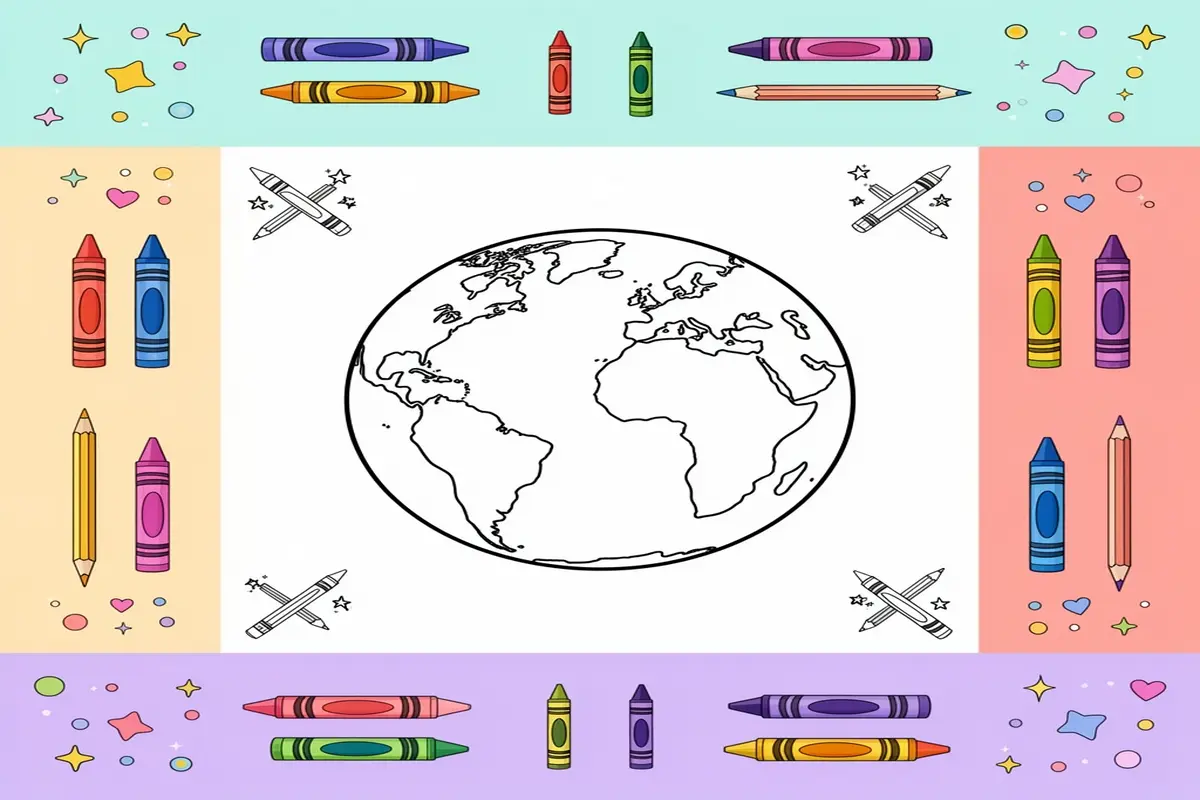
In a world saturated with digital screens, the simple act of coloring offers a tactile, grounding escape. It’s a portal to mindfulness, where focus narrows to the gentle sweep of a crayon and the choice between cerulean and teal. For young minds, this creative process is more than just play; it’s a foundational exercise in fine motor skills, color recognition, and self-expression. When that canvas becomes our very planet, the activity transforms into an educational adventure. Earth coloring pages for kids do precisely that, merging artistic joy with a budding awareness of the globe’s majestic oceans, sprawling continents, and diverse ecosystems. It’s a first, gentle lesson in geography and environmental stewardship, all within the comforting, familiar framework of art.
Starting with our home planet provides a beautiful, relatable context that can spark curiosity about all the life it sustains. After coloring the vast blues and greens of Earth, a child might naturally wonder about the creatures dwelling in those deep seas or roaming the continents. This is where a single creative session can blossom into a wider exploration. For instance, after bringing their earth coloring pages for kids to life, they might be inspired to dive into the depths with our collection of free dolphin coloring pages, adding vibrant life to the oceans they just colored. This seamless journey from the macro view of the planet to the micro view of its inhabitants makes learning cohesive and deeply engaging.
The Psychology & Universal Appeal: More Than Meets the Eye
The Calming Canvas: Mindfulness in Every Stroke
At its core, coloring is a meditative act. The repetitive motion and required concentration act as a natural anxiety reducer, pulling children (and adults) into a state of flow. Earth coloring pages for kids are particularly effective for this, as the subject itself—our planet—is inherently grounding. Choosing colors for land and sea isn’t just a creative decision; it’s a quiet, focused moment of connection to something larger than oneself. This practice builds patience, improves focus, and provides a non-verbal outlet for emotions, making it a powerful, accessible tool for emotional regulation and calm.
A Tapestry of Learning: Art Meets Education
Beyond relaxation, these pages are a stealthy educational powerhouse. They serve as a child’s first, friendly map. As they color, they unconsciously absorb the shapes of continents, the concept of vast oceans, and the relative positions of countries. This visual and kinetic learning is far more memorable than rote memorization. Educators and parents can use earth coloring pages for kids as a springboard for discussions about habitats, climate, and conservation, turning an art project into a meaningful dialogue about science and our role in protecting the planet’s future.
Designed for All: From Tiny Fingers to Aspiring Artists
The beauty of this theme lies in its incredible scalability. For the youngest artists, simple, bold outlines of the globe with large spaces are perfect for practicing grip and staying within lines. For older children and even adults, intricate pages featuring detailed topographic maps, atmospheric layers, or artistic interpretations of Earth from space offer a satisfying challenge. This range ensures that everyone, from a preschooler holding their first crayon to a pre-teen seeking a complex project, can find a page that meets their skill level and sparks their imagination, making it a universally engaging activity.
Part 2: Essential Materials & Preparation for Stunning earth coloring pages for kids
To ensure your young artists get the most out of their earth coloring pages for kids, proper preparation with quality materials is key. This section outlines the professional-grade supplies and setup that will elevate the coloring experience from a simple activity to an engaging, skill-building project. The right tools not only make the process more enjoyable but also help in achieving beautiful results that children can be proud of, especially when depicting the intricate landmasses and oceans of our planet.
The Foundation: Selecting Premium Paper for earth coloring pages for kids
The paper you choose is the single most important factor in the final outcome. For standard home printing of earth coloring pages for kids, opt for a bright white, smooth cardstock with a weight of 120-160 GSM (grams per square meter). This weight is thick enough to prevent bleed-through from markers and can handle light layering with colored pencils without buckling. A smoother finish allows for more precise, even color application, which is perfect for rendering the clean continents and deep blue oceans. If you plan to use wet mediums like watercolor pencils or thin markers, consider upgrading to a mixed-media paper (190+ GSM) to fully prevent warping.
Best Coloring Tools: A Detailed Medium Comparison
Choosing between markers, colored pencils, and crayons depends on the desired effect and the child’s age and skill level.
Colored Pencils: The most versatile and recommended tool for detailed work. Wax-based pencils offer vibrant colors and are excellent for blending the greens and browns of forests and mountains on your earth coloring pages for kids. Oil-based pencils provide a smoother laydown and superior blending capabilities. Look for pencils with soft, pigmented cores that require minimal pressure.
Markers: Provide bold, saturated color perfect for vibrant oceans. Use alcohol-based markers for seamless, bleed-free blending (always test on a scrap first), but they require the heaviest paper. Water-based markers are a safer, less messy option for younger children but can cause bleed-through on standard paper. A great alternative is to use markers for large areas like oceans and pencils for the finer continental details.
Crayons: Ideal for younger toddlers for their durability and ease of grip. They create a lovely textured effect but lack the precision needed for smaller details on more intricate pages.
Finishing Touches: Gel Pens, Highlighters, and Blenders
To add that “wow” factor, incorporate specialized tools. White gel pens or metallic silver pens are perfect for adding starry backgrounds, creating cloud highlights, or labeling continents. A clear blender marker (for alcohol-based sets) or a colorless blending pencil (for wax-based pencils) can help smooth gradients in the sky or ocean. For a fun, collaborative project, consider pairing an earth page with detailed astronaut coloring pages for kids to create a thematic solar system display. Fine-tip black markers can be used to carefully redefine any lines that may have become obscured during coloring.
Perfect Workspace: Optimizing Lighting and Ergonomics
A proper workspace prevents fatigue and encourages focus. Ensure the coloring area is well-lit with natural light or a bright, white LED lamp to reduce eye strain and allow for accurate color perception—crucial for distinguishing between different shades of blue and green. The table and chair should be height-appropriate so the child’s feet rest flat and their forearms can comfortably reach the paper. Keep supplies organized in cups or trays, and always protect the work surface with a large piece of cardboard or a dedicated craft mat. Having a damp cloth for sticky fingers and a scrap paper for testing colors will keep the main earth coloring pages for kids clean and smudge-free.
Part 3: Elevate Your Art: Professional Techniques for earth coloring pages for kids
Ready to transform those simple outlines into stunning works of art? Moving beyond basic crayon fills, these professional techniques will help kids (and adults!) add depth, realism, and creativity to their earth coloring pages for kids. This guide is perfect for parents and teachers looking to foster advanced skills and impressive results.
Harmonious Palettes: Color Theory for Your Earth Masterpiece
Understanding basic color theory can turn a good coloring page into a great one. For earth coloring pages for kids, think about the natural world. Use analogous colors (colors next to each other on the wheel) for a serene sky—blues, blue-greens, and purples. For vibrant flowers or animals on the land, try complementary colors (opposites on the wheel), like red and green or blue and orange, to make elements pop. Encourage kids to plan a palette before starting; for instance, a lush forest scene from our animal coloring pages for kids collection can use various greens and browns for a cohesive, realistic look.
From Flat to 3D: Mastering Light and Shadow
Shading is the magic that adds volume. First, decide where your light source is (e.g., the sun in the corner). Then, color areas farthest from that light slightly darker. For the round Earth, start with a base blue for oceans and green for land. Then, using a darker shade of the same color, gently add depth along one edge. Blend with your base color using light, circular strokes. Practice this on simpler rounded objects first, like the planets found in our astronaut coloring pages for kids, to build confidence before tackling the globe.
Adding Realism: Texturing Land, Sea, and Sky
Texture brings your page to life. For earth coloring pages for kids, different areas require different techniques:
Land & Forests: Use short, jagged strokes or tiny dots with greens and browns to create the illusion of leafy treetops or rough mountain terrain.
Oceans & Water: Use long, smooth, horizontal strokes with varying shades of blue. Adding small white-capped waves with a white gel pen can suggest movement.
Clouds: Avoid hard outlines. Use a cotton swab to softly blend white or light grey pastels or colored pencils over a blue sky for a fluffy, ethereal effect.
* Fur & Animals: If your Earth includes creatures, practice texturing on dedicated pages like our lion coloring pages free printable kids adults to master short, overlapping strokes for a furry mane.
The Art of Correction: Graceful Fixes for Coloring Errors
Mistakes are part of the process! Teach these graceful recovery techniques:
1. Embrace It: A stray mark outside the line can become a butterfly, a star, or a leaf. Get creative!
2. Layer Over It: For small errors, carefully layering a darker color can often cover a light one. A dark blue ocean can cover a faint pencil mark.
3. Texture as Camouflage: Turn a smudge into texture. A green smudge on land can become a bush with a few deliberate strokes.
4. Strategic White-Out: For larger issues on smaller areas, a tiny dot of white gel pen or correction fluid can create a “highlight” or reset a small space. Let it dry completely before coloring over it.
By integrating these techniques, children don’t just color—they learn to see like artists, observing light, texture, and color harmony in the world around them.
Showcasing Your Earth Coloring Pages for Kids: Creative Display Ideas
Once your young artist has filled their earth coloring pages for kids with vibrant blues and greens, it’s time to celebrate their work! Moving beyond the fridge door, creative display and DIY projects can extend the fun and reinforce the lessons learned about our planet.
Preserving Your Masterpiece: Archival Tips
To ensure these special creations last, consider simple preservation methods. For a professional touch, use a spray fixative or clear acrylic sealer to prevent crayon or pastel smudging. Laminating pages is a fantastic, durable option for bookmarks or placemats. For framing, choose acid-free mats to prevent yellowing over time. Storing finished pages in a flat portfolio or large binder protects them from creases and allows you to create a beautiful “Earth Art” portfolio to revisit.
Beyond Display: Creative DIY Projects
Transform completed coloring pages into meaningful gifts and keepsakes. A colored Earth makes a perfect globe for a homemade greeting card, especially for Earth Day. Simply glue the page onto folded cardstock. You can also create unique gift tags, decorative notebook covers, or even decoupage them onto a small trinket box. For a classroom activity, combine individual colored Earths to create a stunning, collaborative wall mural that celebrates global unity and beauty.
Your Earth Coloring Pages for Kids Questions Answered
How do you draw the Earth for kids?
Start with a large circle. Explain that the blue areas are oceans and the green/brown shapes are continents. For young kids, simplify by drawing a few basic shapes like a blob for North America and a squiggly line for South America. The goal isn’t perfection but recognition. Using a simple earth coloring pages for kids printable as a guide can make this process fun and stress-free for everyone.
What are the benefits of coloring pages?
Coloring builds fine motor skills and hand-eye coordination, essential for writing. It fosters creativity, color recognition, and focus. For topics like our planet, it serves as a gentle, engaging introduction to geography and environmental awareness. The calming, repetitive motion is also excellent for emotional regulation and mindfulness in children.
How do I print free coloring pages?
Search for reputable sites offering free, high-quality PDFs. Ensure your printer has paper and ink. Select “Best” or “High Quality” in your print settings for clear lines. Use standard printer paper for practice or cardstock for a sturdier result perfect for displays and crafts. Many websites, like ours, offer a vast library of themes, from earth coloring pages for kids to ocean animals like dolphins.
What are the main colors of the Earth?
From space, Earth appears blue (oceans and water), white (clouds and ice caps), and green/brown (landmasses like forests and deserts). When coloring, kids can use shades of blue for water, green for forests, tan or brown for mountains and deserts, and white for the polar ice caps. This is a great chance to discuss different ecosystems.
What is Earth Day for kindergarten?
For kindergarten, Earth Day is a celebration of our home planet! It focuses on simple, positive concepts: appreciating nature (like trees and animals), keeping our environment clean by picking up trash, and conserving resources like water. Activities often include planting seeds, nature walks, and of course, coloring Earth pictures to symbolize care and love for our world.
Final Thoughts: Your Earth Coloring Pages for Kids Journey Begins
The simple act of coloring an Earth page is a powerful starting point. It’s more than just an art project; it’s a hands-on conversation about geography, ecology, and our shared responsibility to this beautiful blue planet. Each page colored reinforces recognition, sparks curiosity, and plants a seed of stewardship. By displaying and repurposing this art, you honor your child’s creativity while making the learning tangible and lasting.
We hope this journey with earth coloring pages for kids inspires wonder and creativity in your home or classroom. Remember, every colored continent and ocean is a step toward raising a generation that cares. Ready for your next adventure? Explore our collection of majestic Elephant Coloring Pages to continue discovering the wonders of our natural world!