We offer a wide collection of free, high-quality printable coloring pages for kids and adults. From cute animals to intricate mandalas, our designs bring creativity and relaxation to everyone. Download, print, and start coloring today!

In an age of digital saturation, the simple act of coloring offers a profound return to tactile, imaginative play. It’s a quiet space where focus deepens, creativity blossoms, and the vibrant world of a child’s imagination meets the page. Among the most cherished and enduring themes are farm coloring pages for kids. These illustrations are more than just outlines of barns and animals; they are gateways to understanding the rhythms of nature, the origins of our food, and the charming characters of rural life. From the gentle cow in the pasture to the cheerful chickens in the coop, each page tells a story waiting to be colored into life. This journey with farm coloring pages for kids builds fine motor skills, teaches color theory, and fosters a calming sense of accomplishment. It’s a delightful counterpart to exploring the wonders of the deep blue sea, much like the aquatic adventures found in our free dolphin coloring pages, bringing a different, yet equally engaging, ecosystem to the coloring table.
The Rustic Allure: Why the Farmstead Captivates Young Minds
The Psychology of the Pastoral: A Sanctuary for Focus
The farm setting operates as a psychological sanctuary. Its familiar, wholesome imagery—rolling hills, friendly animals, and sturdy barns—provides a structured yet open canvas that feels both safe and explorable. This environment naturally reduces anxiety, allowing a child’s mind to enter a state of flow. The act of selecting a sunny yellow for a chick or a earthy green for a tractor requires mindful decision-making, pulling focus away from distractions and channeling it into a single, rewarding task. Farm coloring pages for kids become a tool for mindfulness, where the repetitive motion of coloring and the concrete goal of “filling the field” offer a tangible sense of control and peace.
Roots in Reality: Connecting Dots to Daily Life
Unlike fantasy realms, the farm is a touchpoint to the real world. Coloring these scenes sparks natural curiosity and dialogue. “What sound does a donkey make?” “What do pigs eat?” It becomes an informal, playful lesson in biology, agriculture, and stewardship. This thematic grounding makes farm coloring pages for kids uniquely educational. They help build vocabulary and connect children to the source of their food and the value of hard work, all within the framework of art. The farm is a microcosm of community and cycles, themes that are foundational to a child’s understanding of their world.
A Spectrum for Every Artist: From Simple Silhouettes to Detailed Landscapes
The beauty of this theme lies in its incredible range. For tiny hands just learning to grip a crayon, a big, simple outline of a happy sheep is perfect. For the more advanced young artist, intricate scenes of farmyard panoramas with fencing, vegetable gardens, and multiple animal families present a welcome challenge. This scalability ensures that farm coloring pages for kids grow with the child, continually offering an appropriate test of their developing skills in fine motor control, spatial awareness, and color blending. Whether a toddler is scribbling with joy or a seven-year-old is carefully shading a horse’s mane, the farm provides the perfect backdrop for artistic growth.
Part 2: Essential Materials & Preparation for farm coloring pages for kids
To transform your farm coloring pages for kids from a simple activity into an enriching artistic experience, the right materials and setup are crucial. Proper preparation not only elevates the final artwork but also enhances focus, fine motor skill development, and the sheer joy of creation. This guide details the professional-grade supplies and ergonomic considerations that parents and educators should have on hand.
The Foundation: Premium Paper for farm coloring pages for kids
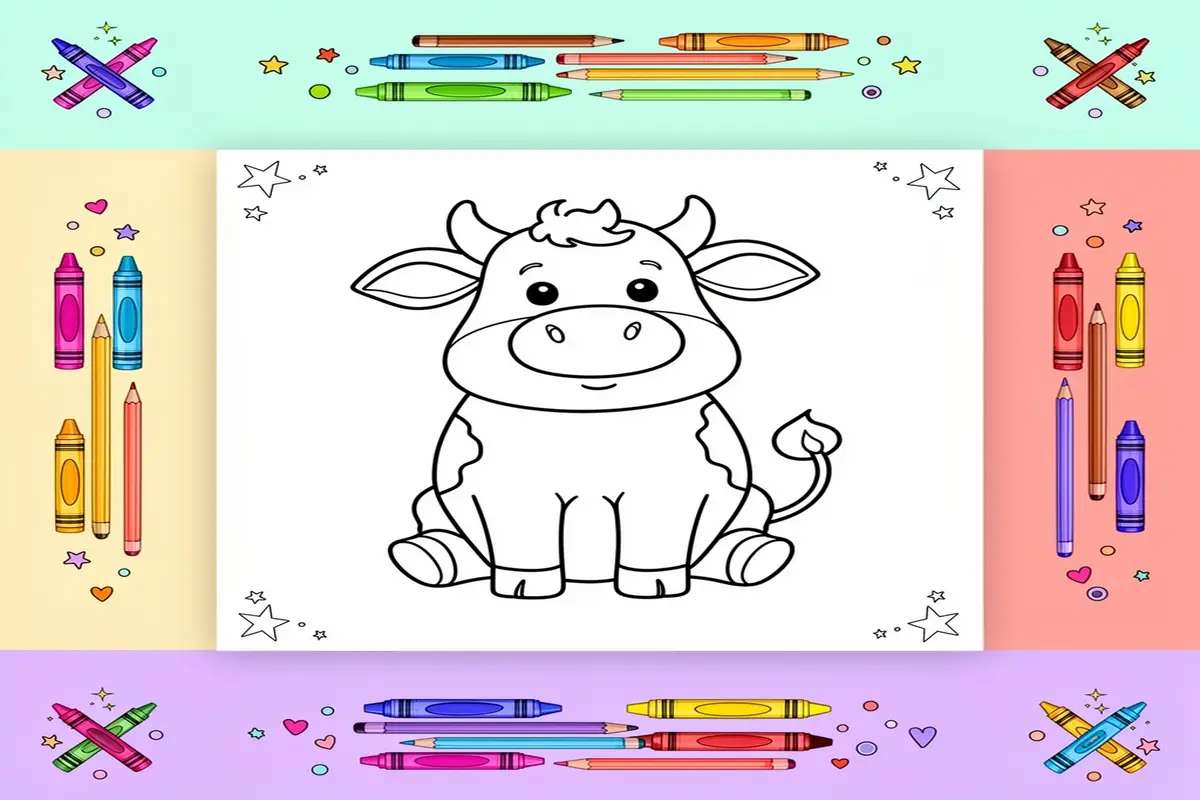
The choice of paper is the most critical, yet often overlooked, element. Standard printer paper (20-24 lb) is prone to bleeding and tearing, especially with enthusiastic young artists. For superior results, opt for a bright white, smooth cardstock (65-80 lb text weight or 110-130 lb index). This heavier GSM (grams per square meter) paper provides a sturdy surface that prevents bleed-through from markers, allows for smooth blending with colored pencils, and can withstand erasing. When printing your chosen farm coloring pages for kids, such as our detailed cow coloring pages free printable, high-quality paper ensures every barn, animal, and tractor detail remains crisp and vibrant.
Best Coloring Tools: Markers vs. Pencils for Farm Scenes
Each coloring medium offers distinct advantages for bringing farm scenes to life. Alcohol-based markers (like Copic or Ohuhu) provide brilliant, blendable colors ideal for large areas like green pastures, blue skies, and red barns. Their quick-drying nature minimizes smudging. For younger children, high-quality water-based markers with broad and fine tips offer excellent control and are generally washable. Colored pencils, particularly wax or oil-based cores, are perfect for adding texture—think the woolly coat of a sheep from our sheep coloring pages free printables or the wood grain on a fence. They allow for layering and subtle shading, teaching children about light, shadow, and dimension. A hybrid approach often yields the best results: markers for bold base colors and pencils for intricate details.
Finishing Touches: Gel Pens & Highlighting Details
The magic often lies in the details. A set of fine-tip and metallic gel pens is indispensable for adding sparkling highlights to dew on grass, chrome on tractors, or animal eyes. White gel pens are particularly effective for creating clouds, correcting small mistakes on darker backgrounds, or adding patterns to clothing. For a final touch of realism or whimsy, consider acrylic paint pens for opaque highlights or glitter glue for special accents on things like holiday-themed farm scenes. These tools empower children to add personal flair and a sense of accomplishment to their completed farm coloring pages for kids.
Perfect Workspace: Ergonomic Setup for Young Artists
A well-prepared workspace is key to sustained engagement and comfort. Prioritize ample, natural lighting or a high-quality daylight LED lamp to reduce eye strain and ensure true color representation. Ensure the seating allows the child’s feet to rest flat on the floor, with the table at elbow height. A non-slip desk mat can stabilize the coloring page and protect the surface. Organize supplies within easy reach using cups for pencils and markers, and keep a dedicated blotter sheet or scrap paper underneath the artwork to protect the table. This organized, comfortable environment encourages focus and allows the child to fully immerse themselves in the pastoral world of their farm coloring pages for kids.
Transforming Farm Coloring Pages for Kids: Professional Techniques
Ready to take those farm coloring pages for kids from simple to spectacular? This guide moves beyond basic crayon strokes to introduce techniques that will build artistic confidence and create stunning results. Whether you’re a parent guiding a young artist or a teacher enriching a classroom activity, these professional methods will unlock a new level of creativity and skill.
Harmonious Palettes: Color Theory for the Farmyard
Understanding basic color theory can transform a flat image into a cohesive scene. For farm coloring pages for kids, start with a complementary scheme for high contrast and vibrancy—think a red barn against a green field. For a more peaceful, harmonious look, use analogous colors (those next to each other on the color wheel), like blending yellows, oranges, and browns for a sunset over a cornfield. Don’t forget the sky! Use a gradient from light blue at the horizon to a deeper blue overhead for instant realism. For more animal-specific inspiration, explore our detailed cow coloring pages free printable and horse coloring pages free printable to practice fur and mane textures with color.
From Flat to 3D: Mastering Light and Shadow
Shading is the magic trick that adds volume. First, decide where your light source is (e.g., the sun in the top corner). Then, apply this rule: areas facing the light are lightest, sides are mid-tone, and areas facing away are darkest. For a round animal like a pig, start with a base mid-tone pink. Add a lighter pink on the curve facing your light source, and a deeper rose or light brown in the shadows underneath. Use gentle, layered pressure with your coloring tool. For objects like a tractor or watering can, use sharp, straight lines for shadows to emphasize their hard, metallic surfaces.
Adding Realism: Textures That Tell a Story
Texture brings a farm scene to life. Here’s how to render common elements:
Fur and Feathers: For a sheep’s wool, use tiny, overlapping circular scribbles instead of solid color. For chicken feathers, color in the direction of growth, using short, slightly curved strokes.
Wood and Metal: For a wooden fence, draw fine, parallel lines following the planks, then add occasional knots with small dark circles. For a metal bucket, use smooth, even shading with a stark, sharp highlight.
* Grass and Foliage: Avoid coloring a field in one solid green. Instead, use at least three green shades in small, upward flicking motions to mimic blades of grass. Add tiny yellow or blue dots for wildflowers.
The Art of Correction: Graceful Fixes for Common Mistakes
Even professional artists make mistakes. The key is knowing how to fix them. If a color goes outside the lines, don’t panic. Use a white gel pen or a very sharp white colored pencil to carefully redefine the edge. For a waxy crayon bleed, gently scrape away excess wax with a toothpick before coloring the adjacent area. If shading becomes too dark and muddy, gently lift color with a kneaded eraser (for pencils) or go over the area with a white pastel pencil to blend and lighten. Remember, many “mistakes” can be incorporated—a dark spot on a cow can become a natural marking, and an errant stroke in the sky can be turned into a distant bird.
Showcasing Your Farm Coloring Pages for Kids: Creative Display Ideas
The fun doesn’t stop when the crayons are put away! Transforming your child’s completed farm coloring pages for kids into a gallery of their work boosts confidence and extends the creative joy. Here are inspiring ways to celebrate their artistic journey.
Preserving Your Masterpiece: Archival Tips
Protect those precious creations from smudges and fading. For special pieces, consider using acid-free sheet protectors in a binder to create a growing portfolio. A simple, affordable frame with a colorful mat can turn any artwork into a statement piece for a playroom or bedroom wall. For a more rustic, farm-themed display, clip finished pages to a string of twine with wooden clothespins for a charming, ever-changing gallery.
Beyond Display: Creative DIY Projects
Take the artwork off the wall and into everyday life! Laminate a favorite colored page and cut it into unique bookmarks or puzzle pieces. Smaller, well-colored animals can be cut out and glued onto folded cardstock to create heartfelt, personalized greeting cards for grandparents. You can even decoupage several pages onto a small wooden tray or storage box, sealing the artwork and creating a functional, farm-fresh keepsake. For more animal-themed fun, explore our collection of free dolphin coloring pages for a new creative challenge.
Your Farmyard Fun Questions Answered
What are the benefits of coloring for kids?
Coloring is a powerhouse activity for development. It strengthens fine motor skills and hand-eye coordination, essential for writing. It fosters creativity and color recognition while also providing a calming, focused task that can reduce anxiety and improve concentration. It’s a simple, screen-free way to encourage artistic expression and quiet time.
Where can I find free farm coloring pages?
You can find a wonderful variety of free, high-quality farm coloring pages for kids right here on our website! We offer printable pages featuring all the classic barnyard friends. Simply browse our categories, select your favorites, and download them instantly for endless coloring fun at home or in the classroom.
What are common farm animals for kids?
Classic farm animals that kids love to color include cows, pigs, chickens, sheep, horses, and ducks. Don’t forget friendly goats, noisy roosters, hardworking donkeys, and fluffy rabbits! These animals are fantastic for teaching kids about life on the farm, animal sounds, and the sources of our food and wool.
How to print coloring pages for free?
Printing is easy! After downloading your chosen farm coloring pages for kids as a PDF or image file, open it on your computer. Select “Print” from the file menu. Ensure your printer has paper and ink, then choose “Fit to Page” in your print settings for the best results. Use standard printer paper for practice or cardstock for a sturdier masterpiece.
What age should kids start coloring pages?
Toddlers can start with simple, large shapes as early as 18-24 months using chunky crayons. Around ages 3-4, children develop better grip and can enjoy coloring within broader lines of familiar objects like our farm animal pages. Always follow the child’s interest and focus on the fun of the process, not perfection.
Final Thoughts: Your Creative Farmyard Journey Begins
Embarking on the world of farm coloring pages for kids opens a barn door to more than just art. It’s a gateway to learning, bonding, and quiet creativity. From the first wobbly circle of a sun over a barn to a carefully shaded flock of sheep, each page represents a moment of growth and joy. We hope these ideas for display, DIY projects, and answers to common questions inspire you to make coloring a cherished part of your family’s routine.
Remember, every colored page is a celebration of your child’s unique perspective and developing skills. So gather those crayons, print a new adventure, and let the creativity flow. Ready for your next adventure? Explore our free horse coloring pages for more animal fun!