We offer a wide collection of free, high-quality printable coloring pages for kids and adults. From cute animals to intricate mandalas, our designs bring creativity and relaxation to everyone. Download, print, and start coloring today!

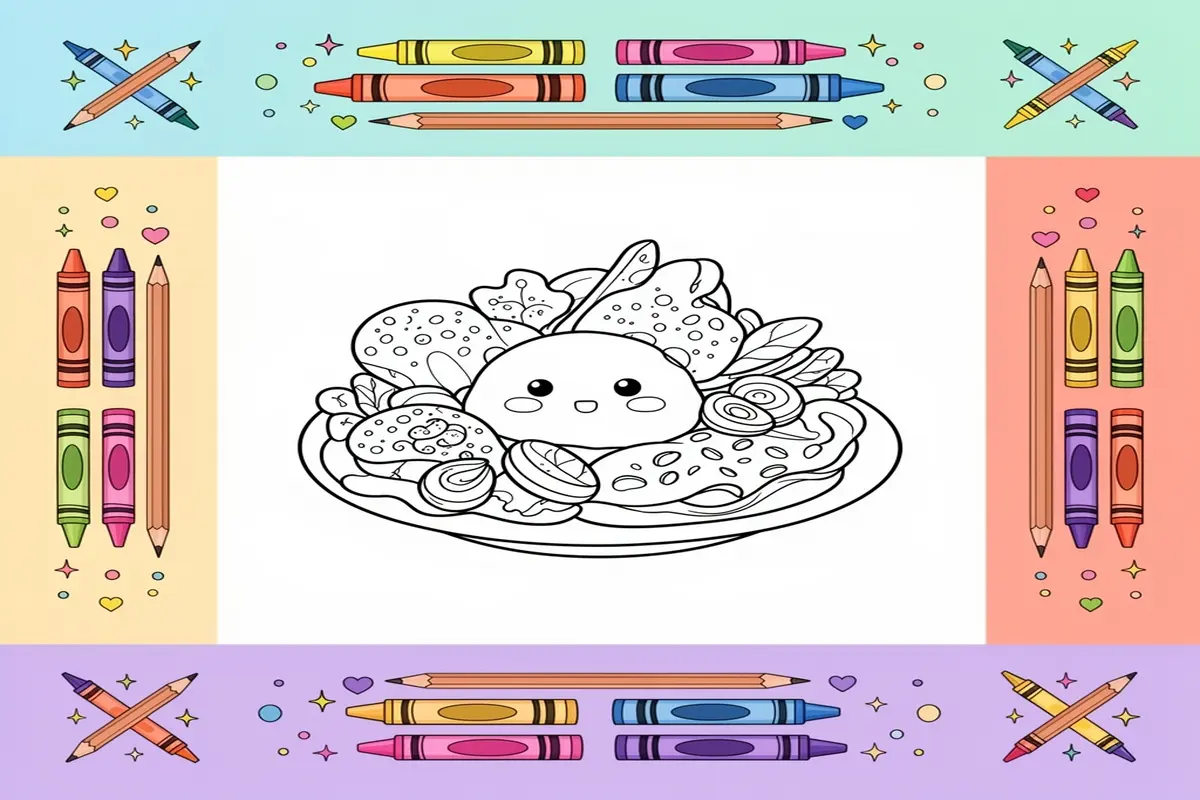
In a world saturated with digital noise, the simple act of coloring offers a profound sanctuary for young minds. It is a tactile, creative escape where focus is honed, and imagination is given free rein to flourish. Among the vast universe of themes, food coloring pages for kids hold a uniquely delicious appeal. They transform the everyday joy of eating into a vibrant artistic adventure, inviting children to explore a rainbow of colors while connecting with the shapes, textures, and stories of what nourishes us. From a perfectly layered birthday cake to a humble, crunchy apple, these pages serve as a delightful gateway to discussions about nutrition, culture, and creativity. They are more than just outlines; they are prompts for storytelling, sensory exploration, and joyful expression. As we celebrate the diverse artistic journeys available to children, from the depths of the ocean with our free dolphin coloring pages to the whimsy of fantasy creatures, the charm of food coloring pages for kids remains a universally relatable and endlessly engaging starting point for any young artist’s portfolio.
The Irresistible Palette: Why Food Captivates Young Artists
What is it about a page filled with donuts, pizzas, and smiling strawberries that instantly captures a child’s attention? The allure of food coloring pages for kids is deeply rooted in both psychology and daily experience, making them a powerful tool for engagement and development.
The Psychology of the Familiar: Comfort and Creativity
Food is a central, comforting part of a child’s world. Coloring familiar items like a slice of watermelon or a taco builds confidence; there is no “wrong” color for a cupcake in the realm of imagination. This familiarity lowers the barrier to entry, allowing even hesitant artists to dive in with enthusiasm. The act of selecting colors for these everyday items empowers decision-making and personal expression, transforming the ordinary into a canvas for extraordinary creativity. It’s a safe space where a blue banana or a polka-dotted pumpkin isn’t just accepted—it’s celebrated.
A Delicious History: From Cave Walls to Coloring Books
The depiction of food is one of humanity’s oldest art forms, tracing back to ancient harvest scenes and still-life paintings that celebrated abundance and culture. Modern food coloring pages for kids are a playful, accessible continuation of this tradition. They democratize art, allowing every child to become the artist of their own bountiful feast. These pages often blend realistic shapes with charming, cartoon-like expressions, creating a bridge between recognizable form and fantastical fun. This fusion teaches children that art can both represent the world and reinvent it, a foundational concept in creative thinking.
Designed for All: From Toddler Grip to Tween Detail
The beauty of this theme lies in its scalability. For tiny hands just learning to grip a crayon, simple outlines of a single piece of fruit or an ice cream cone provide the perfect practice ground for motor skills. For older children seeking a challenge, intricate pages featuring elaborate dinner spreads, food trucks laden with details, or cross-section views of complex dishes offer hours of focused engagement. This makes food coloring pages for kids a versatile resource that grows with the artist, continually offering new levels of complexity and satisfaction, ensuring that the creative feast never ends.
Professional Supplies for food coloring pages for kids: Your Complete Toolkit
To transform your food coloring pages for kids from simple outlines into vibrant masterpieces, the right materials are essential. Proper tools not only enhance the final artwork but also improve the child’s experience, allowing for better control, richer colors, and longer-lasting creations. This section details the professional-grade supplies that will elevate your coloring sessions, ensuring every cupcake, fruit basket, and pizza slice is filled with dazzling, crisp color. Investing in quality materials from the start fosters a greater appreciation for art and yields display-worthy results from your food coloring pages for kids.
The Foundation: Choosing Paper for Lasting Artwork
The paper is the canvas for all food coloring pages for kids, and its quality directly impacts the final result. For standard markers or crayons, a bright white, smooth 80-100 GSM (grams per square meter) printer paper is sufficient. However, for advanced techniques with wet media like markers or watercolor pencils, upgrade to heavyweight paper (120-160 GSM) or dedicated marker paper. This prevents bleeding, buckling, and allows for blending without tearing. For a premium finish, especially if you plan to display the artwork, consider cardstock. Its rigidity holds up to layering and erasing, making it ideal for detailed work on pages featuring intricate patterns like a basket of farm animal coloring pages or a Thanksgiving feast.
Best Coloring Tools: Markers vs. Pencils
The core debate lies between coloring pencils and markers, each offering distinct advantages for food coloring pages for kids. Colored Pencils (wax- or oil-based) provide superior control for fine details, such as the seeds on a strawberry or the texture of bread crust. They are layered beautifully, allowing for rich shading and realistic gradients. Look for pencils with soft, pigmented cores that blend smoothly. Markers, particularly alcohol-based ones, deliver vibrant, uniform blocks of color perfect for juicy apples or glossy candies. They are faster to use but offer less control and can bleed through paper. A hybrid approach is often best: use pencils for detail and shading, and markers for bold, flat areas. For younger children, high-quality washable markers and sturdy pencils with good break resistance are the professional choice.
Finishing Touches: Gel Pens & Highlights
To make artwork truly pop, incorporate specialized detailing tools. Gel pens, especially in metallic, glitter, or white ink, are perfect for adding highlights to food coloring pages for kids. Use them to draw gleaming highlights on cherries, sprinkles on donuts, or steam rising from a hot drink. Fine-line pigment liners (e.g., 0.1-0.5 mm) are excellent for redefining outlines that may have become blurred with coloring or for adding intricate patterns to clothing or backgrounds. A colorless blender marker is a professional secret for smoothing pencil gradients or creating subtle textures in marker work, such as the creamy swirl of a milkshake.
Perfect Workspace: Lighting & Ergonomics
A proper workspace is a critical, often overlooked, material. Ensure ample, natural-spectrum lighting to reduce eye strain and allow for accurate color perception—vital when selecting the perfect shade for a peach or a lime. The coloring surface should be firm, flat, and at an appropriate height to promote good posture. For tool organization, use separate containers for pencils, markers, and pens to prevent damage and make selection efficient. Always keep a scrap of the same paper you’re using for testing colors and techniques. Finally, protect the work surface with a self-healing cutting mat or a simple board; this provides a ideal slightly textured surface for pencil work and guards your table from marker inks.
Part 3: Elevating Your Art: Professional Techniques for food coloring pages for kids
Ready to transform simple outlines into stunning works of art? Moving beyond basic filling, these professional techniques will help kids (and adults!) develop real artistic skills while making their food coloring pages for kids pop with life. This guide focuses on actionable methods to add depth, realism, and creativity to every page.
Harmonious Palettes: Color Theory for food coloring pages for kids
Understanding basic color relationships can instantly elevate a coloring project. Teach young artists about complementary colors (opposites on the color wheel, like red and green for a vibrant apple) to make elements stand out. For a more soothing, realistic look, explore analogous colors (neighbors on the wheel, like yellow, orange, and red for a sunset over a farm). Applying this to a page of fruit coloring pages can turn a simple apple into a study of reds with a touch of complementary green on the leaf, adding instant sophistication.
From Flat to 3D: Mastering Shading Techniques
Shading is the magic that turns a flat circle into a round meatball or a fluffy cupcake. Start by choosing a light source direction. Then, practice these steps:
1. Base Layer: Apply the main color evenly.
2. Shadow Side: Add a slightly darker shade of the same color on the side opposite your light source.
3. Highlight: Leave a small area white or use a very light tint where the light hits directly.
4. Blend: Gently layer and smooth the transitions between these areas with your coloring tool. This technique works wonders on rounded foods like oranges or bread rolls, giving them a delicious, three-dimensional form.
Adding Appetizing Realism: Texture Methods
Texture makes a picture feel touchable. Here’s how to render common food textures:
Crispy & Flaky: For fried chicken or pie crust, use short, sharp, overlapping strokes in varying browns and yellows. Avoid solid fills.
Juicy & Smooth: For berries or candies, aim for a solid, glossy look. Use heavy, even pressure and consider leaving a stark white highlight for a wet appearance.
Fluffy & Soft: For whipped cream, cotton candy, or bread, use tiny, circular scribbles or very light, feathery strokes to create a soft, airy feel.
Sprinkled & Topped: Use the very tip of your pencil or marker to create tiny, multi-colored dots for sprinkles or seeds, adding playful detail.
The Art of Correction: Gracefully Fixing Coloring Errors
Mistakes are part of the process! Here’s how to handle common issues:
Coloring Outside the Lines: Instead of stressing, turn the stray mark into a feature. A green streak outside a pickle could become a shadow or a bit of fresh dill.
A Color That’s Too Dark: Lighten an area by gently going over it with a white colored pencil or crayon. This can also create interesting opaque effects for frosting or icing.
Smudges: Incorporate them! A brown smudge near a cookie could become a chocolate chip or a crumb on the table. For a clean fix, use a sticky tack eraser for colored pencils.
Unhappy with a Color Choice: Layer over it! Coloring a strawberry blue? Layer red heavily over it to create a deep, shadowy base. The key is to keep layering with confidence. Remember, even professional artists adapt as they go. For more intricate subjects where practice is key, exploring animal coloring pages for kids can be a great way to hone these texture and correction skills on fur and scales before applying them to your culinary creations.
Showcasing Your Food Coloring Pages for Kids: Creative Display Ideas
Once your young artist has filled their food coloring pages for kids with vibrant hues, it’s time to celebrate their work! Moving beyond the coloring book, creative display and DIY projects extend the fun and build lasting confidence.
Preserving Your Masterpiece: Archival Tips
To keep those colorful creations looking fresh, consider simple preservation methods. For special pieces, use acid-free glue sticks to mount them on sturdy cardstock. Laminating sheets are an affordable, kid-proof option for placemats or fridge art. For a gallery wall, clip finished pages to a string with decorative clothespins for an ever-changing, easy-to-update display that honors every masterpiece.
Beyond Display: Creative DIY Projects
Transform completed pages into cherished gifts and keepsakes. A colorful fruit page can become a unique greeting card when folded and glued to construction paper. Cut out individual items like cupcakes or vegetables to create custom bookmarks or gift tags. For a fun party activity, assemble a collection of themed pages into personalized coloring books, perhaps inspired by our delightful dessert coloring pages for kids.
Your Food Coloring Pages for Kids Questions Answered
Where can I find free printable food coloring pages?
Numerous educational and parenting websites offer free, high-quality printables. Look for sites that categorize pages by theme, like fruits, vegetables, and healthy meals. Always ensure you’re downloading from a reputable source. Our own collection includes a wonderful variety of food coloring pages for kids, from simple outlines to more detailed scenes, all ready to print and enjoy.
What are the benefits of coloring for kids?
Coloring boosts fine motor skills and hand-eye coordination as children practice staying within lines. It’s a fantastic, screen-free activity that encourages focus, patience, and creativity. It also serves as a calming, emotional outlet, allowing kids to express themselves through color choice and artistic decisions.
How to use coloring pages to teach healthy eating?
Use food coloring pages for kids as a conversation starter. While coloring a page full of vegetables, discuss their colors, names, and health benefits. You can create a “rainbow plate” challenge, encouraging kids to color and later eat foods of different colors. It’s a playful, non-pressured way to introduce nutritional concepts.
What are Kawaii food coloring pages?
Kawaii is a Japanese style emphasizing cuteness. Kawaii food coloring pages feature adorable, smiling versions of everyday items like hamburgers, sushi, or ice cream cones with big, charming eyes and exaggerated, joyful expressions. They are incredibly popular for their friendly and appealing aesthetic that kids adore.
What are the best coloring markers for kids?
For young children, washable markers are essential. Brands like Crayola are reliable and offer vibrant colors. For older kids interested in blending, consider non-toxic, fine-tip markers. Always test markers on a spare sheet to ensure they don’t bleed through the paper, especially on single-sided printable food coloring pages for kids.
Final Thoughts: Your Food Coloring Pages for Kids Journey Begins
The journey with food coloring pages for kids is about so much more than just staying inside the lines. It’s a gateway to creativity, a tool for learning, and a canvas for family connection. From discussing the colors of the harvest to proudly displaying a gallery of delicious art, each page colored is a moment of growth and joy. We hope this guide inspires you to fill your home with color, conversation, and creativity. Remember, every masterpiece starts with a single stroke.
Ready for your next adventure? Explore our farm animal coloring pages to continue the thematic fun!