We offer a wide collection of free, high-quality printable coloring pages for kids and adults. From cute animals to intricate mandalas, our designs bring creativity and relaxation to everyone. Download, print, and start coloring today!

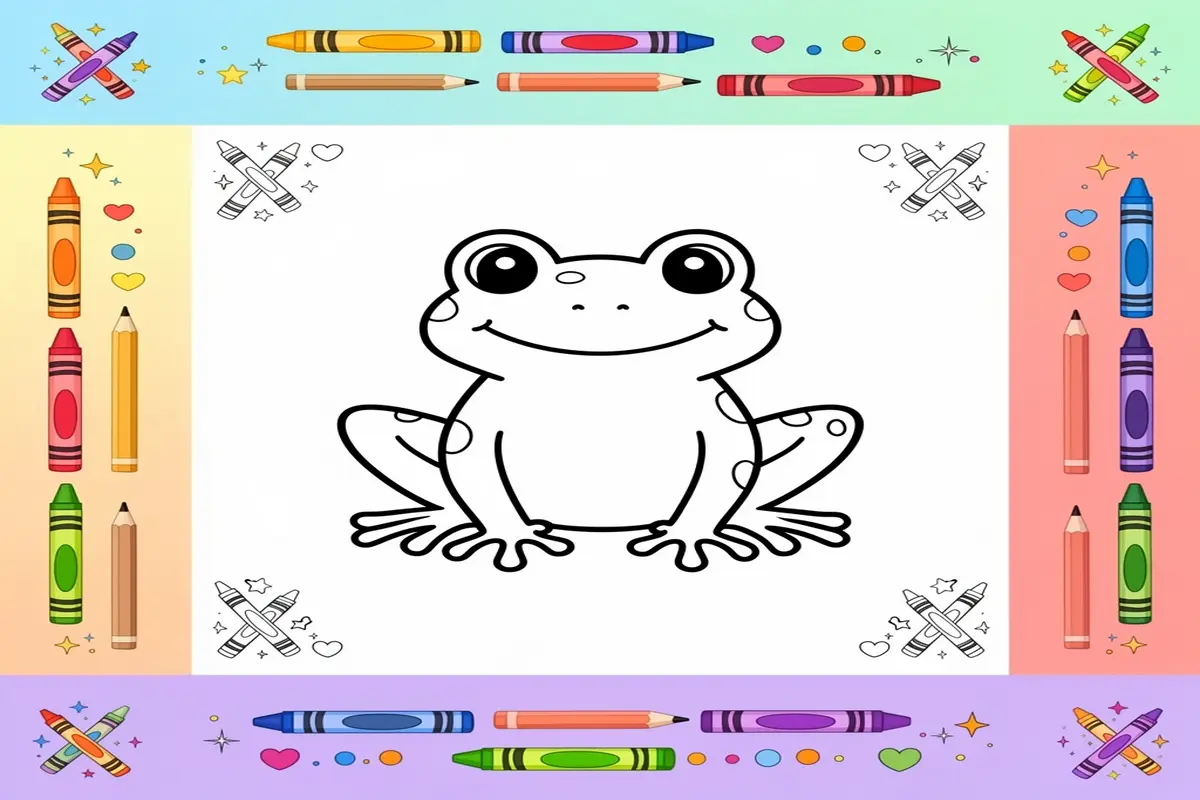
In a world saturated with digital noise, the simple act of coloring offers a sanctuary of focus and creative expression. It’s a tactile journey back to basics, where a blank page becomes a world of possibility. For young artists, frog coloring pages for kids provide a particularly enchanting gateway into nature’s wonders. These amphibious characters, with their bulging eyes, webbed feet, and potential for vibrant color, captivate the imagination and invite hours of engaged play. More than just a pastime, engaging with these pages nurtures fine motor skills, color recognition, and a budding appreciation for wildlife. From the familiar garden frog to exotic rainforest species, each outline is a new story waiting to be told in crayon, marker, or paint. As you explore this delightful collection, remember the creative adventure continues under the sea with our mesmerizing jellyfish coloring pages.
The Ribbiting Appeal: Why Frogs Captivate Young Minds
What is it about frogs that makes them such perfect subjects for a child’s coloring book? The answer lies at the intersection of biology, psychology, and pure artistic fun. Frog coloring pages for kids are uniquely positioned to teach and delight simultaneously.
The Psychology of Green: Mindfulness in Every Stroke
Coloring is a well-documented mindfulness activity, promoting calm and concentration. The organic, flowing shapes of a frog—its rounded body, long limbs, and lily pad habitat—are inherently soothing to fill in. The process of selecting shades of green, brown, yellow, or even fantastical blues allows a child to enter a state of flow, pushing aside distractions. This focused engagement is a gentle exercise in emotional regulation, making these pages a powerful tool for quiet time or easing anxiety.
From Pond to Page: A Mini-Biology Lesson
Every frog coloring pages for kids session is a stealth learning opportunity. As children color, natural questions arise: Why are some frogs bright red? What do tadpoles look like? Where do frogs live? This curiosity opens the door for discussions about life cycles, ecosystems, and biodiversity. A page featuring a frog on a log transforms into a lesson about habitats, while coloring a detailed poison dart frog can spark conversations about adaptation and the rainforest. It’s art education disguised as play.
Curated for Every Little Artist: From Simple to Complex
The beauty of this theme is its incredible range. For tiny hands just learning to grip a crayon, a big, friendly cartoon frog with bold lines is perfect. For older kids seeking a challenge, intricate pages featuring realistic frog species with detailed patterns of spots and textures provide hours of satisfying work. This scalability ensures that frog coloring pages for kids grow with the child, continually offering an appropriate and engaging creative outlet that builds confidence with every completed masterpiece.
Professional Materials & Preparation for frog coloring pages for kids
To ensure a successful and enjoyable coloring session, having the right materials and a prepared workspace is key. This guide will walk you through the essential supplies and setup needed to get the most out of your frog coloring pages for kids, whether for a simple afternoon activity or a detailed educational project.
The Foundation: Selecting Premium Paper for frog coloring pages for kids
The paper you choose directly impacts the final result and your child’s coloring experience. For standard printing, a bright white, medium-weight paper (around 100-120 GSM) is ideal. It provides a smooth surface for fine details and prevents bleed-through from most markers. If your child prefers using wet mediums like markers or watercolor pencils, consider upgrading to heavyweight cardstock (160-200 GSM). For a thematic connection, consider pairing your amphibian art with other nature scenes, such as those found on our forest coloring pages for kids, which often feature similar lush, detailed environments.
Best Coloring Tools: Markers vs. Pencils for Detailed Art
The choice between coloring tools depends on the desired outcome and the child’s skill level.
Colored Pencils: Excellent for frog coloring pages for kids that feature intricate patterns like a frog’s skin texture or lily pad details. Wax-based pencils offer smooth blending, while oil-based cores are harder and allow for sharper, finer lines. They promote control and are perfect for developing fine motor skills.
Markers: Provide vibrant, solid blocks of color that make artwork pop. For children, alcohol-free markers are recommended as they are less likely to bleed through premium paper and are easier to clean up. Look for dual-tip markers (broad and fine) to color large areas and add precise details. Always test markers on a corner of your printed page first.
Finishing Touches: Gel Pens, Blenders, and Highlights
Elevate the completed frog coloring pages for kids with special effects that add depth and personality.
Gel Pens and Metallic Markers: Perfect for adding shimmer to a frog’s eyes, creating dewdrops on leaves, or highlighting water reflections. White gel pens are invaluable for adding highlights on top of darker colored areas.
Colorless Blenders: A dedicated blender marker (for alcohol-based systems) or a white colored pencil (for wax-based pencils) can soften harsh lines and create smooth gradients, ideal for rendering a frog’s rounded body or a soft sunset background.
Fixative Spray: For artwork intended for display, a light coat of artist’s fixative spray will prevent wax bloom from pencils and protect the colors from smudging.
Perfect Workspace: Optimizing Lighting and Ergonomics
A well-prepared workspace enhances focus and comfort, allowing children to fully engage with their creative task.
Lighting: Ensure the coloring area is well-lit with natural light or a bright, white LED lamp to reduce eye strain and allow for accurate color perception. Avoid yellow-toned lights that can distort color choices.
Ergonomics: Provide a flat, stable surface at an appropriate height. For younger children, ensure their feet are supported. Organize supplies within easy reach using cups for pencils and markers and a small tray for frequently used tools like sharpeners and erasers.
Surface Protection: Always place a protective sheet (like scrap paper or a craft mat) underneath the frog coloring pages for kids to protect the table surface from marker bleed and pencil dust.
Part 3: Elevating Your Art: Pro Techniques for frog coloring pages for kids
Ready to transform a simple frog coloring page into a stunning piece of art? Moving beyond basic filling, these professional techniques will help kids (and adults!) develop fine motor skills, understand artistic concepts, and achieve impressive results. Whether your child is working on a cartoon bullfrog or a detailed tree frog, these methods add depth, realism, and creativity. Let’s dive into the advanced world of coloring frog coloring pages for kids.
Harmonious Palettes: Color Theory for frog coloring pages for kids
Understanding basic color relationships can make artwork pop. For a vibrant frog, try a complementary color scheme. A green frog placed on a background with hints of red (like reddish-brown logs or pink flowers) creates dynamic contrast. For a more natural, serene look, use an analogous scheme—colors next to each other on the wheel. Picture a frog using various shades of green, blue-green, and yellow-green for a cohesive, lifelike appearance. Don’t be afraid to get creative; a purple or blue frog can be a fantastic exercise in imagination, much like exploring the vibrant hues in our jellyfish coloring pages.
From Flat to 3D: Masterful Shading Techniques
Shading is the magic that turns a flat circle into a sphere and a simple frog into a dimensional creature. Teach young artists this step-by-step approach:
1. Identify Your Light Source: Decide where the “sun” is (e.g., top left). Every shadow will be opposite.
2. Lay a Base Color: Color the entire frog area with your main, medium-tone green.
3. Add Shadows: Using a darker shade of your base color (or a cool blue), apply more pressure to the areas farthest from the light—under the chin, the lower body, and behind the legs.
4. Apply Highlights: Lightly color or leave white the areas closest to the light source—the top of the head, back, and knees. A white colored pencil or gel pen can add final sparkle here.
Adding Realism: Texture Methods for Skin & Habitat
A frog’s unique texture is key to realism. Instead of coloring smoothly, use small, circular strokes or tiny dots to mimic the bumpy, porous look of frog skin. For the wet, glossy eyes, leave a stark white highlight circle. Don’t forget the environment! Use short, quick strokes for grassy texture and soft, blended colors for water, similar to techniques used in pond scenes from our duck coloring pages. For a lily pad, try a light layer of green with visible, radiating lines.
The Art of Correction: Gracefully Fixing Coloring Errors
Mistakes are part of the process. Teach these graceful fixes:
Over-coloring: Accidentally colored outside the lines? Use the background to your advantage. Thicken a leaf or extend a water ripple to cover the stray mark.
Color Bleed: If dark colors seep into lighter areas, redefine the boundary with a sharp, medium-tone pencil. This creates a clean edge.
* Too Much Pressure: If an area is colored too darkly, gently go over it with a white colored pencil or a kneaded eraser to lift some pigment and lighten it. Remember, perfection isn’t the goal—enjoyment and learning are. Every artist, whether coloring a frog or a fantastic dragon, learns through experimentation.
Showcasing Your Frog Coloring Pages for Kids: Creative Display Ideas
Once your young artist has filled their frog coloring pages for kids with vibrant hues, the fun doesn’t have to stop! Transforming these creations into displays and projects extends the joy and builds immense pride.
Preserving Your Masterpiece: Archival Tips
Protect those colorful amphibians from fading and wear. For long-term storage, consider slipping finished pages into clear plastic sleeves within a binder, creating a personal art portfolio. To display on walls or the fridge, use washi tape or non-damaging adhesive putty to avoid tears. For a more polished look, place the artwork in an inexpensive frame. Laminating pages is a fantastic, durable option for turning them into placemats or reusable art pieces.
Beyond Display: Creative DIY Projects
Turn colored pages into delightful gifts and keepsakes. Carefully cut out the colored frog and glue it onto a folded cardstock to make a unique greeting card. Create custom bookmarks by laminating a strip of the artwork and adding a tassel. For a fun mobile, color and cut out multiple frogs from different frog coloring pages for kids, attach them to strings at varying lengths, and hang them from a branch or hoop. You can even decoupage them onto a small box or picture frame for a personalized touch. For more animal-themed crafting inspiration, check out our collection of free dolphin coloring pages.
Your Frog Coloring Pages for Kids Questions Answered
How do you draw a frog step by step?
Start with a large oval for the body and a smaller circle for the head. Add two large circles on the head for eyes. Draw long back legs with webbed feet extending from the body and smaller front legs. Connect the head and body smoothly, and finally, add a big smiling mouth and details like spots. It’s a simple process that pairs perfectly with frog coloring pages for kids for a full artistic lesson.
What are the benefits of coloring for kids?
Coloring boosts fine motor skills and hand-eye coordination as children learn to stay within lines. It fosters creativity and color recognition while providing a calming, focused activity that can reduce anxiety. It’s also a great way for kids to express emotions and build confidence in their artistic abilities, making it a valuable developmental tool.
Where can I find free frog coloring pages?
You can find a wonderful variety of free, high-quality frog coloring pages for kids right here on our website! We offer everything from simple cartoon frogs to detailed illustrations of frogs in their habitat, all available for instant download and printing to start the fun immediately.
What is the life cycle of a frog?
The frog life cycle, or metamorphosis, has four distinct stages. It begins as an egg (frogspawn) laid in water. The egg hatches into a tadpole, a aquatic creature with a tail and gills. The tadpole then grows legs and becomes a froglet, as its tail shortens and lungs develop. Finally, it transforms into an adult frog that lives on land and returns to water to breed.
How do I print coloring pages from my computer?
First, download and save the coloring page file (usually a PDF or image) to your computer. Open the file and select “Print” from the file menu. In your printer settings, ensure you select the correct printer and choose “Fit to Page” for best results. Use standard white printer paper for everyday fun, or try cardstock for a sturdier page that handles markers better.
Final Thoughts: Your Frog Coloring Pages for Kids Journey Begins
The simple act of coloring a frog can open a pond of possibilities—sparking curiosity about nature, developing essential skills, and creating cherished moments of quiet creativity. These frog coloring pages for kids are more than just paper and lines; they are a launchpad for learning, conversation, and family bonding. Every green, blue, or fantastically pink frog that comes to life is a testament to your child’s growing abilities and unique perspective.
So, gather your crayons, markers, and colored pencils, and dive into this delightful activity. Celebrate each finished piece, display it with pride, and watch your child’s confidence leap forward. Ready for your next adventure? Explore our zebra coloring pages free printable for another exciting safari of color!