We offer a wide collection of free, high-quality printable coloring pages for kids and adults. From cute animals to intricate mandalas, our designs bring creativity and relaxation to everyone. Download, print, and start coloring today!

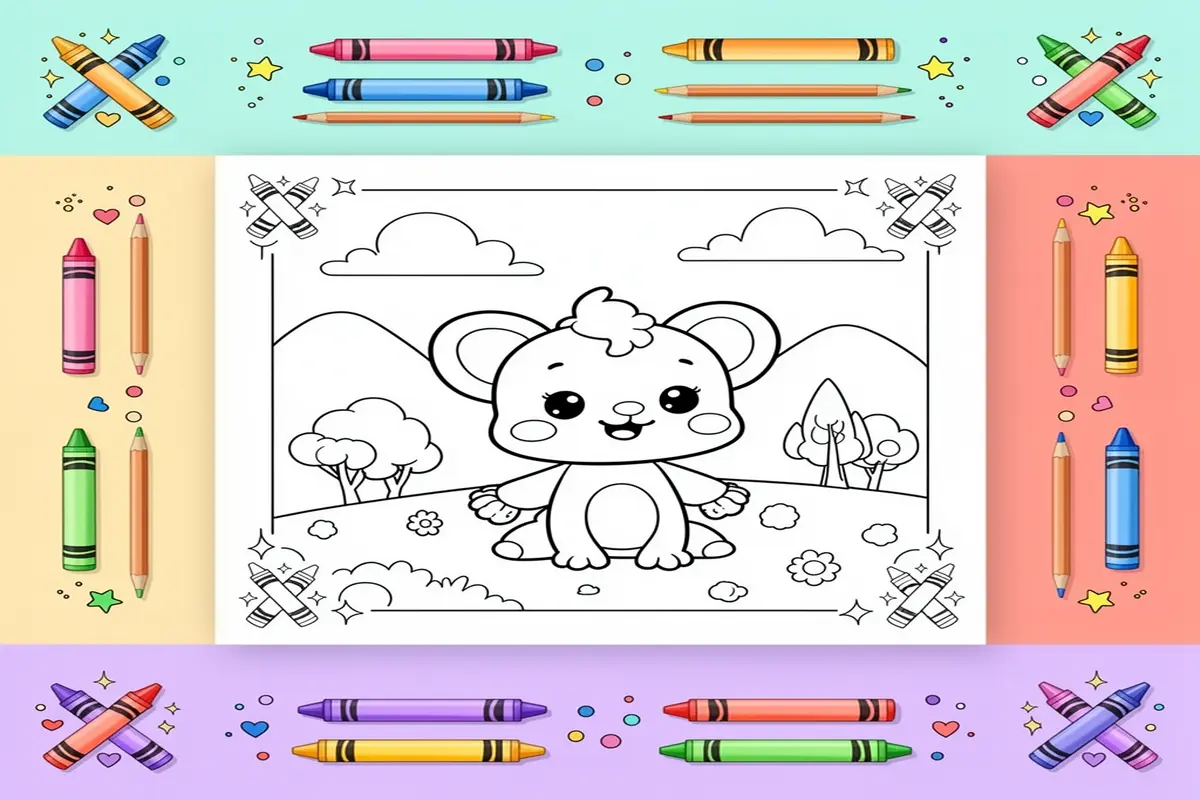
In a world of digital noise and constant stimulation, the simple act of coloring offers a profound sanctuary for young minds. It is a tactile, imaginative journey back to the basics of creativity, where a blank page transforms into a world of possibility. Among the vast universe of coloring themes, landscape coloring pages for kids hold a unique and powerful allure. They invite children to step into sprawling vistas, from serene mountain ranges and sun-drenched beaches to enchanted forests and rolling farmlands, all from the comfort of their own table. This genre does more than just occupy little hands; it fosters an early appreciation for the natural world, encourages storytelling, and builds foundational artistic skills like perspective and color blending. As a gateway to both art and environmental awareness, these pages are an invaluable tool for parents and educators. For a delightful aquatic adventure that complements outdoor scenes, explore our collection of free dolphin coloring pages, where playful creatures await a splash of color.
The Psychology & Enduring Appeal: More Than Just Pretty Pictures
Why do landscape coloring pages for kids resonate so deeply? The answer lies at the intersection of developmental psychology, art therapy, and pure, unbridled imagination. These scenes are not passive; they are worlds to be populated, stories to be told, and emotions to be expressed through hue and shade.
The Mindful Miniature: Cultivating Focus and Serenity
At their core, landscape coloring pages for kids are an exercise in mindfulness for the young artist. The broad, open spaces and repetitive natural patterns—like blades of grass, leaves on a tree, or ripples on a lake—require a gentle, sustained focus. This rhythmic activity helps calm the nervous system, reducing anxiety and providing a non-digital outlet for stress. The child becomes fully immersed in the moment, deciding whether the sky will be a cheerful noon blue or a dramatic twilight purple, effectively practicing emotional regulation through creative choice.
A Portal to Perspective: Building Artistic and Cognitive Skills
Unlike coloring a single animal or object, a landscape presents a layered challenge. It introduces basic concepts of foreground, middle ground, and background. A child intuitively learns that elements closer to them are larger and more detailed, while distant mountains are smaller and lighter. This nurtures spatial awareness and observational skills. Furthermore, mixing greens for a meadow or blending yellows, oranges, and reds for a sunset teaches color theory in the most hands-on way possible, building confidence and artistic intuition.
For Every Young Explorer: From Toddler to Tweens
The beauty of landscape coloring pages for kids is their incredible scalability. For the youngest artists, simple scenes with bold outlines—a single tree on a hill, a basic sun and cloud—offer success and joy. As skills develop, more complex scenes with winding rivers, detailed cottages, or diverse wildlife provide an engaging challenge for older children. This inclusivity ensures that every child, regardless of skill level, can experience the satisfaction of creating their own miniature world, making it a perennial favorite in homes and classrooms alike.
Part 2: Essential Materials & Professional Setup for landscape coloring pages for kids
To transform your child’s coloring experience from simple to spectacular, having the right tools is paramount. When working on landscape coloring pages for kids, the choice of materials directly impacts the final artwork’s vibrancy, detail, and overall enjoyment. Proper preparation with quality supplies empowers young artists to explore textures like grassy fields, fluffy clouds, and reflective water with confidence and creativity. This guide details the professional-grade materials and ergonomic setup that will help your child’s natural scenery masterpieces truly come to life.
The Foundation: Premium Paper Selection for landscape coloring pages for kids
The paper is the literal canvas for your child’s creativity. For landscape coloring pages for kids, which often feature large areas of sky, land, and water, paper weight and texture are critical. Standard printer paper (20-24 lb) is prone to bleeding and warping with wet media. Opt for a heavyweight paper, such as cardstock (65-80 lb) or dedicated marker paper (around 70 GSM). Smooth surfaces are ideal for fine details with colored pencils, while a slight tooth (texture) can help with blending and layering. For a truly special project, consider printing your chosen scene, perhaps a serene forest coloring page for kids, onto high-quality mixed-media paper, which can handle everything from pencils to light washes.
Artistic Mediums: A Detailed Comparison for Young Artists
The choice between markers, pencils, and crayons defines the artwork’s style and depth.
Colored Pencils: The most versatile tool for landscapes. Wax-based pencils (like Crayola) offer vibrant color and are excellent for beginners. For advanced blending of sunsets and skies, consider oil-based pencils (like Faber-Castell Polychromos) which layer smoothly without wax bloom. Look for pencils with high pigment concentration for rich, opaque color that doesn’t fade.
Markers: Provide stunning, uniform blocks of color perfect for large skies or oceans. Alcohol-based markers (like Copic or Ohuhu) blend seamlessly and dry quickly, but require bleed-proof paper. Water-based markers (like Crayola Super Tips) are more child-friendly and budget-conscious, but can cause paper to pill with overworking. Use markers for base layers and add pencil details on top.
Crayons & Gel Sticks: Excellent for younger children, offering bold, expressive strokes. They are ideal for creating textured effects like rough tree bark or distant mountains.
Finishing Touches: Enhancing Details with Specialty Tools
Once the base colors are down, specialty tools can add magical realism to any scene.
Gel Pens & Metallic Markers: These are indispensable for adding sparkling highlights to waterfalls, sunlight glinting on lakes, or stars in a night sky. White gel pens can create perfect clouds over a colored background.
Blending Tools: A colorless blender marker (for alcohol inks) or a blending stump/tortillon (for pencils) helps smooth gradients in sunsets and shadows, teaching children advanced color theory through practice.
Fine Liners: A black or dark brown fine-liner pen (0.3 mm or 0.5 mm) can be used to re-define outlines that may have become obscured during coloring, adding crispness back to intricate elements like fence posts or mountain ridges.
Creating the Ideal Workspace: Ergonomics & Lighting
A proper workspace prevents fatigue and allows for focused creativity. Ensure the coloring surface is stable and at a comfortable height to avoid hunching. Natural, north-facing light is ideal, but a high-CRI (Color Rendering Index) LED desk lamp can provide excellent, shadow-free illumination that shows true colors, which is essential for detailed landscape coloring pages for kids. Keep supplies organized in cups or trays—having a dedicated place for pencils, markers, and tools fosters independence and keeps the artistic process flowing smoothly. A simple desk protector or large placemat can define the space and protect your table, giving your young artist the freedom to create without restraint.
Mastering Landscape Coloring Pages for Kids: Advanced Techniques for Stunning Results
Ready to transform your child’s landscape coloring pages for kids from simple sketches into breathtaking works of art? This guide moves beyond basic filling-in to introduce professional techniques that build skill, patience, and incredible visual impact. By mastering a few key methods, you can help young artists create depth, mood, and realism in every scene.
Harmonious Palettes: Color Theory for Landscape Coloring Pages for Kids
Understanding basic color relationships is the first step to creating cohesive and beautiful scenes. For landscape coloring pages for kids, teach the difference between complementary and analogous schemes. Complementary colors (like blue and orange for a sunset sky over mountains) create vibrant contrast and make elements pop. Analogous colors (like greens, yellow-greens, and blues for a peaceful forest stream) create harmony and a calming mood. Start by choosing a “color mood” for the scene—is it a bright, cheerful meadow or a dramatic, stormy seascape? Then, select a simple scheme to match. For more practice with natural scenes, our forest coloring pages for kids offer the perfect canvas to experiment with these green-dominated palettes.
From Flat to 3D: Mastering Light and Shadow
The secret to making mountains look massive and trees look solid is shading. First, decide where your light source is (e.g., the sun in the top corner). Explain that everything facing the light is lighter, and everything opposite is darker. Use a “layering” technique: color an area smoothly with a light base layer. Then, gently apply medium pressure for mid-tones in shadowed areas. Finally, use firm pressure or a darker shade for the deepest shadows (like under a tree’s canopy or the side of a cliff). For water, leave white streaks for sunlight reflections. This step-by-step approach turns flat shapes into dimensional forms.
Adding Realism: Texture Techniques for Nature
Each element in a landscape has a unique texture. Show kids how to use different strokes to mimic these surfaces.
Foliage & Grass: Use quick, upward flicks or tiny circular scribbles instead of solid green blocks.
Mountains & Rocks: Use small, directional strokes following the rock’s shape to show its rough, hard surface.
Sky & Water: Use long, smooth, horizontal strokes for a calm sky or water. For clouds, color around them lightly, leaving the cloud white, or use gentle circular motions for fluffy texture.
Wood (Trees): Use vertical, slightly wavy lines following the trunk’s curve. For a fun textural challenge that complements a landscape scene, try adding detailed creatures from our farm animal coloring pages to a meadow.
The Art of Correction: Graceful Fixes for Coloring Mistakes
Mistakes are part of the creative process! Teach these graceful fixes to build confidence. If a color goes outside the lines, don’t panic. Often, it can be incorporated—a stray green stroke can become a blade of grass. For smaller errors, a white gel pen or a carefully used eraser can lighten areas for a re-do. If a color turns out too dark, try blending a lighter color over the top to soften it. The most important lesson is that “perfect” isn’t the goal. A landscape is wonderfully varied, and sometimes unexpected color choices or lines lead to the most creative and unique results. Encourage artists to work with their “mistakes” and see where their imagination takes them.
Showcasing Your Child’s Landscape Art: Creative Display & DIY Ideas
The journey with landscape coloring pages for kids doesn’t end with the last crayon stroke. Transforming those finished masterpieces into cherished decor or heartfelt gifts is a rewarding final step that celebrates your child’s creativity.
Preserving Your Masterpiece: Archival Tips
Before displaying, consider protecting the artwork. For pieces you want to last, use acid-free spray fixative to prevent wax bloom from crayons. Slipping colored pages into inexpensive clear plastic sleeves protects them from fingerprints and sunlight. For a more permanent solution, consider laminating favorites. This not only preserves them but also allows kids to handle their art without damage, turning a simple page into a durable keepsake.
Beyond the Fridge: Creative DIY Projects
Move beyond the refrigerator magnet! Turn completed landscape coloring pages for kids into custom greeting cards, bookmarks, or gift wrap. Simply glue the artwork onto folded cardstock or parchment. For a beautiful wall display, create a rotating “gallery” by clipping pages to a string of fairy lights with mini clothespins. You can also decoupage them onto a wooden tray or storage box, creating a functional and personalized item. These projects make wonderful, heartfelt gifts for family members.
Your Landscape Coloring Pages for Kids Questions Answered
What is landscape art for kids?
Landscape art for kids is a depiction of outdoor scenery, simplified for young artists. It typically includes elements like mountains, rivers, trees, sunsets, and houses. Using landscape coloring pages for kids introduces them to concepts of horizon lines, foreground, and background in an accessible, fun way. It’s a wonderful first step in appreciating the natural world through art.
How do you color a landscape for beginners?
Start with the sky and background first, using light colors. Then, move to the middle ground (like hills or trees), and finally, color the foreground details. Encourage kids to use light pressure for distant objects and darker, brighter colors for things up close. This simple technique, practiced on landscape coloring pages for kids, teaches basic depth perception.
What are the benefits of coloring for child development?
Coloring boosts fine motor skills, hand-eye coordination, and grip strength, essential for writing. It fosters creativity, color recognition, and focus. It also serves as a calming, screen-free activity that helps children express emotions and build confidence in their artistic abilities.
Where can I find free landscape coloring pages?
You can find a fantastic variety of free, printable coloring pages right here! We offer numerous nature-themed options. For a related aquatic adventure, explore our collection of fish coloring pages, which complement landscape scenes beautifully.
What are the best materials for coloring landscapes?
For beginners, high-quality wax crayons or thick colored pencils are excellent. As skills develop, try watercolor pencils or markers for blending skies and water. Always have a good eraser and sharpener on hand. The right tools make working on detailed landscape coloring pages for kids even more enjoyable.
The Final Stroke: Beginning Your Creative Adventure
The path through landscape coloring pages for kids is more than just filling in lines; it’s a journey of discovery, patience, and joyful expression. From learning about the world’s vistas to developing crucial skills and finally showcasing their art, each page offers a valuable experience. These activities create quiet moments of pride and accomplishment, building memories alongside motor skills. So, celebrate every sunset colored and every tree brought to life.
Ready for your next adventure? Explore our forest coloring pages for kids to dive deeper into the wonders of nature!