We offer a wide collection of free, high-quality printable coloring pages for kids and adults. From cute animals to intricate mandalas, our designs bring creativity and relaxation to everyone. Download, print, and start coloring today!

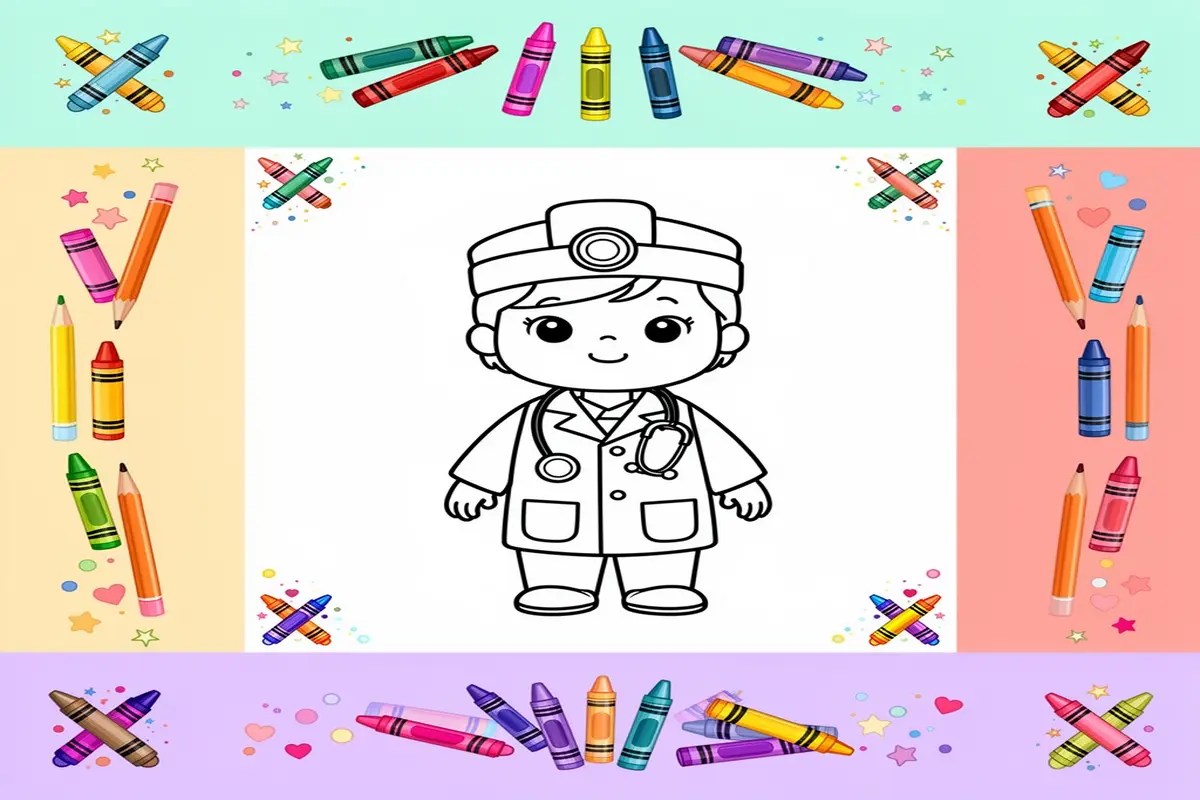
In a world where children are often apprehensive about doctor visits and medical concepts, a simple, creative tool is emerging as a powerful ally: medical coloring pages for kids. Far more than just a pastime, these specialized pages transform intimidating subjects like anatomy, dental hygiene, and hospital tools into approachable, engaging adventures. They serve a dual purpose, providing a calming, focused activity while demystifying the human body and healthcare professions. By engaging with these illustrations, children can process their experiences, ask questions in a safe context, and build foundational knowledge that lasts a lifetime. This unique niche of educational art stands apart from more whimsical themes, like our delightful fish coloring pages, by offering targeted therapeutic and learning benefits. The journey into medical coloring pages for kids is one of empowerment, turning anxiety into understanding through the stroke of a crayon.
Beyond the Crayon: The Therapeutic Power of Medical Illustrations
The Psychology of Engagement: From Fear to Familiarity
The core appeal of medical coloring pages for kids lies in their ability to facilitate exposure therapy in a gentle, child-led manner. Coloring a friendly cartoon stethoscope or a smiling heart organ allows a child to interact with medical imagery on their own terms. This controlled, creative engagement reduces the ‘unknown’ factor associated with hospitals or check-ups, replacing fear with familiarity. The focused, repetitive motion of coloring also induces a meditative state, lowering stress hormones—a benefit for any child facing a procedure or simply grappling with big questions about their body. It’s a proactive tool for building health literacy and emotional resilience.
A Historical Palette: Educational Art Through the Ages
The use of detailed illustrations to teach complex biological concepts is a tradition centuries old, from Leonardo da Vinci’s anatomical sketches to modern textbook diagrams. Medical coloring pages for kids are the natural evolution of this practice, tailored for young, developing minds. They translate intricate systems—the skeletal framework, the network of veins, the structure of a tooth—into clear, color-coded segments. This active learning approach, where the child is the illustrator, enhances memory retention and cognitive understanding far more effectively than passive observation. It’s a hands-on lesson in biology that feels like play.
Designed for Diverse Needs: From the Curious Toddler to the Anxious Teen
The beauty of this resource is its vast scalability. For a preschooler, a simple page of a happy bandage or a doctor’s bag introduces helpful community helpers. For a school-aged child, a detailed diagram of the digestive system can complement science homework. For a teenager or a child managing chronic illness, intricate pages depicting cell structures or medical equipment can provide a sense of control and a positive outlet for stress. Furthermore, these pages are invaluable in waiting rooms, classrooms, and therapy settings, serving as a universal tool for communication, distraction, and education. By meeting children at their individual level, medical coloring pages for kids prove to be a versatile asset in any parent’s or educator’s toolkit.
Professional Supplies for medical coloring pages for kids: Your Complete Toolkit
To ensure a successful and educational coloring session with medical coloring pages for kids, having the right materials is as important as the activity itself. Proper tools enhance fine motor control, allow for greater detail, and make the experience more enjoyable and less frustrating for young learners. This section details the essential supplies and preparation steps to transform a simple coloring activity into an engaging, skill-building lesson on human anatomy or medical professions.
The Foundation: Choosing Paper for medical coloring pages for kids
The paper you select directly impacts the final result and the child’s experience. For standard home or classroom use, a bright white, smooth cardstock in the 120-160 GSM (grams per square meter) range is ideal. This weight is heavy enough to prevent bleed-through from markers and can withstand erasing and layering with colored pencils without tearing. When printing intricate medical coloring pages for kids, such as detailed anatomy sheets showing muscular or skeletal systems, a smoother surface allows for precise coloring within the fine lines. If you plan to use wet mediums like markers or gel pens, consider investing in a marker pad specifically designed to prevent bleeding. For a more tactile, artistic feel, a lightly textured mixed-media paper can add depth when using colored pencils.
Best Coloring Tools: Markers vs. Pencils
The choice between markers and colored pencils often depends on the child’s age and the desired outcome. For younger children, broad-tip, washable markers are excellent for bold, vibrant areas like a surgeon’s scrubs or a red cross symbol. However, for the intricate details found on many anatomy-themed pages, colored pencils are superior. They offer control for shading and labeling different body parts. Look for pencils with soft, pigmented cores that blend easily. A dual-approach often works best: use markers for large, defined areas and colored pencils for detailed work like labeling bones or organs. For a comprehensive collection of detailed animal anatomy pages that require similar precision, explore our anatomy coloring pages for kids.
Finishing Touches: Gel Pens & Highlights
Elevate the finished medical coloring pages for kids with special detailing tools. White gel pens are invaluable for adding highlights to eyes, making teeth sparkle on a dental hygiene page, or creating shine on medical instruments like stethoscopes or syringes. Metallic gel pens in silver or gold can be used to color surgical tools or add decorative borders. Fine-line black markers (0.4mm or 0.6mm tip) are perfect for older children to neatly trace over labels or redefine any lines that became obscured during coloring. These finishing touches encourage pride in the work and allow for creative expression even within an educational framework.
Perfect Workspace: Lighting & Ergonomics
Preparation extends beyond physical supplies to the environment. Ensure the workspace has ample, natural light or a bright, white LED desk lamp to reduce eye strain and allow children to see the fine details on their medical coloring pages. The seating should support good posture; feet should be flat on the floor or a stool, with the table at elbow height. A non-slip desk mat can stabilize the paper. Organize materials within easy reach—a simple cup for pencils and markers prevents constant searching and maintains focus. Having a dedicated, well-prepared space signals that the activity is important and helps children engage more deeply with the educational content they are coloring.
Mastering Medical Coloring Pages for Kids: Advanced Creative Techniques
Ready to transform those simple line drawings into vibrant, educational masterpieces? Moving beyond basic filling, these advanced techniques will help children (and assisting adults) add depth, realism, and a professional touch to medical coloring pages for kids. This isn’t just about staying inside the lines—it’s about bringing concepts like anatomy, dental health, and medical equipment to life through color and texture.
Harmonious Palettes: Color Theory for Medical Scenes
Understanding basic color relationships can make a medical-themed page more visually appealing and accurate. For a calming scene, like a dentist coloring page for kids, use analogous colors—those next to each other on the color wheel, like blues, blue-greens, and soft purples. This creates a serene, cohesive feel perfect for a clinical setting. For emphasis, use complementary colors (opposites on the wheel). Imagine a red heart on a light green background in an anatomy diagram—the contrast makes the key organ pop. When coloring diverse scenes, like the animals found in our farm animal coloring pages, this principle helps each element stand out clearly, a skill easily transferred to differentiating organs or tools on a medical page.
From Flat to 3D: Mastering Shading for Depth
Shading is what turns a flat circle into a spherical red blood cell or a simple rectangle into a three-dimensional first-aid kit. Teach kids to imagine a light source (e.g., the sun in the top-left corner). The side closest to the light is lightest, the side farthest is darkest, with a mid-tone in between. Start with a base mid-tone. Then, apply gentle pressure to add the darkest shadow on the opposite side, and use very light pressure (or leave white) for the highlight. Practice this gradient technique on rounded objects like hearts, bones, or pills before tackling complex scenes like a detailed anatomy coloring page for kids, where shading muscles and organs adds incredible realism.
Adding Realism: Texture Techniques for Medical Themes
Texture makes a brain look wrinkly, a bandage look soft, or a stethoscope look metallic. For fur on a therapy animal in a scene, use short, quick, overlapping strokes with a sharp colored pencil. For shiny metal (like surgical tools), use high contrast: leave a stark white highlight and use very dark gray or blue right next to it, with smooth blending in between. For soft textures like cotton balls or a nurse’s uniform, use even, light layers with minimal contrast and a slightly blurred edge. Experimenting with textures on other subjects, like the rough skin of a rhino coloring page or the smooth shell of a turtle, builds the motor skills needed for medical details.
The Art of Correction: Gracefully Fixing Coloring Errors
Mistakes are part of the learning process! If a color goes outside the lines, don’t panic. Use a lighter color or a white colored pencil to gently push the errant color back toward the line. For small smudges, a pointed eraser can clean up edges. If a chosen color isn’t working, try layering a new color on top—dark blues can often tone down an overly bright red, for instance. The key is to stay calm and see errors as opportunities to problem-solve, a valuable lesson that mirrors the adaptability needed in medical fields. Remember, the goal of medical coloring pages for kids is engagement and education; perfection is less important than the creative journey.
Showcasing Your Medical Coloring Pages for Kids: Creative Display Ideas
Once your young learner has finished their masterpiece, it’s time to celebrate their work! Displaying their completed medical coloring pages for kids validates their effort and reinforces their newfound knowledge. Here are inspiring ways to turn their art into a source of pride and conversation.
Preserving Your Masterpiece: Archival Tips
To ensure these educational artworks last, consider simple preservation methods. Use acid-free sheet protectors in a dedicated binder to create a growing “Anatomy Atlas.” For favorite pieces, a basic laminator seals in color and allows for repeated handling—perfect for pages they love to study. Framing a special piece, like a beautifully colored heart or brain, adds a touch of scientific decor to their bedroom or playroom, making learning a visible part of their daily environment.
Beyond Display: Creative DIY Projects
Transform colored pages into meaningful projects. Create unique greeting cards for a doctor or nurse, turning gratitude into a personal art project. Laminate and cut out individual organs to make bookmarks or mobiles. You can even bind a collection of pages into a custom anatomy book. For a fun group activity, use colored pages as placemats for a healthy eating discussion, blending art with wellness themes. These projects extend the life and educational value of their coloring time.
Your Medical Coloring Adventure Questions Answered
How to teach human anatomy to kids?
Start with simple, relatable concepts using hands-on tools. Medical coloring pages for kids are perfect for this, allowing children to visualize and color organs like the heart or lungs as you discuss their functions. Pair coloring with age-appropriate books, songs about the body, and models. Keep sessions short, positive, and follow your child’s curiosity about their own body.
What are the benefits of anatomy coloring books?
Anatomy coloring books boost fine motor skills and focus while making complex science accessible. They transform passive learning into an active, engaging experience. As children color and label parts, they build a foundational understanding of biology and develop a healthier, more familiar relationship with their own bodies, which can reduce anxiety about medical topics.
Where to find free printable human body coloring pages?
Many educational websites and libraries offer free, high-quality printables. For a wide variety of options, you can explore our own collection of anatomy coloring pages for kids. Always ensure sources are reputable to guarantee accurate and child-friendly anatomical illustrations for your learning activities.
Does coloring help children with hospital anxiety?
Absolutely. Therapeutic coloring, especially with familiar medical coloring pages for kids, provides a calming, focused activity that can distract from stressful environments. It gives children a sense of control and mastery. Coloring pages featuring friendly doctors or familiar body parts can also demystify medical equipment and procedures, making the hospital setting less intimidating.
What are the major internal organs for kids?
The major organs to introduce first are the brain, heart, lungs, stomach, liver, intestines, and kidneys. Use simple analogies: the brain is the “boss,” the heart is a “pump,” and the lungs are “balloons.” Coloring pages that depict these organs in a clear, friendly context help children remember their names and basic roles within the body system.
Final Thoughts: Your Medical Coloring Pages for Kids Journey Begins
Embarking on this journey with medical coloring pages for kids is about so much more than staying inside the lines. It’s a gentle gateway to understanding the incredible human body, fostering a lifelong curiosity about science and health. Each colored page represents a moment of focused calm, a new fact learned, and a step toward demystifying medicine. By displaying and celebrating this art, you reinforce the joy of discovery and empower your child with knowledge.
Remember, the goal is to inspire, not overwhelm. Let their interests guide the way, whether it’s the circulatory system or the skeletal structure. Celebrate every question and every completed page. You’re not just coloring—you’re building confidence and foundational knowledge one vibrant page at a time.
Ready for your next adventure? Explore our dolphin coloring pages for kids to dive into the wonders of marine biology!