We offer a wide collection of free, high-quality printable coloring pages for kids and adults. From cute animals to intricate mandalas, our designs bring creativity and relaxation to everyone. Download, print, and start coloring today!

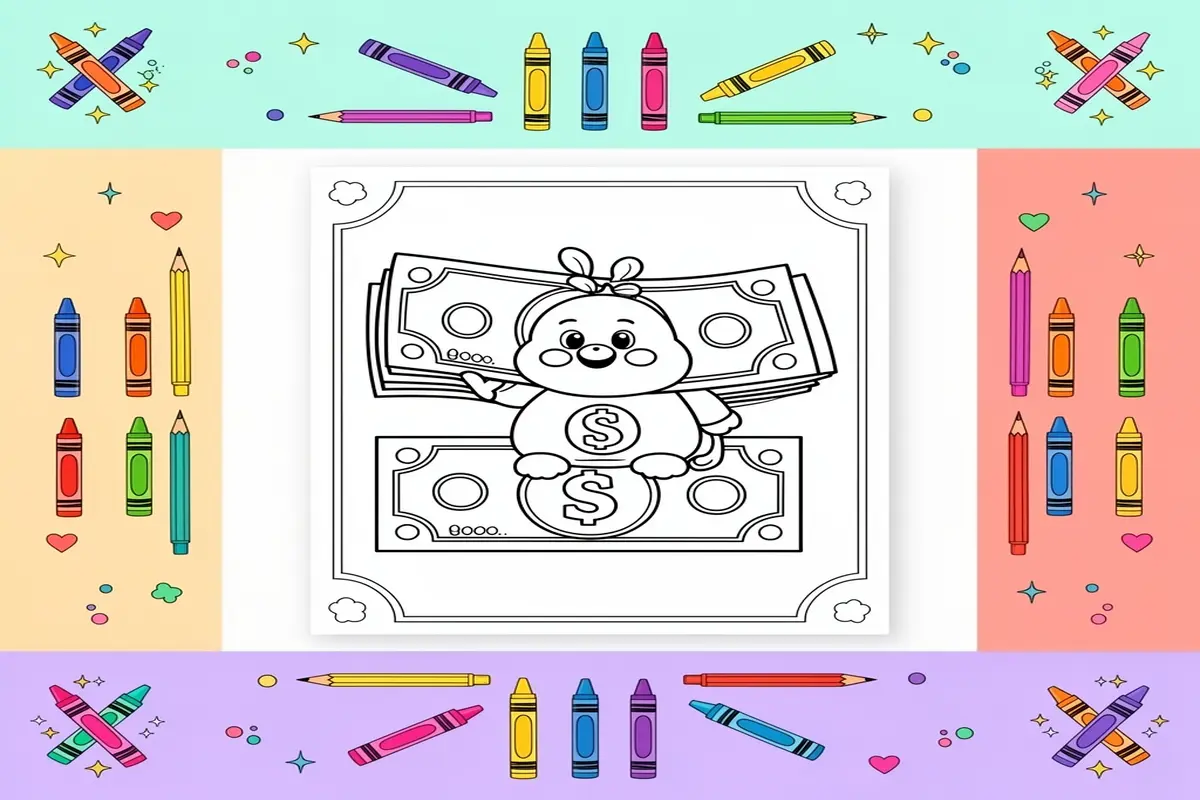
In a world where digital screens dominate, the simple act of coloring offers a tangible, calming escape. It’s a gateway to creativity, focus, and foundational learning. When this artistic journey intersects with the concept of currency, it transforms into a powerful educational tool. Money coloring pages for kids do more than just occupy little hands; they open a dialogue about value, saving, and the fascinating world of economics in a language children understand—play. These pages, featuring coins, bills, piggy banks, and imaginative financial scenes, provide a unique canvas. They blend the joy of artistic expression with early financial literacy, making abstract concepts wonderfully concrete. It’s a creative foundation, much like exploring the majestic creatures of the sea with our free whale coloring pages, that prepares young minds for real-world understanding. By engaging with money coloring pages for kids, children embark on a dual-path adventure of color and cognition.
The Psychology & Universal Appeal: More Than Just Crayons
At first glance, coloring pages about money might seem purely utilitarian. However, their appeal is deeply rooted in psychology and developmental benefits, offering a rich, multi-sensory learning experience that captivates young minds.
The Focus Factor: Mindfulness in Every Shade
The structured lines of a dollar bill or the circular shape of a coin require a specific kind of attention. Coloring within these lines isn’t about restriction; it’s an exercise in concentration and fine motor control. This focused activity induces a state of flow, quieting the mind and reducing anxiety. As a child decides whether a coin should be silver, copper, or a fantastical rainbow hue, they are practicing decision-making and present-moment awareness. This mindful engagement with money coloring pages for kids builds neural pathways for patience and meticulous work, skills that are directly transferable to mathematical thinking and financial responsibility.
A Historical Piggy Bank: Tracing the Roots of Currency
Money is a story—a narrative of trade, culture, and human ingenuity. Coloring pages can serve as a springboard into this rich history. From ancient barley shekels to Spanish doubloons and modern banknotes, each design holds a tale. When children color these symbols, they interact with a cultural canvas that spans continents and centuries. Parents and educators can use these money coloring pages for kids to discuss how societies evolved from bartering to coinage, making history tactile and visually engaging. It’s an artistic archaeology dig, uncovering the layers of how we assign value.
Curated for Every Young Economist: From Toddler to Tween
The beauty of this theme lies in its scalability. For a preschooler, a simple, large illustration of a single coin with a friendly face is a lesson in shape recognition and color naming. For an early elementary student, a page featuring a piggy bank surrounded by coins introduces basic addition and the concept of saving. Older children can tackle intricate scenes of a marketplace or detailed world currency, which encourage research, cultural curiosity, and more complex discussions about earning and spending. This tiered approach ensures that money coloring pages for kids are not a one-size-fits-all resource, but a adaptable tool that grows with the child’s cognitive and artistic abilities, making financial literacy an accessible and ongoing creative pursuit.
Professional Materials & Preparation for money coloring pages for kids
Before your young artist begins bringing their money coloring pages for kids to life, proper preparation is key. Having the right materials on hand transforms a simple activity into an engaging, educational, and high-quality art session. This guide outlines the essential toolkit for parents and educators to ensure every coloring project focused on currency concepts is both successful and enjoyable. The right supplies not only enhance the final result but also make the process of learning about money through money coloring pages for kids more tactile and memorable.
The Foundation: Selecting Premium Paper for money coloring pages for kids
The paper you choose is the canvas for financial creativity. Standard printer paper (20-24 lb) is sufficient for quick, casual coloring with crayons. However, for more detailed work with markers or a mixed-media approach, upgrading to heavyweight paper (32 lb or higher) or cardstock (65-110 lb) is recommended. This prevents bleed-through, reduces wrinkling, and allows for layering and blending of colors. For a special project, consider using textured artist paper, which can add depth to the illustrations and make the finished money coloring pages for kids feel more substantial. Always perform a test print to ensure your printer handles the chosen paper weight smoothly.
Best Coloring Tools: Markers vs. Colored Pencils
The choice between markers and colored pencils defines the artwork’s style and is crucial for detailing coins, bills, and symbols.
Colored Pencils: Ideal for precision, shading, and teaching fine motor control. Wax-based pencils (e.g., Crayola) offer vibrant color and smooth application, while oil-based pencils (e.g., Faber-Castell) provide superior blendability for creating metallic effects on coins. They are less messy and allow for easy correction, making them perfect for detailed areas like intricate patterns on banknotes or the features of historical figures on currency.
Markers: Brilliant for bold, solid areas of color. Alcohol-based markers (like those from Ohuhu or Copic) offer seamless blending and professional, bleed-resistant results but are a more significant investment. Water-based markers (e.g., Stabilo) are excellent for children, providing vivid color with less risk of permanent stains. For filling in large backgrounds on a page featuring a treasure chest or piggy bank, markers are unrivaled in speed and uniformity. Explore our educational coloring pages for more activities that pair well with these tools.
Finishing Touches: Gel Pens & Highlighters for Metallic Details
To truly make currency designs pop, incorporate specialized tools for accents and effects. Gel pens, especially in metallic silver, gold, and copper, are perfect for coloring coins, adding shimmer to treasure, or highlighting decorative borders on bills. White gel pens are excellent for creating highlights and correcting small mistakes on darker colors. Fine-line permanent markers (like Sharpies) in black or brown can be used to redefine outlines that may have become faint during coloring, ensuring crisp final images. A set of multi-colored fine liners is also invaluable for adding intricate patterns or textures.
Creating the Perfect Workspace: Ergonomics & Lighting
A well-prepared environment is as important as the materials. Ensure ample, natural light or a bright, neutral-white LED desk lamp to reduce eye strain and allow for accurate color perception. The seating surface should support good posture; for younger children, a table and chair at the correct height are essential. Protect the work surface with a washable mat or newspaper. Organize supplies within easy reach using cups for pencils and markers and small trays for other tools. Having a dedicated, clutter-free space signals that the activity is valued and helps children focus on the task, whether it’s differentiating coin values or designing their own banknote on money coloring pages for kids.
Mastering money coloring pages for kids: Advanced Techniques for Lifelike Results
Moving beyond simple flat colors can transform your child’s money coloring pages for kids from basic drawings into impressive, realistic artwork. This section delves into professional techniques that teach valuable art skills while making the learning process about currency incredibly engaging. By mastering these methods, children can create stunning renditions of coins, bills, and financial symbols that pop off the page. Let’s explore how to add depth, harmony, and realism to every project.
Harmonious Palettes: Color Theory for Currency
Understanding basic color theory is the first step to making money coloring pages for kids look cohesive and intentional. For coins, teach the use of analogous colors—colors next to each other on the wheel, like yellows, oranges, and browns—to create a realistic, metallic gradient from highlight to shadow. For paper bills, introduce complementary colors (opposites on the wheel) for elements like seals or serial numbers; a touch of blue-green can make red details stand out vibrantly. Encourage thinking beyond “green for dollars” by observing real currency’s subtle hues, a skill that also enhances other projects like our detailed animal coloring pages for kids.
From Flat to 3D: Mastering Shading and Depth
Shading is what gives a flat coin the illusion of being round. Start by choosing a light source direction (e.g., top-left). The area farthest from this light will be darkest. Use a three-step process: 1) Base Layer: Apply a medium tone evenly. 2) Shadow: Add a darker tone along the opposite edge (e.g., bottom-right). 3) Highlight: Leave a small strip or dot untouched or use a very light color at the point closest to the light. For bills, use light, parallel strokes to shade the edges, suggesting the paper’s slight thickness. This technique turns a simple circle into a dimensional coin.
Adding Realism: Textures for Metal, Paper, and More
Texture brings artwork to life. For money coloring pages for kids, focus on three key textures:
Metallic Coin: Use small, tight circular strokes to create a slightly rough, reflective surface. Layer a lighter color over a darker base in these circles to mimic shine.
Paper Bill: Use long, smooth, and continuous strokes in one direction to achieve a flat, linen-like finish. For older, wrinkled bills, add very light, wispy lines in a crosshatch pattern.
* Sky or Backgrounds: Use soft, blended gradients for backgrounds behind piggy banks or financial symbols. This technique is also perfect for creating serene scenes in our nature coloring pages for kids.
The Art of Correction: Gracefully Fixing Coloring Errors
Mistakes are part of the learning process. Teach these graceful fixes:
1. Over-coloring: If a color goes outside the lines, don’t panic. Use a white gel pen or a very sharp colored pencil to carefully redefine the edge.
2. Muddy Colors: This happens when colors are over-blended. Let the page rest, then go back in with a sharper pencil to redefine key areas with clean, bold lines.
3. Wrong Color Choice: Incorporate it! If a coin turns an unexpected blue, frame it as a “rare magical coin” and build a fantasy story around it. The goal is creative confidence, not perfection. Learning to adapt improves problem-solving skills far beyond the coloring page.
Showcasing Your money coloring pages for kids: Creative Display Ideas
Once your young financial artists have finished their masterpieces, it’s time to celebrate their work! Moving beyond the coloring book, displaying their creations builds confidence and reinforces the lessons learned. Here are some inspiring ways to honor their hard work.
Preserving Your Masterpiece: Archival Tips
To ensure those valuable money coloring pages for kids last, consider simple preservation. For a glossy, protected finish, use clear contact paper or have pages laminated at a local office supply store. This makes them durable for repeated handling. For a more formal display, place the colored pages in inexpensive frames from a craft store. You can even create a rotating “Financial Art Gallery” on a dedicated wall or refrigerator to showcase new work regularly.
Beyond Display: Creative DIY Projects
Transform completed coloring pages into functional art and heartfelt gifts. Carefully cut out colored coins and bills to create unique, personalized greeting cards for birthdays or thank-yous. They can also be laminated and turned into bookmarks or used as decorative labels for savings jars. For a fun school project, bind several themed pages together to make a custom “My Money Book,” combining their art with other educational coloring pages for a complete learning portfolio.
Your money coloring pages for kids Questions Answered
How to teach kids about money with coloring pages?
Use coloring pages as a conversation starter. As children color different coins and bills, discuss each one’s name and value. Create simple games, like “grocery store,” where colored pages become play money to “buy” toys. This hands-on activity makes abstract concepts tangible, seamlessly blending art with practical math and financial literacy lessons.
Where can I find free money coloring sheets?
Many educational websites and platforms like Safari Coloring offer free, printable resources. Search for “free printable money worksheets” or “coin identification pages.” Libraries and teacher resource sites are also excellent places to find high-quality money coloring pages for kids that are both fun and instructional, often complete with activity prompts.
What are the benefits of teaching kids about money?
Early financial education builds foundational math skills, fosters responsibility, and encourages smart decision-making. Using tools like money coloring pages for kids introduces these concepts in a low-pressure, engaging way. It helps children understand value, saving, and delayed gratification, setting them on a path toward financial confidence and literacy from a young age.
How to make play money for school projects?
Printed coloring pages are perfect for this! Have children color and cut out multiple copies of bill and coin pages. For durability, glue them onto cardboard or laminate them. You can even create a custom currency for a classroom economy. This DIY approach is cost-effective and gives students ownership over their learning materials.
What is the best way to teach counting money?
Start with identification, then move to sorting and grouping. Use colored pages to create piles of like coins. Practice counting by ones (pennies), fives (nickels), and tens (dimes). Set up a pretend store where children use their colored play money to “purchase” items with price tags, adding coins to reach the correct total in a fun, practical scenario.
Final Thoughts: Your money coloring pages for kids Journey Begins
The simple act of coloring transforms into a powerful gateway for learning when you use money-themed pages. It’s more than just an art project; it’s a foundational step toward financial literacy, blending creativity with essential life skills. By displaying their work and incorporating it into playful, everyday lessons, you reinforce the values of saving, smart spending, and recognizing value. This journey nurtures both their artistic expression and their growing understanding of the world.
We hope these ideas inspire countless colorful conversations and learning moments. Remember, every colored coin is a step toward a brighter, more confident future. Ready for your next adventure? Explore our farm animal coloring pages to continue combining creativity with education!