We offer a wide collection of free, high-quality printable coloring pages for kids and adults. From cute animals to intricate mandalas, our designs bring creativity and relaxation to everyone. Download, print, and start coloring today!

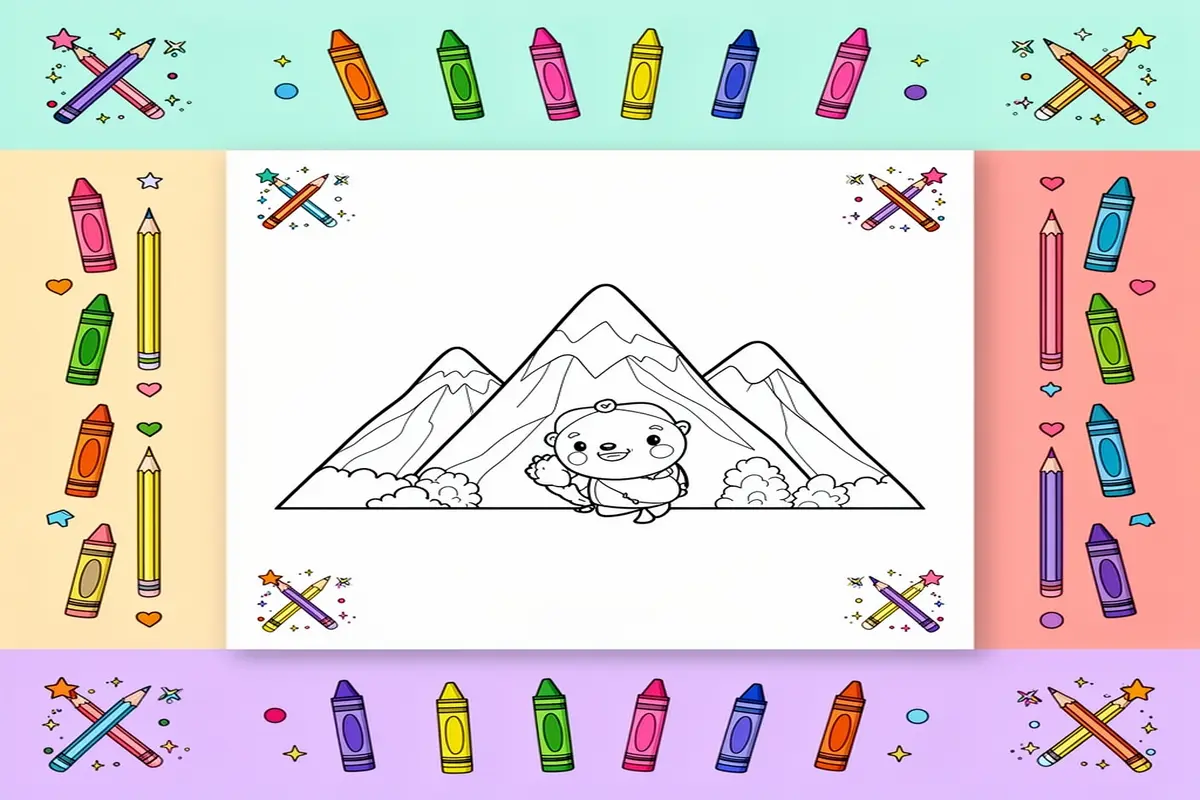
In a world of digital distractions, the simple act of coloring offers a profound return to focus, imagination, and calm. It’s a tactile journey where a blank page transforms into a personal masterpiece, one deliberate stroke at a time. This is especially true when the subject is the majestic and enduring beauty of nature’s grandest landscapes. Introducing children to mountain coloring pages for kids is more than a pastime; it’s an invitation to explore vast horizons, understand geological wonders, and craft their own vibrant alpine worlds. From snow-capped peaks to lush, rolling foothills, these pages become a canvas for storytelling and artistic expression, building fine motor skills and environmental appreciation simultaneously. As they select hues for a sunset over a ridge or the cool blues of a glacial lake, kids engage in a mindful activity that builds concentration and reduces anxiety. While they might later dive into the depths with our captivating free dolphin coloring pages, the towering and tranquil scenes found in mountain coloring pages for kids provide a uniquely grounding and awe-inspiring creative experience.
Part 1: The Peak of Potential: More Than Just a Pretty Picture
Why do these serene landscapes hold such power on the page? The appeal of mountain coloring pages for kids is rooted in a blend of psychology, education, and pure artistic freedom. They are not merely outlines to be filled but gateways to learning and emotional regulation.
The Psychology of the Peak: Cultivating Calm and Focus
The very shape and symbolism of a mountain—stable, immense, and peaceful—can have a calming effect on the mind. The act of coloring within these grand, natural lines requires a gentle focus that pulls a child away from overstimulation. This mindful engagement lowers stress, similar to meditation, as the young artist makes quiet decisions about color palettes for rock faces, forests, and skies. It’s a creative exercise in patience and presence, where the journey of coloring is as rewarding as the final, colorful summit.
A Landscape of Learning: Geology, Ecology, and Art Combined
Every mountain scene is a silent lesson. As children color, natural questions arise: Why are some peaks white? What colors would a forest have? What animals live here? This opens doors to discussions about ecosystems, weather, and geography. A mountain coloring pages for kids can illustrate the concept of elevation through changing vegetation or the play of light and shadow across different slopes, blending art seamlessly with introductory earth science and fostering a deeper connection to the natural world.
Designed for All Explorers: From Foothills to Summits
The beauty of this theme lies in its incredible accessibility. Simple, bold outlines of a single mountain are perfect for tiny hands just learning to grip a crayon, building confidence with every stroke. For older kids and even adults, more intricate scenes featuring detailed ranges, winding trails, and cozy cabins offer a satisfying challenge. This scalability ensures that mountain coloring pages for kids can grow with the artist, providing endless opportunities for developing skill, experimenting with advanced techniques like shading and blending, and simply enjoying a timeless creative retreat.
Professional Materials & Preparation for mountain coloring pages for kids
To ensure a successful and enjoyable coloring session with mountain coloring pages for kids, proper preparation is key. Having the right materials on hand transforms a simple activity into an enriching artistic experience that can boost fine motor skills and color recognition. This guide details the essential supplies and setup for optimal results.
The Foundation: Choosing Paper for mountain coloring pages for kids
The paper you select directly impacts the final artwork. For standard printing, a bright white, smooth cardstock (between 120-200 GSM) is highly recommended. Its heavier weight prevents bleed-through from markers and can handle light layering with colored pencils without buckling. If your mountain coloring pages for kids feature intricate details like pine trees or rocky textures, a slightly textured paper can help pencils grip better for finer shading. For a more artistic project, consider watercolor paper; its absorbent surface allows kids to experiment with water-based markers or diluted paints to create stunning sunset skies over the peaks, much like the techniques one might use for beautiful landscape coloring pages for kids.
Best Coloring Tools: Markers vs. Pencils
The choice between markers and colored pencils often depends on the child’s age and the desired effect. Washable fine-tip markers are excellent for younger children, offering vibrant, bold coverage perfect for large areas like a sky or a meadow. Look for brands with quick-drying ink to minimize smudging. For older kids focusing on the detailed scenery of mountain coloring pages for kids, colored pencils are superior. They allow for blending, shading, and creating texture on rocky surfaces. A quality set with soft, pigmented cores will provide smoother application and richer colors. For versatility, consider a dual-approach: use markers for large backgrounds and pencils for intricate foreground details.
Finishing Touches: Gel Pens & Highlighting Tools
Elevate the completed artwork with special effects tools. White gel pens or opaque paint pens are fantastic for adding highlights to snow-capped peaks, creating clouds, or drawing tiny stars in a night mountain scene. Metallic gel pens in silver or gold can be used to trace rivers or sunbeams for a magical touch. A set of blending stumps or a colorless blender pencil is invaluable for older children to seamlessly blend pencil colors, creating smooth gradients in the sky or realistic shadows in the mountain valleys. These finishing tools encourage attention to detail and creative problem-solving.
Perfect Workspace: Lighting & Ergonomics
A well-prepared workspace ensures comfort and allows kids to focus on their mountain coloring pages for kids. Prioritize natural light whenever possible, positioning the table near a window to reduce eye strain and provide true color perception. For evening activities, a bright, cool-white LED desk lamp is ideal. Ergonomically, ensure the child’s feet rest flat on the floor or a stool, with the table at elbow height. Protect the work surface with a large placemat or craft sheet, and keep a clean rag or paper towels nearby for quick clean-ups. Organizing supplies in accessible cups or trays fosters independence and keeps the creative process flowing smoothly.
Elevate Your Peaks: Advanced Techniques for Mountain Coloring Pages for Kids
Ready to transform those simple outlines into breathtaking, gallery-worthy scenes? This guide moves beyond basic coloring to introduce professional techniques that will bring depth, realism, and stunning visual impact to your mountain coloring pages for kids. These methods are perfect for parents and teachers looking to guide young artists toward more advanced, satisfying results.
Harmonious Palettes: Color Theory for Majestic Scenes
Understanding basic color relationships can turn a good picture into a great one. For mountain coloring pages for kids, two schemes work wonders. First, the analogous scheme uses colors next to each other on the color wheel, like blues, blue-greens, and greens for a serene, cohesive alpine lake scene. This creates natural harmony. For dramatic sunset peaks, teach the complementary scheme—opposites on the wheel. Pairing warm orange or red mountains against a cool blue or purple sky makes each element pop vibrantly. Start with a base color and encourage blending with its neighbors for smooth, professional transitions.
From Flat to 3D: Masterful Shading for Depth
Shading is the magic that turns a flat triangle into a towering, rocky massif. The key is to imagine a consistent light source, like the sun, in one corner of the page.
1. Identify Planes: On your mountain, decide which slopes face the light (lightest), which face away (darkest), and which are in between.
2. Layer Pressure: Start with a very light base layer over the entire shape. Then, using the same pencil or crayon, apply gradually heavier pressure on the shadowed sides. For a steep cliff face, use firm, vertical strokes.
3. Blend for Realism: Use a blending stump, a cotton swab, or even a clean finger to softly smooth the transition between light and dark areas. This creates the curved, rounded feel of a massive mountain. For more practice with natural landscapes, explore our detailed landscape coloring pages for kids.
Adding Realism: Texture Techniques for Rock, Snow, and Sky
Texture brings your scene to life. Here’s how to tackle common elements:
Rocky Surfaces: Avoid smooth coloring. Use short, jagged, and scribbly strokes in varying directions. Layer a second, slightly darker color over the first in a broken pattern to suggest cracks and crevices.
Snow-Capped Peaks: Leave the very top pure white of the paper. Just below the crest, use a very light blue or grey to create a soft shadow, blending it downward. This gives the snow volume.
Skies and Water: For a smooth sky, use the side of your pencil tip and color in small, gentle circles. For water reflections, like a lake at the mountain’s base, use horizontal, back-and-forth strokes and consider a complementary blue-green palette, similar to techniques you might use for ocean coloring pages.
The Art of Correction: Gracefully Fixing Coloring Errors
Mistakes are part of the process! Here’s how to fix them without starting over:
Over-Coloring: If a section gets too dark, don’t erase (which can tear paper). Instead, use a white colored pencil or crayon to gently layer over the area. This can lighten the shade and create interesting highlights.
Color Bleed: If color goes outside the lines, incorporate it! Turn a stray blue mark into a distant bird in the sky or a small wildflower in the meadow.
Wrong Color Choice: If a green mountain slope feels off, layer a complementary color like a light red or brown over it in spots. This can create a beautiful, natural-looking earthy tone and add complexity. The goal is creative problem-solving, not perfection.
By integrating these techniques, you empower young artists to see their mountain coloring pages for kids not just as activities, but as opportunities to create true works of art, building both skill and confidence with every peak they color.
Showcasing Your Mountain Masterpieces: Creative Display & DIY Ideas
Once your young artist has filled their mountain coloring pages for kids with vibrant hues, it’s time to celebrate their work! Moving beyond the coloring book, displaying their art boosts confidence and turns their creativity into a cherished part of your home.
Preserving Your Masterpiece: Archival Tips
Protect those colorful peaks from fading or damage. For long-term display, consider using acid-free photo corners or a simple frame with UV-protective glass. A more budget-friendly option is to carefully laminate the page, making it durable for repeated admiration. Storing flat portfolios or large art folders is perfect for keeping a growing collection of landscapes organized and pristine.
Beyond Display: Creative DIY Projects
Transform completed pages into meaningful crafts. Cut out the colored mountain scene to create a stunning, personalized greeting card or a unique bookmark. For a beautiful gift, decoupage the artwork onto a small wooden box or a canvas tote bag. You can even create a rotating “gallery wall” in their room with clipboards or string lights and clothespins, pairing their mountains with other nature coloring pages for kids for a full scenic vista.
Your Mountain Coloring Pages for Kids Questions Answered
How do you draw a simple mountain for kids?
Start with a large, upside-down “V.” Add a few smaller “V” shapes behind it to show distance. Draw a wavy line at the base for the ground, and perhaps a simple sun or cloud in the sky. This easy framework is perfect for kids to then bring to life with their favorite mountain coloring pages for kids.
What colors do you use for mountains?
For realism, use grays, browns, and dark greens. Snow-capped peaks can have white or light blue shadows. Encourage creativity with purples, pinks, and oranges for a fantastical sunset scene! The best mountain coloring pages for kids allow for both realistic and imaginative color exploration.
What are the benefits of coloring for kids?
Coloring enhances fine motor skills, hand-eye coordination, and focus. It serves as a calming, screen-free activity that reduces anxiety and sparks creativity. It’s also a wonderful opportunity for self-expression and color recognition, making it a valuable developmental tool.
Where can I find free printable mountain coloring pages?
You can find high-quality, free printable pages on dedicated educational and parenting websites, as well as on library community portals. Sites like Safari Coloring offer vast collections of free themes, ensuring you can easily find the perfect mountain coloring pages for kids and more.
How to print coloring pages for free?
Use your home printer with standard copy paper or heavier cardstock for better results. Ensure you select “Fit to Page” in your print settings. Public libraries often offer free or low-cost printing services if you bring the digital file on a USB drive.
Final Thoughts: Your Mountain Coloring Adventure Awaits
The journey with mountain coloring pages for kids is about so much more than staying inside the lines. It’s an adventure in creativity, a lesson in nature’s grandeur, and a peaceful moment of focus in a busy day. From learning simple shapes to creating breathtaking landscapes, each page colored builds skills and cherished memories. We hope these ideas for display, DIY projects, and tips inspire countless hours of artistic exploration and family connection.
Ready for your next adventure? Explore our forest coloring pages for kids to continue building beautiful, nature-filled worlds!