We offer a wide collection of free, high-quality printable coloring pages for kids and adults. From cute animals to intricate mandalas, our designs bring creativity and relaxation to everyone. Download, print, and start coloring today!

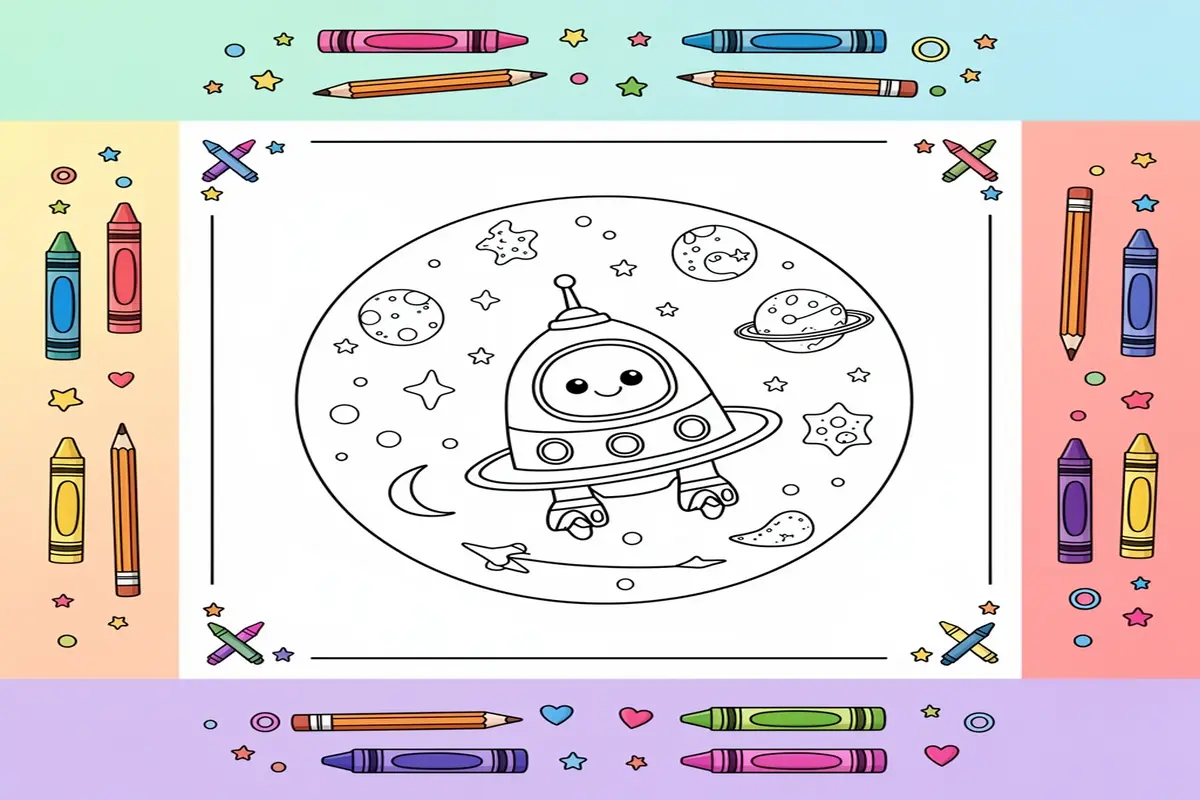
In the quiet concentration of a child at a coloring table, something magical unfolds. It’s more than just staying within the lines; it’s a journey of focus, creativity, and emotional discovery. Coloring has long been celebrated as a gateway to mindfulness for all ages, offering a simple yet profound escape from the digital noise of modern life. When the theme turns cosmic, that gateway opens onto an infinite universe of wonder. Outer space coloring pages for kids transform this calming activity into an epic adventure, inviting young artists to become explorers of distant galaxies, designers of futuristic spacecraft, and cartographers of unknown planets. The appeal is universal, tapping into our innate curiosity about the great beyond while providing the structured, tactile satisfaction that nurtures developing minds. Whether your young artist is captivated by the serene beauty of our solar system or the thrilling possibilities of alien encounters, these pages offer a stellar creative platform. For those whose interests also drift to the depths of our own planet, a parallel universe of creativity awaits with our collection of ocean coloring pages, where whales glide and jellyfish pulse with color. Ultimately, providing outer space coloring pages for kids is about gifting them the controls to their own rocket ship of imagination.
The Cosmic Canvas: Why Space Captivates Young Minds
The allure of the cosmos is timeless, but for a child, it represents the ultimate frontier of fantasy and fact. Outer space coloring pages for kids leverage this powerful fascination, serving as more than just art supplies—they are tools for engagement, education, and emotional exploration.
The Psychology of the Final Frontier: Wonder as a Learning Engine
Why does a picture of a ringed planet or a soaring rocket ship instantly command a child’s attention? It triggers a sense of awe and boundless possibility. Psychologically, engaging with cosmic themes stimulates curiosity and big-picture thinking. As children decide whether Mars should be red, rusty orange, or a fantastical purple, they are not just coloring; they are making hypotheses, exercising choice, and processing the scientific tidbits they’ve absorbed. This thematic backdrop turns a quiet activity into an active learning session, fostering a growth mindset where questions are encouraged, and creativity fuels discovery.
From Ancient Myths to Modern Missions: A Rich Tapestry to Color
The story of humanity’s relationship with the stars provides a deep and colorful history for children to tap into. Their coloring pages can reflect this evolution—from constellations drawn as mythical creatures in ancient times to the sleek, precise lines of a modern space telescope. By coloring a scene of astronauts planting a flag on the moon, children connect with a pivotal historical moment. When they bring a nebula to life with swirls of pink and blue, they are interacting with the very real, awe-inspiring imagery captured by space probes. This context enriches the experience, allowing outer space coloring pages for kids to serve as a springboard for stories about science, perseverance, and exploration.
Designed for Every Young Astronaut: From Preschoolers to Pre-Teens
The beauty of this theme lies in its scalability. For tiny hands just learning to grip a crayon, simple, bold outlines of a smiling sun, a crescent moon, or a friendly alien ship are perfect. These designs build confidence and motor skills. For older, more detail-oriented kids, intricate scenes of space stations, complex planetary landscapes, and galaxies teeming with stars offer a satisfying challenge that can occupy hours of focused, calming engagement. This range ensures that every child, regardless of skill level, can find a page that launches their creativity into orbit, making the universe feel wonderfully accessible.
Part 2: Professional Materials & Preparation for Outer Space Coloring Pages for Kids
To ensure your young astronauts get the most out of their creative journey, proper materials and preparation are key. The right tools can transform the experience of coloring outer space coloring pages for kids from a simple activity into an immersive, skill-building adventure. This guide outlines the professional-grade supplies and setup that will help children achieve stellar results, whether they’re coloring a swirling galaxy or a detailed rocket ship. For a thematic extension into other cosmic wonders, consider pairing this activity with our detailed solar system coloring pages.
The Foundation: Selecting Premium Paper for Outer Space Coloring Pages for Kids
The paper you choose is the launchpad for creativity. For standard crayons and colored pencils, a smooth, bright white paper with a weight of 100-120 GSM (grams per square meter) is ideal. This weight prevents bleed-through from markers and can handle light layering. For artists who love to use wet mediums like markers or gel pens, upgrading to heavyweight mixed-media paper (160+ GSM) or marker-specific paper is essential. These sheets have a slight tooth for pencil work and a coated surface that prevents ink from feathering, keeping the crisp lines of planets and spacecraft intact. For a truly professional display, consider printing your chosen outer space coloring pages for kids on cardstock; the rigid surface allows for vigorous coloring and produces a frame-worthy final piece.
Best Coloring Tools: A Detailed Comparison of Mediums
The choice of coloring medium dramatically affects the final artwork. Here’s a professional comparison:
Colored Pencils: The go-to for control and detail. Wax-based pencils (e.g., Crayola) offer vibrant colors and are excellent for beginners. For advanced blending and realistic effects on outer space coloring pages for kids, oil-based pencils (e.g., Faber-Castell) layer seamlessly, perfect for creating nebulae and planetary textures.
Markers: Provide bold, saturated color perfect for deep space blacks and vibrant nebulas. Alcohol-based markers (blendable, bleed-through risk) offer professional blending for gradients, while water-based markers are more child-friendly and work well on marker paper. Use a combination: markers for large areas of color and pencils for adding fine details over top.
Crayons: Excellent for younger children, offering a tactile experience and producing a unique, waxy texture that can be used to create interesting effects for rocky planetary surfaces.
Finishing Touches: Gel Pens, Metallic Inks, and White Highlights
This is where outer space coloring pages for kids truly come to life. No space scene is complete without the twinkle of stars and the glow of distant suns. Keep a set of gel pens on hand, specifically white and metallic colors (silver, gold, neon). These are perfect for adding tiny stars, highlighting comet tails, or creating engine glow on rockets. A white gel pen or a white colored pencil can also be used to softly blend and lighten areas, creating ethereal gas clouds. For an extra touch, consider acrylic paint pens for opaque, vibrant highlights on top of any dried medium.
Perfect Workspace: Optimizing Lighting and Ergonomics
A proper workspace ensures comfort and allows colors to be seen accurately. Natural daylight is the best lighting for color perception; position the workspace near a window if possible. Supplement with a daylight LED desk lamp to eliminate shadows and reduce eye strain. Ergonomics are crucial for extended missions: ensure the child’s feet are flat on the floor (use a footstool if needed) and the table height allows forearms to rest comfortably. A slanted drawing board can further improve posture and provide an ideal angle for detailed work. Keep all materials—pencils, sharpeners, erasers—within easy reach in cups or organizers to maintain a tidy and efficient creative zone.
Part 3: Mastering the Cosmos: Advanced Techniques for Outer Space Coloring Pages for Kids
Ready to transform your child’s outer space coloring pages for kids from simple sketches into stunning, dimensional masterpieces? This guide moves beyond basic filling to introduce professional techniques that build confidence and artistic skill. By mastering a few key methods, young artists can bring the wonders of the universe to life with depth, realism, and creativity.
Harmonious Palettes: Color Theory for Galactic Scenes
Understanding basic color relationships can make a space scene truly pop. For outer space coloring pages for kids, try these two approaches:
Complementary Colors: Use opposites on the color wheel for maximum vibrancy. Imagine a purple nebula streaked with bright yellow stars, or an orange Mars against a deep blue-black space. This creates exciting, dynamic contrast.
Analogous Colors: Choose colors next to each other on the wheel for a harmonious, serene feel. A nebula blending from deep blue to aqua to green feels calm and unified. This technique is perfect for creating ethereal gas clouds or the smooth gradient of a distant planet’s surface. For more practice with cool, flowing colors, explore our galaxy coloring pages for kids.
From Flat to 3D: Shading for Cosmic Depth
Shading is the magic that turns a circle into a planet. Teach a simple three-step method:
1. Identify Your Light Source: Decide where the sun is in your picture. Everything will be lighter on the side facing it.
2. Layer Your Colors: Start with a medium base color. Apply heavy pressure on the shadowed side (away from the light) and light, feathery pressure on the lit side.
3. Blend: Use a white colored pencil, a blending stump, or even a gentle finger rub to smooth the transition between light and dark. For a cratered moon, shade the inside rim of each crater opposite the light source.
Adding Realism: Texturing the Final Frontier
Different space objects have unique surfaces that texture techniques can capture:
Gaseous Nebulas & Stars: Use small, circular scribbles or stippling (tiny dots) with varying pressure to create a cloudy, luminous effect. Layer light pinks over dark blues for a glowing look.
Metallic Spacecraft & Rings: To show shiny metal, leave thin, jagged lines completely white (highlights) next to areas of very dark gray or blue. Use long, smooth strokes in one direction.
Rocky Planets & Asteroids: Create a rough, pebbly surface with tight, irregular scribbles and small, sharp angled lines. For more intricate, patterned texture practice, our mosaic coloring pages for kids offer excellent training.
The Art of Correction: Gracefully Fixing Coloring Errors
Mistakes are part of the creative process! Here’s how to handle common issues:
Coloring Outside the Lines: Turn the “error” into a feature. A little color bleed around a star can become its glowing aura. Use a white gel pen to redefine a line or create tiny stars over a too-dark area.
A Color That’s Too Dark: Gently lift color with a sticky-tack eraser. Alternatively, layer a lighter color on top (e.g., light blue over dark blue) to modify the hue and create new texture.
* Unhappy with a Choice: Frame it as a creative opportunity. Ask, “Could this dark patch be a mysterious black hole or a shadowed asteroid?” Often, incorporating the “mistake” leads to a more unique and interesting piece of art.
Showcasing Your outer space coloring pages for kids: Creative Display Ideas
Once your young astronaut has completed their cosmic masterpieces, it’s time to celebrate their creativity! Displaying their work boosts confidence and transforms their art into a cherished part of your home’s decor.
Preserving Your Masterpiece: Archival Tips
To ensure those vibrant galaxies and rockets last, consider simple preservation methods. For special pieces, use acid-free sheet protectors in a binder to create a portfolio. You can also have them laminated at a local office supply store for durability. For wall displays, use washi tape or non-damaging poster putty to avoid marks on both the art and your walls, allowing for easy rotation of new outer space coloring pages for kids.
Beyond Display: Creative DIY Projects
Take the artwork to the next level with fun DIY projects. Turn colored pages into unique greeting cards, bookmarks laminated for strength, or even decoupage them onto a plain pencil case or storage box. A collection of pages can be bound into a custom storybook, narrating an interstellar adventure. These projects make heartfelt gifts for family and extend the life of the creative fun.
Your outer space coloring pages for kids Questions Answered
What are the benefits of coloring for kids?
Coloring boosts fine motor skills, hand-eye coordination, and focus. It serves as a calming, screen-free activity that reduces anxiety and sparks creativity. For outer space coloring pages for kids, it also becomes an educational tool, naturally introducing concepts about planets, rockets, and the universe in an engaging, stress-free way.
How do you color a galaxy background?
Start with a black or dark blue base. Use a cotton swab or sponge to dab on purples, pinks, and blues, blending colors softly for a nebula effect. Add white or yellow dots with the tip of a brush or a gel pen to create distant stars. Layer colors lightly and don’t be afraid to experiment—the cosmos is full of surprises!
Where can I find free space coloring pages?
You can find a fantastic selection of free, high-quality outer space coloring pages for kids right here on our site! We offer everything from friendly aliens to detailed solar systems, all ready to download and print. For more artistic exploration, check out our galaxy coloring pages for kids.
What are the real colors of the planets?
Mercury is gray, Venus is yellowish-white, and Earth is blue with white clouds. Mars is reddish-brown, Jupiter has orange, white, and brown bands, and Saturn is pale gold. Uranus is a light cyan, and Neptune is a vivid blue. Remember, when coloring, creativity rules—a purple Jupiter can be just as fun!
How to print coloring pages from the internet?
First, download the image file to your computer. Open it and select “Print” from the file menu. In your printer settings, ensure you’re using “Best” or “High Quality” for clear lines. Use standard printer paper for practice, but cardstock is excellent for a sturdier page that handles markers and paints without bleeding through.
Final Thoughts: Launching a Lifelong Love for Creativity
The journey with outer space coloring pages for kids is about so much more than staying inside the lines. It’s a launchpad for imagination, a quiet moment of focus, and a joyful way to learn about the incredible universe we live in. Each completed page is a testament to your child’s growing skills and unique perspective. We hope this guide has filled your home with colorful rockets, swirling galaxies, and big smiles.
Ready for your next adventure? Explore our solar system coloring pages for even more detailed planetary fun!