We offer a wide collection of free, high-quality printable coloring pages for kids and adults. From cute animals to intricate mandalas, our designs bring creativity and relaxation to everyone. Download, print, and start coloring today!

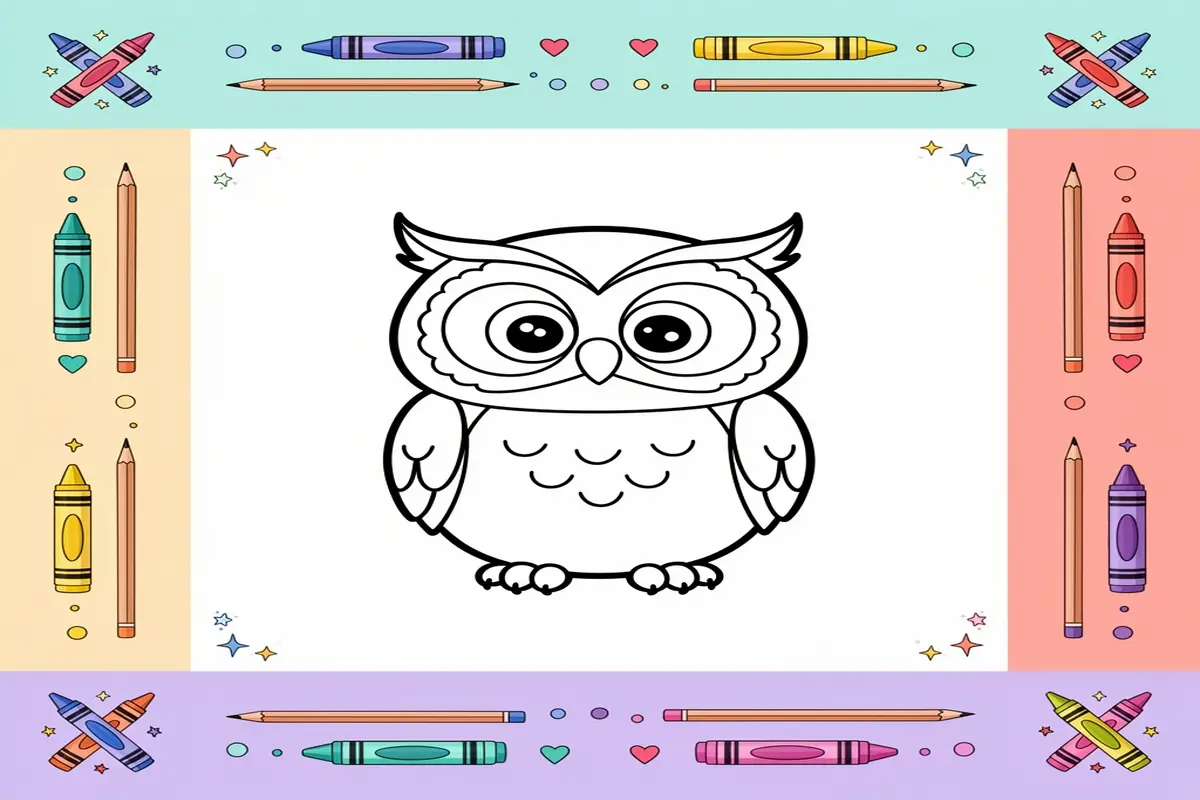
In a world of constant digital stimulation, the simple act of coloring offers a profound return to quiet focus and imaginative play. For children, it’s more than just filling in lines; it’s a gateway to developing fine motor skills, exploring color theory, and expressing their unique inner world. Among the vast menagerie of animal themes, owl coloring pages for kids hold a special allure, captivating young minds with their wise expressions, intricate feather patterns, and mysterious nocturnal charm. These pages invite young artists into a realm of forest fantasy, where every stroke of color can bring a majestic creature to life. Whether depicting a wide-eyed barn owl or a detailed great horned owl, these activities provide a perfect blend of education and entertainment. As part of a broader collection of nature-themed art, exploring owl coloring pages for kids naturally complements other adventures, like journeying into the deep with our captivating free whale coloring pages.
The Enchantment of the Night: Why Owls Captivate Young Artists
The Psychology of Pattern: Focus, Calm, and Mastery
The intricate details found in owl illustrations—from layered feathers to mesmerizing eyes—are not merely decorative; they serve a developmental purpose. Concentrating on these complex patterns requires and cultivates sustained attention, guiding children into a state of flow that reduces anxiety and enhances mindfulness. The act of choosing colors for the owl’s plumage, the bark of its tree, or the moonlit sky behind it empowers decision-making and provides a tangible sense of accomplishment. This makes owl coloring pages for kids a powerful, screen-free tool for emotional regulation and creative confidence.
A Symbol Across Cultures: Stories in Every Line
Owls are woven into the folklore and mythology of countless cultures, often representing wisdom, mystery, and protection. Introducing children to these majestic birds through art opens a door to storytelling and cultural exploration. A coloring session can transform into a lesson about the owl’s role in ancient Greek tales, Native American legends, or as a beloved character in modern literature. This rich symbolic backdrop adds depth to the creative exercise, allowing parents and educators to foster a deeper connection between art, nature, and history.
From Beginner to Budding Artist: A Design for Every Hand
The beauty of owl coloring pages for kids lies in their incredible versatility. For the youngest artists, simple, bold outlines of a cartoon owl with big eyes offer an achievable and satisfying project. For older children seeking a challenge, highly realistic pages with detailed feather textures and forest backgrounds provide an opportunity to experiment with shading, blending, and texture. This scalability ensures that every child, regardless of skill level, can find a page that engages them, making it a perennial favorite in homes and classrooms alike.
Professional Materials & Preparation for owl coloring pages for kids
Before your child begins their artistic exploration of owl coloring pages for kids, having the right tools and environment is crucial. Proper preparation not only enhances the final artwork but also makes the coloring experience more enjoyable and beneficial for developing fine motor skills and focus. This guide details the essential materials and setup for achieving beautiful results with every printable page.
The Foundation: Selecting Premium Paper for owl coloring pages for kids
The paper you choose is the single most important factor in coloring success. For standard owl coloring pages for kids printed at home, we recommend a bright white, smooth cardstock with a weight of 120-160 GSM (grams per square meter). This thickness prevents bleed-through from markers, allows for smooth blending with colored pencils, and gives the artwork a substantial, professional feel. For projects where children want to use wet mediums like watercolor pencils or thin markers, a dedicated mixed-media paper (140lb/300gsm) is ideal. It’s also wise to print a few extra copies on standard paper for quick, spontaneous coloring sessions where experimentation is the goal, much like you might with our versatile abstract coloring pages for kids.
Best Coloring Tools: A Detailed Medium Comparison
The choice between markers, pencils, and crayons dramatically affects the outcome of your owl coloring pages for kids.
Colored Pencils: The most versatile and recommended tool for detailed work. Wax-based pencils (e.g., Crayola) offer vibrant colors and are excellent for beginners. For advanced blending and realism in feathers and eyes, invest in a small set of artist-grade, oil-based pencils (like Prismacolor Premier), which have softer cores and superior pigment laydown. They allow for techniques like burnishing to create smooth, waxy finishes perfect for an owl’s plumage.
Markers: Provide bold, vibrant flats of color. For children, alcohol-free, water-based markers are safer and easier to control. Look for dual-tip markers (fine and broad) for coloring large areas and adding details. Always test for bleed-through on your chosen paper. For older kids and more advanced projects, alcohol markers (like Copic or Ohuhu) offer professional, blendable results but require specific marker paper to prevent bleeding.
* Crayons & Gel Sticks: Excellent for younger children due to their durability and ease of use. While they offer less precision, they encourage bold, expressive strokes and are perfect for filling large background areas like night skies or tree trunks on a coloring page.
Finishing Touches: Enhancing Details with Special Tools
To elevate the artwork from simple coloring to a masterpiece, incorporate a few specialized tools. A set of fine-tip gel pens in metallic gold, silver, and white is indispensable for adding highlights to an owl’s eyes, tracing intricate feather patterns, or drawing moon and stars in the background. A white colored pencil or a white gouache paint pen can be used to add soft highlights and texture over darker colors. For children who enjoy mixed media, small, round-tip glue sticks and a shaker of fine glitter can add a magical sparkle to the owl’s wings or a starry sky. Keep a high-quality art eraser on hand for cleaning up any stray pencil marks outside the lines.
Perfect Workspace: Optimizing Lighting and Ergonomics
A well-prepared workspace ensures comfort and allows your child’s creativity to flourish. Prioritize natural light if possible; position the desk near a window. Supplement with a bright, neutral-white LED desk lamp to eliminate eye strain and ensure true color representation. The seating should allow the child’s feet to rest flat on the floor, with the tabletop at elbow height. A non-slip desk mat or a simple clipboard can secure the coloring page and provide a smooth surface. Organize materials within easy reach using cups for pencils and markers and small trays for other tools, fostering independence and keeping the focus on the fun of coloring.
Part 3: Elevating Owl Artistry: Advanced Techniques for Owl Coloring Pages for Kids
Ready to transform your child’s owl coloring pages for kids from simple outlines into stunning, gallery-worthy art? This section moves beyond basic filling to explore professional techniques that build fine motor skills, artistic confidence, and a deeper understanding of visual art. These methods are perfect for older kids, teens, or parents and teachers looking to guide young artists to the next level.
Harmonious Habitats: Color Theory for Feathered Friends
Understanding basic color theory can make any owl illustration pop. Start with complementary colors (opposites on the color wheel) to create vibrant contrast. Imagine a great horned owl with rich brown feathers; using hints of blue in the shadows (brown’s complement) makes it look more dynamic. For a softer, more natural look, use analogous colors (colors next to each other). A barn owl can be brought to life with a palette of creams, light browns, and soft grays. Encourage kids to experiment by coloring one owl using a warm analogous scheme (oranges, reds, yellows) and another using a cool one (blues, purples, greens), just like they might with different fish coloring pages or abstract coloring pages for kids.
From Flat to Feathered: Mastering Shading and Depth
Shading is what gives a two-dimensional owl form and weight. Teach a simple three-step method:
1. Identify Your Light Source: Decide where the light is coming from (e.g., the top left).
2. Layer Your Colors: Start with a base layer of your lightest color over the entire area.
3. Build Shadows: Apply a medium tone to areas facing away from the light, and use the darkest tone only in the deepest crevices—under the wings, by the beak, and in facial disc grooves.
Use the side of your colored pencil or crayon for smooth, gradual blends. Pressing harder creates darker values, while a light touch leaves highlights. This technique works wonders for giving owls, and other creatures like those on realistic lion coloring pages, a powerful three-dimensional presence.
Texture Techniques: Bringing Feathers and Forests to Life
An owl’s beauty is in its intricate textures. To create soft feathery textures, use short, gentle, overlapping strokes that follow the direction the feathers grow (outward from the body). For the fluffy down on a baby owl, try tiny circular scribbles with a white or light gray pencil over a base color. Don’t forget the environment! Use stippling (small dots) for a rough tree bark perch and smooth, blended strokes for a moonlit sky in the background. Combining these textures turns a simple page into a rich, tactile scene.
The Art of the Oops: Graceful Fixes for Coloring Mistakes
Mistakes are part of the creative process. First, embrace the “happy accident.” A stray mark outside the lines can become a leaf, a tiny bug, or a star in the night sky. For smaller errors, a white gel pen or a quality eraser can clean up edges or even lighten areas for re-coloring. If a color turns out too dark, try layering a lighter color on top to modify the hue—yellow over dark green can create a mossy effect. The key is to stay flexible and creative, turning potential frustrations into opportunities for unique artistic solutions.
Showcasing Your owl coloring pages for kids: Creative Display Ideas
Once the final feather is colored, the fun continues! Transforming finished owl coloring pages for kids into cherished decor or heartfelt gifts adds a wonderful sense of accomplishment. Here are inspiring ways to celebrate their artistic journey.
Preserving Your Masterpiece: Archival Tips
Protect those vibrant creations! For long-term display, consider using acid-free photo corners or a simple spray fixative to prevent crayon or marker smudging. Laminating pages is a durable option for placemats or coasters. Alternatively, press colored pages in a large book overnight before framing to ensure they lie flat. A simple clip frame offers an easy, no-commitment way to rotate gallery walls of their latest masterpieces, including other favorites like our zebra coloring pages free printable.
Beyond Display: Creative DIY Projects
Turn art into keepsakes! A colored owl can become a beautiful greeting card when glued to folded cardstock. For a fun reading companion, laminate the page, cut out the owl, and punch a hole for a ribbon bookmark. Create a mobile by stringing several different colored owls from a branch. You can also decoupage them onto a wooden box or journal cover for a personalized gift that will be treasured.
Your owl coloring pages for kids Questions Answered
How do you draw an owl for kids?
Start with simple shapes: a large “U” for the body and a circle on top for the head. Add two triangle shapes for ears and two big circles for eyes. Draw a small diamond or triangle beak in the middle. Finish with wings as curved lines on the sides and feet with three toes. This basic structure is perfect for kids to then personalize on their owl coloring pages for kids.
What are the benefits of coloring for children?
Coloring boosts fine motor skills and hand-eye coordination as children practice staying within lines. It fosters creativity and color recognition while providing a calming, focused activity that can reduce anxiety. It’s also a great opportunity for self-expression and building confidence in their artistic abilities, making every session with owl coloring pages for kids both fun and developmental.
Where to find free owl coloring pages?
You can find a wonderful variety of free, high-quality owl coloring pages for kids right here on our site! We offer pages ranging from cute cartoon owls to more realistic ones, all designed to be easily downloadable and printed at home for instant creative fun.
What colors are real owls?
Real owls display a remarkable range! Most have camouflaging feathers in shades of brown, gray, tan, and white, often with intricate patterns like bars or spots. Some species, like the Snowy Owl, are predominantly white, while others, like the Barn Owl, have golden-buff backs. This natural palette provides fantastic inspiration for children’s coloring choices.
What is the best paper for coloring pages?
For best results, use medium-weight (around 80-100 lb) matte or satin-finish paper. This paper is thick enough to prevent bleed-through from markers and holds up well to layered crayon or colored pencil. It also feeds smoothly through most home printers, ensuring your owl coloring pages for kids look crisp and provide a great coloring surface.
Final Thoughts: Your owl coloring pages for kids Journey Begins
The journey with owl coloring pages for kids is about so much more than filling in lines. It’s a gateway to learning about nature, a quiet moment of mindfulness, and a vibrant celebration of your child’s unique perspective. Each finished page is a testament to their growing skills and imagination, a tangible piece of joy you can display and share. We hope these ideas for display and DIY projects inspire you to extend the creative adventure even further.
Ready for your next adventure? Explore our forest coloring pages for kids to discover a whole habitat waiting for color!