We offer a wide collection of free, high-quality printable coloring pages for kids and adults. From cute animals to intricate mandalas, our designs bring creativity and relaxation to everyone. Download, print, and start coloring today!

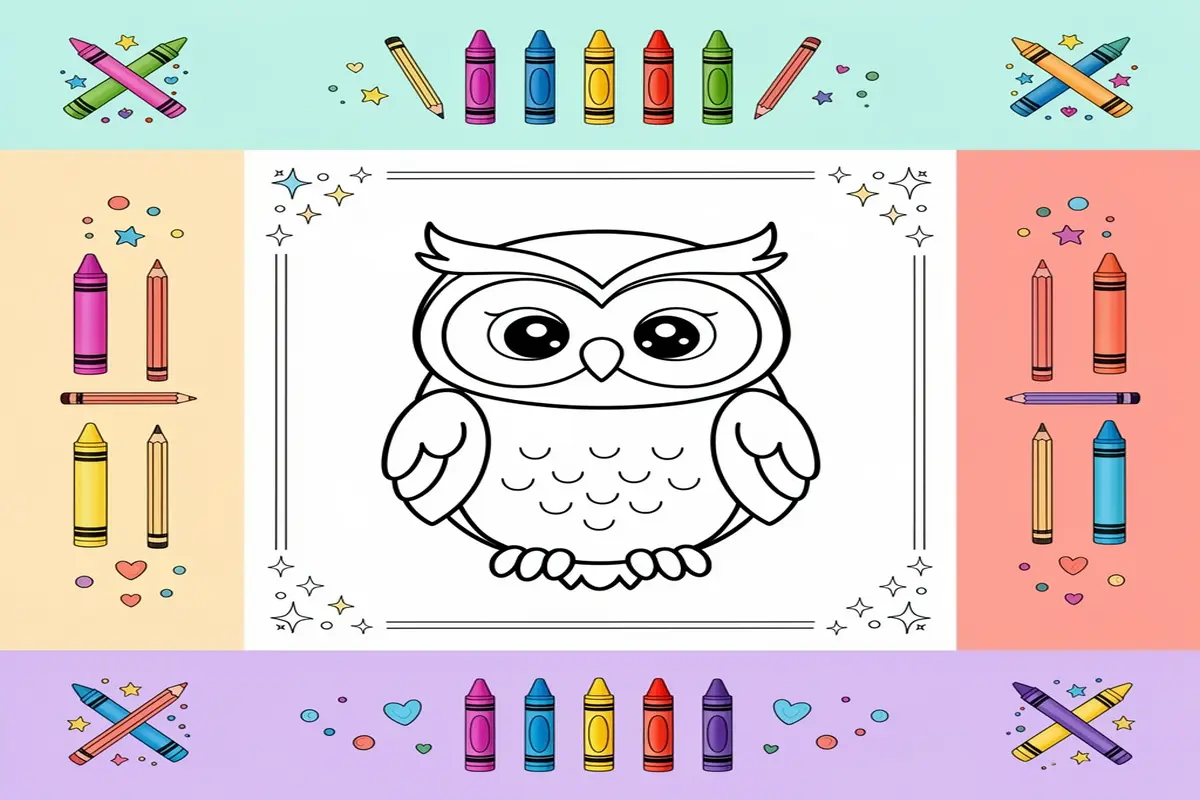
In a world of constant digital stimulation, the simple act of coloring offers a profound sanctuary for young minds. It’s a tactile, screen-free journey into imagination, focus, and emotional regulation. Among the vast menagerie of artistic subjects, owl coloring pages for kids hold a special, wise charm. These nocturnal creatures, with their captivating eyes and intricate feather patterns, provide a perfect canvas for children to explore color theory, fine motor skills, and storytelling. The appeal of owl coloring pages for kids extends beyond mere fun; it’s an engaging entry point into nature education and mindful creativity. Whether your child is fascinated by the silent flight of a barn owl or the vibrant plumage of a tropical species, these pages offer endless artistic possibilities. For those who also love exploring the wonders of the deep, our collection of free dolphin coloring pages offers another fantastic aquatic adventure.
The Enchantment of the Nocturnal Muse: Why Owls Captivate Young Artists
The Psychology of Pattern & Focus: A Mindful Escape
An owl’s anatomy is a masterpiece of natural design, offering a unique blend of complexity and approachability for a coloring page. The concentric circles of facial discs, the layered textures of feathers, and the compelling gaze of large eyes create a focal point that naturally draws a child’s attention. This intricate detail requires a level of concentration that gently pushes aside distractions, fostering a state of flow and mindfulness. Working within the lines of an owl coloring page for kids becomes a meditative exercise, calming anxiety and building patience. The repetitive motion of coloring soft feathers or detailed talons can be incredibly soothing, providing a non-verbal outlet for expression and emotional processing.
A Symbol Across Cultures: Weaving Wisdom into Art
Owls are not just birds; they are powerful symbols across global mythologies, often representing wisdom, mystery, and knowledge. Introducing owl coloring pages for kids opens a door to cultural stories and natural science. Parents and educators can share tales of Athena’s owl in Greek mythology or the owl as a protector in various Native American traditions. This contextual layer enriches the coloring experience, transforming it from a simple activity into an interdisciplinary learning moment. Children aren’t just coloring a bird; they are giving life to a creature steeped in legend, encouraging curiosity about the natural world and its place in human storytelling.
Designed for All Hands: From Toddler Grip to Tween Detail
The beauty of owl coloring pages for kids lies in their incredible versatility. For the youngest artists, simple, bold outlines of a cartoon owl with big eyes help develop grip strength and hand-eye coordination. For older children and even tweens, more realistic renderings with complex feather patterns and forest backgrounds provide a satisfying challenge that hones precision and encourages research into real owl species and their habitats. This scalability ensures that every child, regardless of skill level, can find an owl illustration that meets them where they are, building confidence and artistic courage with every page they complete.
Part 2: Professional Materials & Preparation for owl coloring pages for kids
To ensure a smooth and enjoyable coloring session with your owl coloring pages for kids, having the right materials prepared is essential. This professional toolkit will not only enhance the final artwork but also support fine motor development and creative confidence. Proper preparation prevents frustration and allows children to focus on the joy of bringing their nocturnal avian scenes to life.
The Foundation: Selecting Premium Paper for owl coloring pages for kids
The paper you choose is the single most important factor in coloring success. For standard owl coloring pages for kids, a smooth, bright white paper with a weight of around 100-120 GSM (grams per square meter) is ideal. This weight prevents bleed-through from markers and can handle light layering with colored pencils. For a more artistic project, consider transferring your owl design to mixed-media or marker paper. If you’re printing at home, ensure your printer settings are optimized for “high quality” or “photo” to produce crisp, clean lines that are easy for small hands to follow. For a thematic connection, exploring other nocturnal or woodland creatures can be inspiring; our collection of bat coloring pages offers similarly engaging outlines perfect for practicing these paper and technique choices.
Best Coloring Tools: A Detailed Medium Comparison
The choice between markers, colored pencils, and crayons dramatically affects the outcome of your owl coloring pages for kids.
Colored Pencils (Professional Choice): Opt for soft-core, wax- or oil-based pencils with high pigment density. They allow for excellent control, detailed feather texture, and sophisticated blending—perfect for creating the subtle gradients in an owl’s plumage. Brands like Prismacolor Premier or Faber-Castell Polychromos are industry standards.
Markers (Vibrant & Bold): Alcohol-based markers (e.g., Copic, Ohuhu) provide seamless, bleed-free blends ideal for large areas like wings or a moonlit sky. Water-based markers are more child-friendly and economical but can bleed on standard paper. Always test on a corner first.
* Crayons (Classic & Tactile): High-quality crayons with good color saturation are excellent for younger children. They encourage a different pressure technique and can create a beautiful, textured look reminiscent of an owl’s soft feathers.
Finishing Touches: Gel Pens, Highlights, and Outlining
Elevate the completed artwork with detailing tools. White or metallic gel pens are indispensable for adding highlights to owl eyes, creating stars in a night sky, or drawing fine feather details. A fine-line black marker (e.g., Pigma Micron, size 01) can be used to carefully redefine any lines that were obscured during coloring, making the image pop. For a final touch, consider a light gray pencil to add soft shadows beneath the owl, grounding it on the page and adding a sense of dimension.
Perfect Workspace: Ergonomic and Lighting Setup
A proper workspace maximizes comfort and minimizes mess. Ensure the coloring surface is stable, well-lit with natural or full-spectrum artificial light to reduce eye strain, and protected by a large backing board or self-healing mat. Organize tools within easy reach using cups or trays. For ergonomics, provide a chair where the child’s feet can rest flat on the floor and the table height allows forearms to be parallel to the surface. Keep a clean cloth for wiping hands and a pencil sharpener handy to maintain fine points for those intricate areas on the owl coloring pages for kids.
Part 3: Elevating Your Art: Professional Techniques for Owl Coloring Pages for Kids
Ready to transform a simple page into a stunning piece of art? This section moves beyond basic coloring to explore techniques that bring owl coloring pages for kids to life with depth, realism, and creativity. These methods are perfect for parents and teachers guiding young artists toward more impressive results.
Link: For more animal-themed coloring fun, explore our collection of bird coloring pages and realistic animal coloring pages.
Harmonious Habitats: Color Theory for Owl Scenes
Understanding basic color theory can turn a good owl picture into a great one. For a realistic look, use analogous colors (those next to each other on the color wheel) for the owl’s feathers—think browns, tans, and oranges for a Great Horned Owl. For a more vibrant, eye-catching piece, introduce complementary colors. Placing a blue owl against an orange sunset background makes both elements pop dramatically. Encourage kids to plan a color scheme before starting, deciding if their owl will be nocturnal and mysterious or bright and fantastical.
From Flat to Feathered: Masterful Shading Techniques
Shading is the secret to creating a three-dimensional owl. First, identify your light source. If the light is coming from the top left, the top-left areas of the owl’s body, head, and branches will be lightest. Use progressively heavier pressure or darker colors on the opposite sides (bottom right). Start light—you can always add more color. For the owl’s round head and body, use curved shading strokes that follow the form. A step-by-step approach: 1) Lay down a base color lightly and evenly. 2) Add medium pressure in the shadow areas. 3) Use the deepest tones in the very darkest creases, like under the wings.
Texture Tales: Rendering Feathers, Bark, and Night Skies
Each element on your owl coloring page has a unique texture. For feathers, use short, directional strokes instead of long, smooth ones. Layer different shades of the same color to create a soft, layered effect. For the tree bark your owl is perched on, try a technique called “scumbling”—using small, circular, scribbly motions to create a rough, uneven surface. A night sky can be made with a smooth, heavy layer of dark blue or black, then dotted with a white gel pen for stars. Experimenting with these textures makes the entire scene more engaging and realistic.
The Art of the Fix: Gracefully Correcting Coloring Mistakes
Even professional artists make mistakes! The key is knowing how to fix them. If a child colors outside the lines, don’t stress. Often, simply shading the background around the object can hide small imperfections. For a stray mark within the owl’s feather area, try incorporating it as a new feather detail by blending it with surrounding colors. If using colored pencils, a white eraser can lift some color for a second try. Teach kids that art is flexible—a “mistake” can become a unique feature, like a special marking on their owl’s wing. The goal is creative expression, not perfection.
Showcasing Your Owl Coloring Pages for Kids: Creative Display Ideas
Once the coloring is complete, the fun continues! Transforming your child’s finished owl coloring pages for kids into cherished decor or heartfelt gifts adds another layer of creativity and pride to the activity.
Preserving Your Masterpiece: Archival Tips
To ensure your child’s artwork lasts, consider using acid-free paper for printing, which prevents yellowing over time. For display, simple framing behind UV-protective glass shields colors from fading. Alternatively, a clear laminator pouch is a budget-friendly way to create durable placemats or wall hangings that can be wiped clean. For a digital archive, scan or photograph the pages in good light to create a lasting gallery of their artistic journey.
Beyond Display: Creative DIY Projects
Turn completed pages into meaningful projects. Create custom greeting cards by cutting out the colored owl and gluing it to cardstock. Laminate and hole-punch a corner to make beautiful bookmarks. For a grand display, combine several finished pages into a unique “owl forest” wall collage. These projects not only celebrate the effort but also teach kids about repurposing art. For more animal-themed crafting inspiration, explore our collection of realistic animal coloring pages.
Your Owl Artistry Questions Answered
How do you color a realistic owl?
Start with a base of soft browns, grays, and tans. Use short, directional strokes to mimic feathers, layering darker shades in shadowy areas like under the wings. Add fine details with a sharp white or cream pencil for highlight accents on the face and feather edges. Blending tools or gentle shading with your pencil can create a soft, textured look perfect for these majestic birds.
What are the benefits of coloring for child development?
Coloring enhances fine motor skills and hand-eye coordination as children practice staying within lines. It fosters creativity and color recognition while also serving as a calming, focused activity that can reduce anxiety and improve concentration. It’s a wonderful screen-free way to support cognitive and emotional growth.
Where can I find free printable owl coloring pages?
You can find a fantastic variety of free, high-quality printable owl coloring pages for kids right here on our website! We offer everything from simple cartoon owls for toddlers to detailed illustrations for older children, all available to download and print instantly for your convenience.
What are the natural colors of an owl?
Owls display a remarkable range of natural camouflage. Common colors include mottled browns, grays, tans, and rusts. Some species, like the Snowy Owl, are predominantly white, while others, like the Barn Owl, have a mix of golden-brown and gray. Their colors are typically earthy and muted to help them blend seamlessly into tree bark and forest shadows.
What is the best paper for printing coloring pages?
For best results, use slightly heavier paper like cardstock (around 65-80 lb text weight). It prevents bleed-through from markers, handles layered pencil shading beautifully, and feels more substantial for little hands. For a more artistic finish, smooth bristol paper is excellent for colored pencils, allowing for seamless blending on your owl coloring pages for kids.
Final Thoughts: Your Owl Coloring Pages for Kids Journey Begins
The journey with owl coloring pages for kids is about so much more than filling in lines. It’s a quiet adventure into nature, a boost of creative confidence, and a precious opportunity for connection. Each page colored is a step toward developing essential skills and creating lasting memories. We hope this guide has inspired you with new techniques, display ideas, and the joyful anticipation of your next coloring session.
Ready for your next adventure? Explore our bird coloring pages for more feathered friends to color and discover!