We offer a wide collection of free, high-quality printable coloring pages for kids and adults. From cute animals to intricate mandalas, our designs bring creativity and relaxation to everyone. Download, print, and start coloring today!

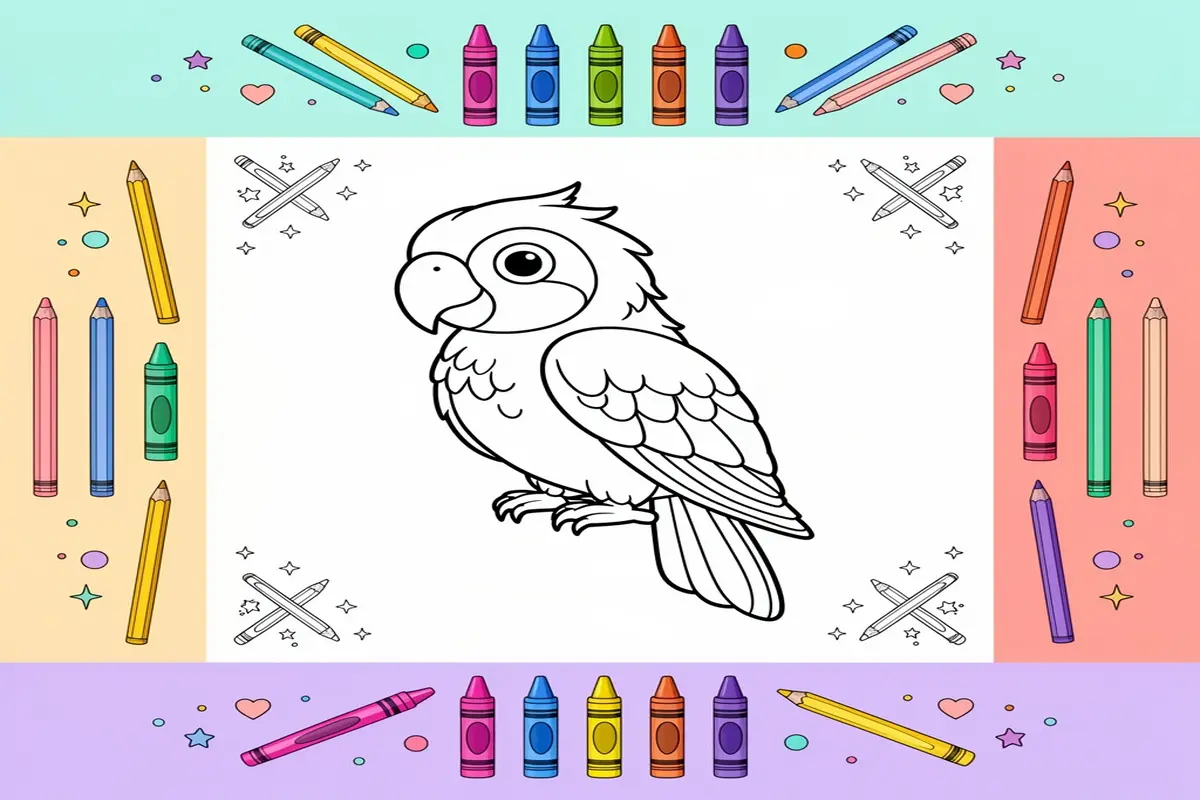
In a world saturated with digital noise, the simple act of coloring offers a sanctuary of focus and calm. It’s a tactile, imaginative journey back to the fundamentals of creativity, where a blank page transforms into a personal masterpiece. For children, this process is more than just play; it’s a vital exercise in fine motor development, color theory, and emotional expression. When the subject is as vibrant and charismatic as a parrot, the creative possibilities truly take flight. Introducing parrot coloring pages for kids into your child’s activity routine opens a door to a tropical world of brilliant reds, dazzling blues, and lush greens. These pages are not merely outlines to fill; they are invitations to explore biodiversity, practice mindfulness, and unleash unrestrained artistic vision. From the majestic Scarlet Macaw to the clever African Grey, each illustration becomes a lesson in nature’s palette. If your young artist also delights in the wonders of the deep blue sea, our collection of free dolphin coloring pages offers another avenue for aquatic exploration. Engaging with parrot coloring pages for kids is a joyful step toward blending education with artistry, making every coloring session an adventure.
The Vibrant Allure: Why Parrots Captivate Young Artists
There is an undeniable magic to parrots that instantly captures a child’s imagination. Perhaps it’s their almost mythical array of colors, their intelligent gaze, or their playful, social nature. This inherent appeal makes parrot coloring pages for kids a uniquely engaging tool, transcending the ordinary coloring book experience to become a dynamic learning platform.
The Psychology of Color: A Symphony for the Senses
Parrots are nature’s living rainbows, and coloring them taps directly into the psychological power of color. The act of selecting vibrant hues for a parrot’s plumage is inherently stimulating and joyful. For a child, deciding whether a macaw’s feathers should be fiery scarlet, sunbeam yellow, or ocean blue is an exercise in decision-making and personal expression. This process can be incredibly calming, focusing the mind on a single, rewarding task and pushing aside anxiety or restlessness. The bold, saturated colors associated with parrots naturally promote feelings of energy and happiness, turning a simple activity into a mood-boosting session of creative therapy.
A Feathered Journey Through Global Ecosystems
Every parrot species tells a story of a distant habitat. A coloring page can be the starting point for a fascinating discussion about geography and ecology. Is this a Cockatoo from the Australian outback? A Parakeet from the grasslands of India? Or an Amazon parrot from the South American rainforest? As children color, parents and educators can weave in tales of these diverse ecosystems, fostering an early appreciation for wildlife conservation and the importance of protecting these magnificent birds and their homes. This contextual layer transforms parrot coloring pages for kids from a pastime into an interactive, global adventure.
Designed for Every Stage of Artistic Flight
The beauty of this theme lies in its versatility. For tiny hands just learning to grip a crayon, simple, bold outlines of a parrot’s shape are perfect for practicing control. For older children, more detailed pages featuring intricate feather patterns and scenic jungle backgrounds offer a satisfying challenge that hones precision and patience. This scalability ensures that parrot coloring pages for kids remain a relevant and enriching activity for years, growing alongside the child’s developing skills and providing a constant, creative outlet for artists at every level.
Professional Materials & Preparation for parrot coloring pages for kids
To ensure your child gets the most creative and educational value from their parrot coloring pages for kids, proper preparation is key. Having the right materials on hand transforms a simple activity into an enriching experience that develops fine motor skills, color recognition, and artistic confidence. This guide details the essential toolkit for bringing vibrant macaws, cockatoos, and parakeets to life.
The Foundation: Selecting Premium Paper for parrot coloring pages for kids
The paper you choose directly impacts the final artwork and your child’s enjoyment. For standard home printing, opt for a bright white, smooth cardstock with a weight of 120-160 GSM (grams per square meter). This thickness prevents bleed-through from markers and handles layering with colored pencils without tearing. For a more textured, artistic feel suitable for pencil blending, a mixed-media paper is an excellent choice. If you plan to use wet mediums like watercolor pencils or thin markers, consider marker paper or bleed-proof paper specifically designed to contain ink. Always print your parrot coloring pages for kids at high-quality settings to ensure crisp lines that are easy for small hands to follow.
Best Coloring Tools: A Detailed Medium Comparison
The choice of coloring medium defines the style and outcome of the artwork.
Colored Pencils: Ideal for detail and control, especially for the intricate feather patterns often found in parrot coloring pages for kids. Look for soft-core pencils (like Prismacolor or Faber-Castell) with high pigment levels for vibrant, blendable colors. They allow for shading and texture, teaching children about light and dimension.
Markers: Provide bold, saturated color perfect for a graphic, lively look. Fine-tip markers are essential for small areas like beaks and eyes, while broad-tip markers cover large feather sections quickly. For younger children, opt for water-based markers that are washable and have low odor. Alcohol-based markers (like Copic) offer superior blending for older kids but will bleed through standard paper.
Crayons: A classic, durable option for younger artists. They require more pressure and are less precise, making them better for broader strokes rather than fine detail.
Finishing Touches: Gel Pens, Blenders, and Highlights
Elevate the finished page with special tools that add excitement and professional flair. White gel pens or acrylic paint markers are fantastic for adding highlights to a parrot’s eye or creating light reflections on glossy feathers. Colorless blender pencils or markers can smooth colored pencil strokes and create seamless gradients in the plumage. For a touch of sparkle on exotic wings, non-toxic glitter glue pens can be used under supervision. These tools encourage experimentation and make the final creation feel truly special.
Creating the Perfect Workspace: Ergonomics and Lighting
A well-prepared workspace fosters focus and creativity. Ensure the coloring area has ample, natural light or a bright, white LED lamp to reduce eye strain and allow for true color perception. The seating should support good posture; the child’s feet should rest flat on the floor or a stool, with the table at elbow height. Keep all materials—coloring pages, pencils, sharpeners, and erasers—within easy reach on a clean surface. A portable art bin or caddy can help organize supplies. For extended sessions, consider a slant board or binder to angle the parrot coloring pages for kids, improving hand positioning and reducing neck fatigue. This thoughtful setup, paired with a variety of engaging pages like our detailed bird coloring pages, promotes a calm, productive artistic environment.
Mastering Parrot Coloring Pages for Kids: Advanced Artistic Techniques
Ready to transform your child’s parrot coloring pages for kids from simple outlines into vibrant, textured masterpieces? This guide moves beyond basic filling to introduce professional techniques that build artistic confidence and produce stunning results. By focusing on color theory, shading, and texture, you can help young artists unlock a new level of creativity with every parrot they color.
Harmonious Palettes: Color Theory for Parrot Coloring Pages for Kids
While parrots are famously colorful, guiding children toward harmonious color choices teaches valuable lessons in art. Start with the concept of complementary colors—opposites on the color wheel, like red and green or blue and orange. Using a complementary color for small details (like a green eye shadow on a red macaw) makes those details pop. For a more blended, natural look, explore analogous colors—colors next to each other on the wheel, such as blue, blue-green, and green for a parrot’s wing gradients. Introducing these concepts through parrot coloring pages for kids turns a fun activity into a foundational art lesson. For more practice with vibrant animal palettes, explore our flamingo coloring pages for kids.
From Flat to 3D: Mastering Shading and Depth
Shading is the magic that turns a flat shape into a rounded, three-dimensional form. Teach a simple, three-step method:
1. Identify Your Light Source: Decide where the “sun” is in the picture (e.g., top left). Every shadow will be opposite this.
2. Layer Your Colors: Color the entire area with your base color lightly. Then, apply a second, slightly heavier layer on the areas farthest from the light source (e.g., the lower right side of the parrot’s body).
3. Add a Shadow Line: For dramatic depth, use a darker shade or pencil to add a thin shadow line along the very edge opposite the light. This instantly makes the parrot look like it’s sitting on the page.
Adding Realism: Texture Techniques for Feathers and Beaks
A parrot’s beauty lies in its intricate textures. Here’s how to mimic them:
Feathers: Instead of coloring in smooth strokes, use short, overlapping lines that follow the feather’s direction. Start with a light base and add darker lines at the feather tips and bases. For a fluffy chest, use tiny, circular scribbles.
Smooth Beaks: To achieve a glossy, hard look, color the beak smoothly with strong pressure. Leave a small, curved white streak to represent a highlight, and add a sharp, dark shadow underneath where it meets the face. Exploring different animal textures can be fun, as seen in our detailed leopard coloring pages free printables.
The Art of Correction: Gracefully Fixing Coloring Mistakes
Mistakes are part of the process! Teach these recovery strategies:
Turning a Smudge into a Feature: A stray mark outside the lines can become a background leaf or a distant berry with a little creative storytelling.
Layering to Cover: If a color is too light, gently layering a darker shade on top can deepen it without starting over. If a dark color is too harsh, lightly going over it with a white crayon can soften and blend it.
Embracing the Outline: If coloring goes outside the line, use a darker color to neatly redefine the edge. This “bold outline” style is a recognized artistic technique in itself.
By integrating these techniques, children learn that parrot coloring pages for kids are more than just an activity—they’re a canvas for experimentation, problem-solving, and artistic growth.
Showcasing Your Parrot Coloring Pages for Kids: Creative Display Ideas
The fun doesn’t stop when the last crayon is put down! Turning your child’s vibrant parrot artwork into a display boosts their confidence and adds a personal touch to your home. Here are inspiring ways to celebrate their creativity.
Preserving Your Masterpiece: Archival Tips
To ensure those colorful parrots stay bright, consider simple preservation methods. For long-term keepsakes, use acid-free sheet protectors in a binder or have special pieces laminated. This protects from sunlight and fingerprints. Framing is a wonderful option—choose a simple, colorful frame that complements the artwork. Creating a rotating “gallery wall” in a playroom or hallway celebrates their progress and makes them feel like true artists.
Beyond Display: Creative DIY Projects
Transform completed parrot coloring pages into practical and giftable items. Cut out the colored parrot and glue it onto a folded cardstock to make a unique greeting card. Laminated pages become durable bookmarks or placemats. For a fun bedroom accessory, decoupage several colored pages onto a plain lampshade. These projects extend the activity’s value and teach kids about repurposing art. For more animal-themed crafting inspiration, our collection of jungle coloring pages offers endless possibilities.
Your Parrot Coloring Pages for Kids Questions Answered
How do you draw a parrot for kids?
Start with simple shapes: a large oval for the body and a circle for the head. Add a curved beak and a big, friendly eye. Draw a long, sweeping curve for the top of the tail and a wavy line for the bottom. Two simple lines with curves at the end make great feet. Keep it playful and let kids add their own flair—perfection isn’t the goal!
What are the benefits of coloring for child development?
Coloring strengthens fine motor skills and hand-eye coordination, essential for writing. It fosters creativity, color recognition, and focus. The calming, repetitive motion can reduce anxiety and improve emotional regulation. Completing a picture, like a beautiful parrot, builds confidence and provides a wonderful opportunity for positive bonding time with caregivers.
How to print free coloring pages?
It’s easy! Find a trusted website like ours offering free, high-quality parrot coloring pages for kids. Click your chosen design to open the full-size image. Select “Print” from your browser’s menu or right-click the image and choose “Print.” Ensure your printer has paper and ink. For best results, use “Fit to page” in your print settings.
What colors are used for a parrot?
Parrots are a rainbow! While scarlet macaws are famous for red, blue, and yellow, and budgies often feature greens and blues, encourage creativity. There’s no wrong color. Realistic hues are great for learning, but a purple polka-dotted parrot is just as valid. Exploring vibrant colors is a key joy of parrot coloring pages for kids.
Where to get free parrot coloring pages?
You can find a wonderful variety of free, printable parrot coloring pages for kids right here on our site! We offer designs ranging from simple outlines for toddlers to more detailed patterns for older children. Simply browse our animal categories, select your favorite tropical bird, and print instantly for hours of creative fun.
Final Thoughts: Your Parrot Coloring Pages for Kids Journey Begins
Embarking on the adventure of parrot coloring pages for kids opens a world of color, creativity, and developmental benefits. From the first stroke of a crayon to the proud display of a finished masterpiece, this simple activity nurtures young minds, provides peaceful moments, and creates lasting memories. It’s more than just coloring—it’s a launchpad for imagination, fine motor skills, and joyful family connection.
We hope this guide inspires you to create, display, and explore the vibrant world of coloring together. Remember, every page colored is a step in your child’s creative journey. Ready for your next adventure? Explore our tropical fish coloring pages to dive into another colorful ecosystem!