We offer a wide collection of free, high-quality printable coloring pages for kids and adults. From cute animals to intricate mandalas, our designs bring creativity and relaxation to everyone. Download, print, and start coloring today!

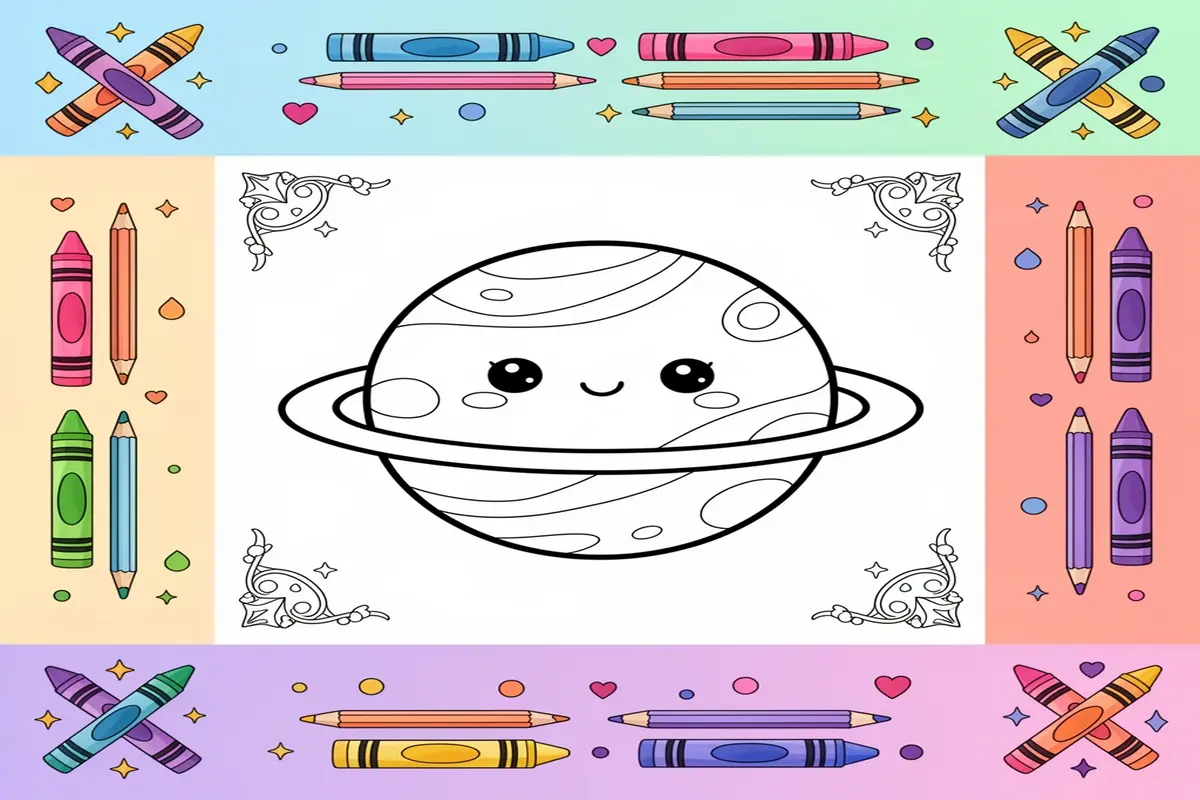
In a world saturated with screens, the simple act of coloring offers a profound return to tactile imagination and quiet focus. For young minds, the universe is a place of endless wonder, and planet coloring pages for kids provide the perfect canvas to explore its mysteries. These aren’t just outlines on a page; they are portals to distant worlds, sparking curiosity about astronomy, science, and the vast beauty beyond our atmosphere. Engaging with planet coloring pages for kids transforms abstract concepts like gas giants, icy rings, and cratered surfaces into a personal, colorful adventure. It’s a foundational artistic experience that complements other nature-themed explorations, much like the deep-sea journeys found in our collection of free dolphin coloring pages.
Beyond the Lines: The Cosmic Appeal of Planetary Art
The Psychology of Color: Crafting a Personal Universe
Why do children (and adults) find such satisfaction in filling a blank planet with color? The answer lies in the powerful combination of mindfulness and agency. Selecting hues for Saturn’s rings or deciding if Mars is red, orange, or a fantastical purple requires focus, pushing aside distractions. This meditative state reduces anxiety and fosters a sense of calm control. For a child, completing a planet coloring pages for kids sheet is a tangible achievement—they haven’t just colored; they’ve engineered a world. This creative decision-making builds confidence and transforms a science lesson into a personal artistic statement, making the learning stick.
A Stellar Educational Tool: Where Art Meets Science
Far from a mere pastime, these coloring pages serve as a dynamic educational bridge. As a child colors the great red spot of Jupiter or the thin atmosphere of Mercury, natural questions arise. “Why is Neptune blue?” “What are Saturn’s rings made of?” This organic curiosity turns a quiet activity into a launching pad for discovery. Parents and educators can use these planet coloring pages for kids as visual aids to discuss planetary order, scale, and unique characteristics. The act of coloring reinforces memory and visual recognition, embedding complex astronomical ideas through the engaging, low-pressure medium of art.
Curated for Every Young Astronomer: From Toddlers to Tweens
The beauty of planetary themes lies in their incredible scalability. For tiny hands, simple, bold outlines of a smiling Earth or a basic ringed planet are perfect for practicing motor skills. Older children can tackle intricate, detailed pages featuring the entire solar system with asteroid belts and distant moons, challenging their precision and patience. This range ensures that planet coloring pages for kids grow with the artist, offering continuous engagement. Whether used in a classroom setting, for homeschool science, or as a rainy-day activity, they provide a universally accessible entry point to both art and the cosmos, proving that creativity and education are beautifully intertwined.
Part 2: Essential Materials & Professional Setup for Planet Coloring Pages for Kids
To transform your planet coloring pages for kids from a simple activity into an immersive educational and artistic experience, the right materials and preparation are key. This section details the professional-grade supplies and setup that will enhance color vibrancy, improve fine motor control, and ensure hours of focused, creative fun. Proper tools not only make the process more enjoyable but also help accurately depict the stunning rings of Saturn or the swirling storms of Jupiter on your planet coloring pages for kids.
The Foundation: Selecting Premium Paper for Planet Art
The paper you choose is the literal canvas for your young astronomer’s work. For standard markers or crayons, a smooth, bright white paper around 100-120 GSM (grams per square meter) prevents bleed-through and allows for true color representation. If using wet mediums like watercolor pencils or heavy marker layering to create galactic nebulae, upgrade to a dedicated mixed-media or marker paper (135+ GSM). For a truly special project, consider printing your planet coloring pages for kids on cardstock; its rigidity makes it ideal for display and allows for intense blending without warping. Always perform a quick test on a corner with your chosen medium.
Optimal Coloring Mediums: Precision vs. Blendability
The choice between colored pencils and markers defines the final artwork’s texture and depth.
Colored Pencils (Wax or Oil-Based): Ideal for detail and blending. They allow children to layer colors to create the rocky texture of Mars or the smooth gradient of a gas giant’s atmosphere. Look for pencils with soft, pigmented cores that offer smooth application without excessive pressure. A set with a wide range of blues, purples, oranges, and metallics is perfect for space scenes.
Markers (Alcohol vs. Water-Based): Alcohol-based markers (blendable) provide vibrant, streak-free color perfect for deep, dark space backgrounds. They require bleed-proof paper. Water-based markers are more child-friendly and economical, excellent for bold, flat areas of color. For a comprehensive collection of themed pages that pair well with planetary exploration, explore our solar system coloring pages, which offer a broader cosmic context.
Detailing Tools: Bringing Celestial Bodies to Life
Fine details make planets pop off the page. A set of white and metallic gel pens is indispensable for adding stars, highlighting planetary rings, or creating shiny craters. A good quality white gel pen can correct small mistakes on dark space backgrounds. For blending colored pencils seamlessly, a colorless blender pencil or paper stumps are professional tools that children can easily learn to use. A fine-tip black marker or pen is also useful for redefining outlines that may have become obscured during vigorous coloring sessions.
Creating the Ideal Creative Workspace
A proper environment fosters concentration and creativity. Ensure ample, natural light or a bright, white LED desk lamp to reduce eye strain and allow for accurate color perception. The seating surface should support good posture—feet flat on the floor and the table at elbow height. Keep supplies organized in cups or trays for easy access. Lay down a protective mat or newspaper to safeguard your table surface, especially when working with permanent markers or paints. Having a clean cloth for wiping fingers and a scrap paper for testing colors completes your professional setup, ready for any interstellar adventure with planet coloring pages for kids.
Part 3: Elevating Your Art: Advanced Techniques for Planet Coloring Pages for Kids
Ready to transform simple outlines into stunning cosmic art? This guide moves beyond basic filling to explore professional techniques that will make your planet coloring pages for kids truly stellar. These methods encourage patience, build fine motor skills, and unlock a universe of creative confidence. For more foundational space-themed fun, our solar system coloring pages are a perfect starting point.
Harmonious Palettes: Color Theory for Realistic Planets
Choosing colors isn’t just about preference—it’s science! Teach young artists to observe real space images. For a gas giant like Jupiter, use analogous colors (blues, purples, and greens next to each other on the color wheel) for its swirling bands. For creating a striking Martian landscape, use complementary colors like red and a touch of teal in the shadows to make the planet “pop.” Discuss how cool colors (blues, purples) recede, making perfect for distant nebulas on the page, while warm colors (reds, oranges) advance, ideal for fiery suns or volcanic planets.
From Flat to 3D: Mastering Planetary Shading
The secret to a round planet is light. First, choose a light source direction (e.g., the top right corner). The area closest to this light will be lightest. Use medium pressure for the base color over the entire sphere. Then, using a slightly darker shade of the same color, apply heavier pressure to the opposite side, curving your stroke to follow the planet’s shape. Finally, add a small, sharp highlight with a white gel pen or by leaving a tiny spot untouched on the lightest side. This simple three-step process—base, shadow, highlight—turns a flat circle into a voluminous world.
Adding Realism: Texturing Alien Landscapes
Each planet has a unique “skin.” For a rocky, cratered surface like Mercury, use a stippling technique (tiny dots) with a gray or brown pencil to suggest rough terrain. For the gaseous swirls of Jupiter or Saturn, use gentle, circular, blending strokes with soft pencils or pastels, layering colors softly into one another. For the icy rings of Saturn, use light, parallel strokes with a blue or white pencil, leaving streaks of the paper showing through to mimic ice particles. Encourage kids to think about what the planet is made of—is it gas, rock, or ice?—and let that guide their texture.
The Art of Correction: Graceful Fixes for Coloring Errors
Mistakes are part of the creative process. If color goes outside the lines, don’t panic! Often, the black line can be redefined with a fine-tip black marker. For small smudges, a white gel pen or a carefully used kneaded eraser can lift color or cover the error. If a color turns out too dark, try blending over it with a lighter color or white to mute it. The key is to adapt. A stray mark can become a new, distant star or a tiny asteroid in the background. This problem-solving turns potential frustration into a lesson in creative improvisation, building resilience. For more intricate, mindful art that practices these skills, explore our advanced coloring pages for kids.
Showcasing Your Planet Coloring Pages for Kids: Creative Display Ideas
Once your young astronomer has filled the solar system with color, it’s time to celebrate their work! Moving beyond the coloring book, creative display turns their art into a source of pride and a beautiful part of your home or classroom decor.
Preserving Your Masterpiece: Archival Tips
To ensure those vibrant planets shine for years, consider simple preservation methods. For a professional touch, use acid-free sheet protectors in a binder to create a “Galaxy Portfolio.” Laminating individual pages makes them durable for play or repeated handling. For wall displays, use washi tape or non-damaging poster putty, which allows for easy rotation of artwork without harming walls or the precious planet coloring pages for kids.
Beyond Display: Creative DIY Projects
Transform finished pages into delightful keepsakes and gifts. Cut out colored planets to create a mobile, hanging them at different lengths from an embroidery hoop. They also make fantastic personalized greeting cards or bookmarks when glued to cardstock. For a collaborative project, combine each child’s work into a massive wall-sized solar system mural. You can find more creative inspiration for animal-themed art with our Safari coloring pages for kids.
Your Planet Coloring Pages for Kids Questions Answered
What are the real colors of the planets?
The real colors are a fascinating mix! Mercury is gray, Venus is yellowish-white, and Earth is blue with white clouds. Mars is reddish-brown, while Jupiter features orange, white, and brown bands. Saturn is pale gold, Uranus is a light cyan, and Neptune is a vivid blue. Remember, when using planet coloring pages for kids, creativity always comes first—a purple Jupiter is just as valid!
What is the correct order of the planets?
The order from the Sun outward is: Mercury, Venus, Earth, Mars, Jupiter, Saturn, Uranus, and Neptune. A helpful mnemonic is: “My Very Educated Mother Just Served Us Noodles.” This order is perfect for lining up finished planet coloring pages for kids on the wall for an educational display.
How to teach the planets to preschoolers?
Keep it simple, fun, and hands-on. Use songs, rhymes, and stories about the planets. Focus on one planet at a time, using simple facts (“Mars is red!”). Coloring is a perfect activity, as it lets them engage creatively while learning names and order in a stress-free way.
Where to find free printable planet coloring pages?
Many educational websites and mom blogs offer fantastic free resources. Look for pages that include planet names and maybe a fun fact. Our own collection provides detailed and engaging solar system sheets that are perfect for a young explorer’s mission.
What are the benefits of coloring for child development?
Coloring boosts fine motor skills, hand-eye coordination, and grip strength, prepping for writing. It fosters creativity, color recognition, and focus. It’s also a wonderful calming activity that builds confidence and can serve as a gentle introduction to educational topics like astronomy.
Final Thoughts: Your Planet Coloring Pages for Kids Journey Begins
The simple act of coloring a page can launch a lifetime of curiosity. These planet coloring pages for kids are more than just an activity; they are a gateway to imagination, a foundation for early science learning, and a precious opportunity for creative bonding. As you display their cosmic artwork, you’re not just putting a picture on the fridge—you’re validating their effort and fueling their wonder about the universe. So grab those crayons, embark on this stellar adventure together, and watch as their creativity and knowledge reach for the stars.
Ready for your next adventure? Explore our Dinosaur coloring pages for kids for more prehistoric fun!