We offer a wide collection of free, high-quality printable coloring pages for kids and adults. From cute animals to intricate mandalas, our designs bring creativity and relaxation to everyone. Download, print, and start coloring today!

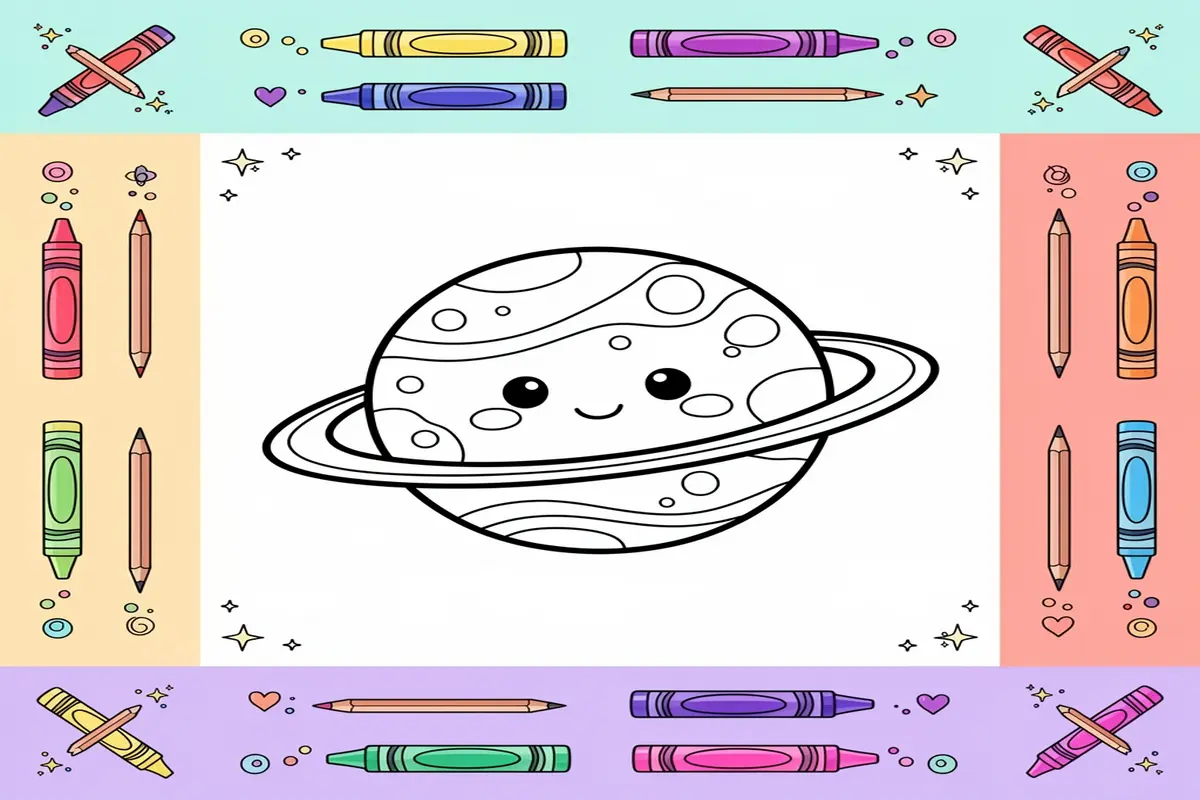
In a world saturated with screens, the simple act of coloring offers a profound return to tactile, imaginative play. It is a quiet rebellion against the digital noise, a space where focus is reclaimed and creativity is given free reign. When this timeless activity meets the awe-inspiring subject of our cosmos, something magical happens. Planet coloring pages for kids transform a blank page into a personal universe, inviting young minds on an artistic voyage of discovery. These pages do more than entertain; they serve as a springboard for curiosity about science, a canvas for emotional expression, and a tool for developing fine motor skills. From the swirling storms of Jupiter to the serene blue of Earth, each celestial body presents a unique challenge and a story to tell. As children select their colors—will Mars be rusty red or a fantastical purple?—they are not just filling shapes; they are making decisions, learning through play, and building a foundational appreciation for the wonders of space. It’s a stellar complement to other nature-themed explorations, like our deep dives into the ocean’s mysteries with free dolphin coloring pages. Ultimately, planet coloring pages for kids provide a perfect blend of education and artistry, launching pad for both knowledge and calm, focused joy.
The Cosmic Canvas: Why Space Captivates Young Minds
There is an innate human fascination with the heavens, a curiosity that begins in childhood. Planet coloring pages for kids tap directly into this sense of wonder, providing a structured yet open-ended way to explore the final frontier from the comfort of home. The appeal is multifaceted, blending science with art in a uniquely engaging format.
The Psychology of Color: A Universe of Calm
The rhythmic, repetitive motion of coloring is clinically recognized for its meditative benefits, promoting mindfulness and reducing anxiety. When applied to the vast, majestic forms of planets and galaxies, this effect is amplified. The act of carefully shading Saturn’s rings or blending the gases of a nebula requires a present-minded focus that gently pushes aside daily worries. For a child, it becomes a peaceful ritual, a quiet time where they are in control of their colorful cosmos. This mindful engagement makes planet coloring pages for kids a powerful, screen-free tool for emotional regulation and creative calm.
From Ancient Myths to Modern Science: A Rich Tapestry
The planets are not just astronomical objects; they are characters in our oldest stories, bearing the names of Roman gods. Coloring Jupiter becomes an opportunity to discuss mythology, while rendering Earth can lead to conversations about geography and environmental stewardship. This activity naturally bridges art and STEM education. As children color, parents and educators can weave in fascinating facts—the extreme temperatures of Venus, the giant storm on Jupiter, the possibility of water on Mars. Each page becomes a interactive lesson, grounding abstract scientific concepts in a tangible, creative experience.
Designed for Every Young Explorer
The beauty of planet coloring pages for kids lies in their universal accessibility. For preschoolers, simple, bold outlines of a smiling sun or a ringed planet build confidence and color recognition. School-aged children can tackle more detailed solar system maps, engaging with the relative sizes and positions of planets. Older kids and even adults might enjoy intricate, realistic depictions of planetary surfaces or imaginative scenes of alien landscapes. This scalability ensures that every child, regardless of age or skill level, can find a page that challenges and delights them, fostering a lifelong love for both art and science on their own terms.
Part 2: Essential Materials & Preparation for Planet Coloring Pages for Kids
To transform your planet coloring pages for kids into a vibrant and educational masterpiece, the right materials and setup are crucial. Proper preparation not only enhances the final artwork but also makes the coloring process more enjoyable and beneficial for developing fine motor skills. This guide outlines the professional-grade supplies and ergonomic considerations that will help young artists do justice to the rings of Saturn or the swirling storms of Jupiter on their planet coloring pages for kids.
The Foundation: Selecting Premium Paper for Durability
The choice of paper is the first critical decision. Standard printer paper (20-24 lb) is prone to bleeding and warping with most wet media. For a superior experience with planet coloring pages for kids, opt for a heavier weight. Cardstock (65-80 lb) provides a sturdy, non-bleeding surface ideal for colored pencils and fine-tip markers. For a truly professional result, consider smooth Bristol paper (100+ GSM); its vellum surface allows for impeccable blending with pencils and minimal feathering with markers, ensuring the fine details of planetary surfaces remain crisp. This is especially important for intricate designs like those found in our solar system coloring pages, where precision matters.
Best Coloring Tools: A Detailed Medium Comparison
The coloring medium defines the visual impact of your planetary scenes.
Colored Pencils: The go-to for control and detail. Wax-based pencils (e.g., Crayola) offer smooth application, while oil-based (e.g., Faber-Castell) allow for superior layering and blending—perfect for creating the gradual gradients of a Martian sunset or Jupiter’s gaseous bands. Look for soft, high-pigment cores for vibrant coverage without excessive pressure.
Markers: Provide bold, saturated color. Alcohol-based markers (like those from Crayola’s “Blend & Sketch” line) offer seamless blending, ideal for creating deep, cosmic backgrounds. Water-based markers are excellent for younger children due to their ease of use and washability. Always test on a corner to prevent bleed-through.
* Hybrid Approach: Many artists begin with colored pencils for detailed planetary bodies and use markers to quickly fill in the vast, dark expanse of space.
Finishing Touches: Gel Pens and Highlighting Techniques
Elevate the artwork with specialized tools for details. Metallic and white gel pens are indispensable for planet coloring pages for kids. Use them to add dazzling star fields, highlight the icy rings of Saturn, or create the glowing effect of a sunlit crescent on a moon. A white colored pencil or a soft pastel can be gently used to create nebulous clouds or atmospheric haze. A fine-tip black pen can be used to redefine any outlines that may have become obscured during the coloring process, ensuring each planet pops.
Perfect Workspace: Ergonomic and Lighting Setup
A proper workspace sustains focus and comfort. Ensure the coloring area is well-lit with neutral white LED lighting to reduce eye strain and reveal true color relationships—critical when distinguishing between the subtle blues of Neptune and Uranus. The seating should support good posture, with the table at elbow height. Use a clipboard or a hardback book under the page for a firm, portable surface. Keep supplies organized in cups or trays, and always place a scrap paper sheet underneath the coloring page to protect the work surface and prevent transfer.
Mastering the Cosmos: Advanced Techniques for Planet Coloring Pages for Kids
Ready to transform your child’s simple planet coloring pages for kids into breathtaking cosmic masterpieces? Moving beyond basic flat fills, these advanced techniques will unlock a new dimension of creativity and skill. They’re perfect for older kids ready for a challenge, or for parents and teachers looking to guide young artists toward more professional, satisfying results. Let’s explore the artistic strategies that turn a page of circles into a vibrant, textured universe.
Link: For more scenes that benefit from these advanced coloring methods, explore our galaxy coloring pages for kids and solar system coloring pages.
Harmonious Palettes: Color Theory for Planetary Art
Understanding basic color theory can elevate a planet coloring page from random to realistic. Teach kids about complementary colors (opposites on the color wheel) to make features pop—think using deep oranges to shade a blue gas giant. Analogous colors (colors next to each other) are perfect for creating smooth, natural transitions on a planet’s surface, like blending yellows, oranges, and reds for a fiery Mars. Encourage them to think about the planet’s “mood”: is it a cold, icy world (blues, purples, whites) or a toxic, hot planet (yellows, greens, acidic hues)? Choosing a deliberate palette before starting is the first step toward a cohesive piece of art.
From Flat to 3D: Mastering Planetary Shading
The secret to a round planet is shading. Start by choosing a consistent light source (e.g., the sun in the corner of the page). The area closest to the light will be lightest, the opposite side darkest, with a mid-tone in between. For a simple sphere, demonstrate a gradual blend from light to dark. For gas giants like Jupiter, shading can define the curve of its famous bands. Use a layering technique: apply a base color lightly, then add progressively deeper shades along the “dark side,” blending with a lighter touch or a blending tool. This creates the illusion of a spherical, three-dimensional world floating in space.
Adding Realism: Texturing Your Planets
Texture brings a planet to life. For a rocky planet like Mercury, use small, sharp strokes and stippling (tiny dots) with a darker color over a base layer to create a craggy, pockmarked surface. A gas giant’s swirling storms can be rendered with soft, circular, overlapping strokes, blending colors while they are still wet. For icy rings around a planet like Saturn, use long, smooth, parallel strokes with a white or light blue pencil over a gray base, leaving some gaps to suggest transparency and reflection. Discussing real NASA images can provide incredible inspiration for these textural details.
The Art of Correction: Gracefully Fixing Coloring Errors
Mistakes are part of the artistic process! A common issue is coloring outside the lines of a planet’s outline. Instead of seeing it as a flaw, turn it into a glowing atmospheric halo by lightly blending the stray color outward into the black space. If a color is too dark, gently lift pigment with a sticky-tack eraser. For a muddy blend, sometimes the best fix is to go darker—adding defined shadows or new planetary features can cover and incorporate the problem area. Teach kids that in space art, happy accidents can often lead to the most creative nebulae or asteroid belts in the background. The goal is confident creation, not perfection.
Showcasing Your Planet Coloring Pages for Kids: Creative Display Ideas
Once your young astronomer has filled the solar system with color, it’s time to celebrate their work! Moving beyond the coloring book, creative display turns their art into a source of pride and a daily reminder of their cosmic adventure.
Preserving Your Masterpiece: Archival Tips
To keep those vibrant planets looking stellar, consider simple preservation methods. For special pieces, use acid-free sheet protectors in a binder to create a growing gallery. Laminating pages makes them durable for play or placemats. For wall displays, use washi tape or non-damaging poster putty, which allows for easy rotation of artwork without harming walls or the precious planet coloring pages for kids.
Beyond Display: Creative DIY Projects
Transform completed pages into delightful keepsakes and gifts. Cut out colored planets to create a mobile, string them together for a festive garland, or glue them onto homemade greeting cards. You can also laminate and hole-punch them to craft unique bookmarks or decoupage them onto a small box for a special trinket holder. These projects extend the fun and learning, much like the creative potential found in our outer space coloring pages.
Your Planet Coloring Pages for Kids Questions Answered
What are the real colors of the planets?
The real colors are a fascinating mix! Mercury is gray, Venus is yellowish-white, and Earth is blue with white clouds. Mars is reddish, Jupiter has orange, white, and brown bands, Saturn is pale gold, Uranus is light blue, and Neptune is vivid blue. When using planet coloring pages for kids, this is a perfect chance to blend science with artistic choice.
How do you draw the solar system for kids?
Start with a large sun. Then, using concentric circles as guides, place the eight planets in order: Mercury, Venus, Earth, Mars, Jupiter, Saturn, Uranus, Neptune. Keep the inner four planets smaller and rocky, and the outer four larger (especially Jupiter and Saturn with its rings). Simple circles with unique features work perfectly for a child-friendly diagram.
What is the correct order of the planets?
The order from the Sun is: Mercury, Venus, Earth, Mars, Jupiter, Saturn, Uranus, and Neptune. A fun mnemonic to help kids remember is: “My Very Educated Mother Just Served Us Noodles.” Coloring the planets in this sequence on planet coloring pages for kids reinforces this fundamental astronomy lesson.
How to teach the planets to preschoolers?
Use songs, rhymes, and simple, hands-on activities. Focus on names, order, and one key characteristic each (e.g., “Mars is red,” “Saturn has rings”). Coloring is an ideal tool—it’s engaging and helps with recognition. Keep it playful and visual, celebrating their curiosity about the solar system.
What are the benefits of coloring for child development?
Coloring enhances fine motor skills, hand-eye coordination, and grip strength. It fosters creativity, color recognition, and focus. It also provides a calming, screen-free activity that boosts confidence as children complete their artwork and express themselves, making it a wonderfully beneficial pastime.
Final Thoughts: Your Planet Coloring Pages for Kids Journey Begins
The journey through the solar system with crayons in hand is more than just an art project; it’s a launchpad for curiosity, creativity, and quality time. Each page colored is a step toward understanding our incredible universe, building developmental skills, and creating joyful memories. Whether displayed proudly on the fridge or transformed into a handmade gift, these artworks represent a child’s first bold exploration of the cosmos.
We hope this guide inspires countless hours of colorful discovery. Remember, the learning and fun don’t have to stop at Pluto’s doorstep! Ready for your next adventure? Explore our galaxy coloring pages for kids for even more stellar creative fun!