We offer a wide collection of free, high-quality printable coloring pages for kids and adults. From cute animals to intricate mandalas, our designs bring creativity and relaxation to everyone. Download, print, and start coloring today!

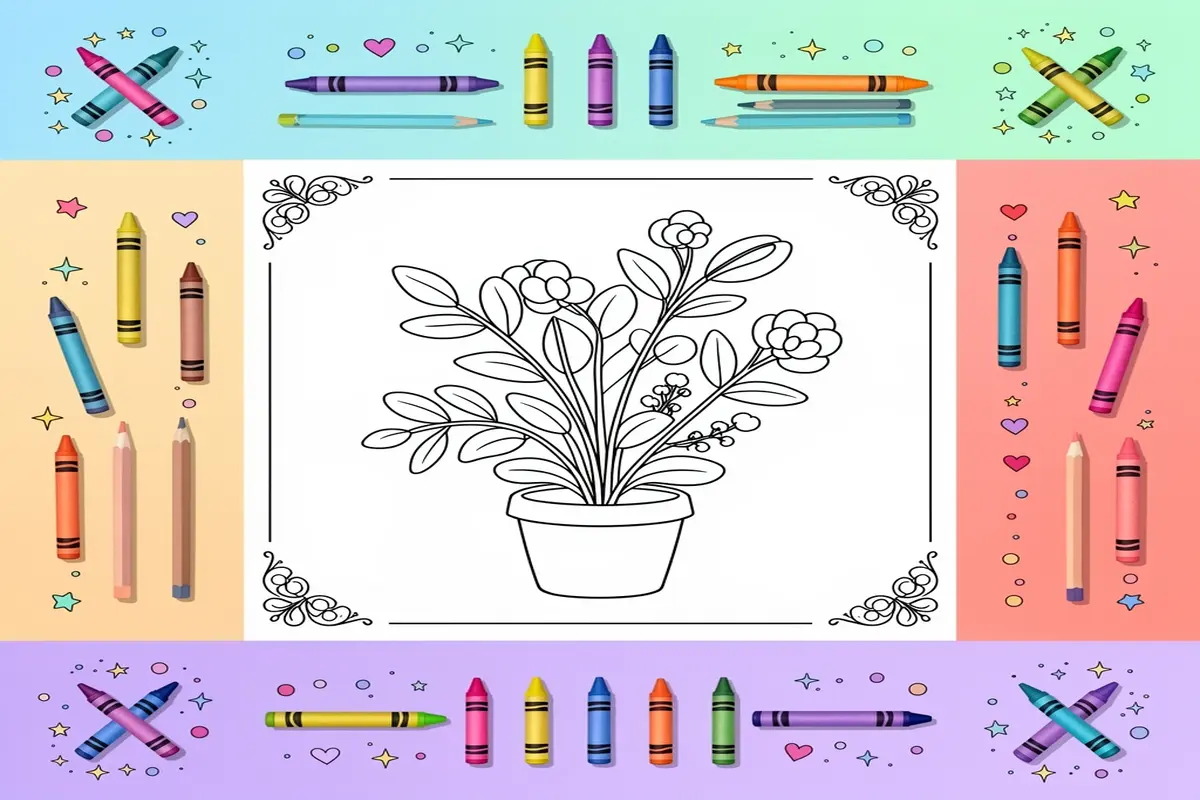
In a world saturated with digital noise, the simple act of coloring offers a profound sanctuary for young minds. It’s a tactile, screen-free journey where imagination takes root and flourishes. Among the vast garden of artistic themes, plant coloring pages for kids stand out as a uniquely enriching choice. They are more than just outlines on a page; they are portals to the natural world, inviting children to explore the intricate beauty of leaves, flowers, and towering trees from the comfort of their own table. This creative activity seamlessly blends artistic expression with foundational lessons in botany and ecology, fostering a quiet sense of wonder and focus. As a delightful complement to other nature-themed adventures, such as exploring the depths with our free dolphin coloring pages, engaging with plant coloring pages for kids helps cultivate a well-rounded appreciation for our planet’s diverse ecosystems, one colored petal at a time.
The Root of the Appeal: Why Flora Captivates Young Artists
What is it about sketching vines and shading petals that holds such timeless appeal for children? The answer lies in a powerful combination of psychological comfort, educational value, and boundless creative freedom. Plant coloring pages for kids tap into a fundamental human connection to nature, offering a structured yet open-ended canvas for self-expression.
The Psychology of Green: Mindfulness in Every Leaf
The very subject matter of plants is inherently calming. Studies in color psychology suggest that greens and blues promote relaxation and concentration. When a child focuses on filling in a fern or a sunflower, they engage in a form of active meditation. The repetitive motion of coloring within (or creatively outside!) the lines helps quiet the mind, reduce anxiety, and improve fine motor skills. This mindful practice provides a much-needed pause from overstimulation, making plant coloring pages for kids a valuable tool for emotional regulation and developing sustained attention.
A Blooming Classroom: Stealthy Science Lessons
Beyond relaxation, these pages are a vibrant educational resource. As children select colors for a rose’s bloom or a cactus’s spines, natural questions arise: “Why are leaves green?” “What does this plant need to grow?” This curiosity transforms art time into an informal science lesson. Parents and educators can use these illustrations to discuss photosynthesis, plant anatomy, habitats, and the importance of conservation. It’s learning disguised as play, making complex botanical concepts accessible and memorable through hands-on engagement.
From Seedling to Sage: Curated for Every Growing Artist
The beauty of plant coloring pages for kids lies in their incredible versatility. For the youngest artists, simple outlines of a smiling daisy or a friendly potted plant offer achievable success. Intermediate colorists can challenge themselves with detailed herb gardens, complex floral mandalas, or layered rainforest scenes. This scalability ensures that every child, regardless of skill level, can experience the joy of creation and the pride of a finished masterpiece. It’s an inclusive activity that grows with the child, continually offering new levels of detail and complexity to explore.
Part 2: Essential Materials & Preparation for plant coloring pages for kids
To transform your plant coloring pages for kids from a simple activity into an enriching artistic experience, the right materials and setup are crucial. Proper tools not only enhance the final artwork but also improve comfort and skill development. This guide details the professional supplies and preparatory steps needed to ensure every coloring session focused on plant coloring pages for kids is successful and enjoyable.
The Foundation: Selecting Premium Paper for plant coloring pages for kids
The paper you choose is the single most important factor in coloring quality. For standard home printing, opt for a bright white, smooth cardstock with a weight of 120-160 GSM (grams per square meter). This thickness prevents bleed-through from markers and allows for multiple layers of pencil without tearing. For a more textured, artistic finish suitable for botanical illustrations, a light-to-medium tooth drawing paper is excellent for colored pencils, helping the pigment grip the surface. When printing your plant coloring pages for kids, ensure your printer settings are adjusted to “cardstock” or “thick paper” for optimal ink adhesion and to capture the fine details of leaves and petals.
Best Coloring Tools: A Detailed Medium Comparison
The choice between markers, pencils, and crayons dramatically affects the outcome of your plant illustrations.
Colored Pencils: The preferred choice for detail and realism. Wax-based pencils (e.g., Crayola) offer smooth application, while oil-based (e.g., Faber-Castell) provide superior layering and blending, perfect for creating depth in flower petals and variegated leaves. Look for pencils with high pigment concentration for vibrant results without excessive pressure.
Markers: Ideal for bold, graphic-style plants. Alcohol-based markers (like Copic or Ohuhu) offer seamless blending, allowing children to create stunning gradients on large leaves. For younger artists, high-quality water-based markers with dual tips (broad and fine) provide versatility and are less likely to bleed through proper cardstock. They pair wonderfully with our flower coloring pages for kids for vibrant botanical projects.
Crayons & Gel Sticks: Excellent for younger children developing grip strength. They encourage broad, sweeping strokes, great for coloring large areas like tree canopies or garden backgrounds.
Finishing Touches: Enhancing Details with Special Tools
Once the base coloring is complete, special tools can add professional polish. Fine-line gel pens in white or metallic colors are perfect for adding highlights to dewdrops on leaves or creating delicate vein patterns. A colorless blender pencil (for wax-based sets) or a specialized blending marker can smooth pencil strokes and eliminate harsh lines, teaching kids about light and shadow. For a mixed-media approach, consider adding subtle backgrounds with soft pastels or watercolor washes before the detailed coloring begins, making the plants truly stand out.
Perfect Workspace: Ergonomic and Lighting Setup
A well-prepared workspace prevents fatigue and fosters focus. Ensure the coloring surface is stable and at an appropriate height—elbows should be at a 90-degree angle. Natural daylight is the ideal light source for accurate color perception; position the desk near a window. For evening sessions, use a high-CRI (Color Rendering Index) LED desk lamp to reduce eye strain. Keep supplies organized in cups or caddies, and always place a protective mat or extra sheet of paper under the plant coloring pages for kids to protect the table surface. Having a dedicated, inviting space signals that this is a valued creative time.
From Flat to Fabulous: Mastering plant coloring pages for kids
Unlock the full creative potential of plant coloring pages for kids by moving beyond simple flat fills. These advanced techniques will help young artists transform their pages into vibrant, textured masterpieces, building both skill and confidence. For a foundational exploration of the natural world, be sure to also check out our nature coloring pages for kids and forest coloring pages for kids.
Harmonious Palettes: Color Theory for Lush Leaves
Understanding basic color relationships can make any plant coloring pages for kids project pop. Teach children to use analogous colors (colors next to each other on the wheel, like yellow-green, green, and blue-green) for a harmonious, realistic leaf or stem. For exciting contrast, introduce complementary colors. A red flower (like a poppy) will dramatically stand out against a background of various greens. Encourage them to think beyond “just green” for leaves—adding touches of yellow, blue, or even brown can create depth and interest instantly.
From Flat to 3D: Layering and Shading Techniques
The secret to making a flat image look three-dimensional is light and shadow. Guide your child to choose an imaginary light source (e.g., the sun in the top corner). Then, practice this simple three-step method on a large leaf: 1) Base Layer: Color the entire leaf with a light green. 2) Mid-Tone: Apply a medium green to all areas except where the light hits directly. 3) Shadow: Use a darker green or blue-green along the underside and the side opposite the light. Blend gently where the colors meet. This technique also works beautifully for tree trunks and flower petals.
Adding Realism: Creating Texture in Nature
Each part of a plant has a unique texture. Here’s how to render them:
Fuzzy Stems & Leaves: For plants like lambs ear, use very short, quick strokes with a colored pencil, leaving tiny white spaces. Avoid smooth, even coloring.
Shiny Petals: To make a rose petal look glossy, leave a stark white highlight and use strong, smooth color around it, with a sharp transition between light and dark.
Rough Bark: Use a broken, scribbly technique with browns and grays, applying uneven pressure. A light touch with the side of a pencil tip can create a grainy effect.
Grassy Fields: Instead of coloring every blade, use directional upward strokes in clusters of varying greens, allowing the paper to show through in places.
The Art of Correction: Graceful Fixes for Coloring Mistakes
Mistakes are part of the learning process. Teach these recovery strategies:
Over-Coloring: If a section gets too dark, gently lift color with a kneaded eraser or use a white colored pencil to blend and lighten the area.
Outside the Lines: Turn stray marks into new artistic elements. A green mark outside a leaf can become a tiny bug or a dewdrop. A wayward flower color can be transformed into a butterfly in the background.
Color Choice Regret: Layer a new color on top! Coloring lightly allows for easy adjustment. A yellow flower can be warmed up with a light orange layer, or a blue sky can be softened with a gentle glaze of white.
Smudges: Incorporate them as natural shadows or texture in the soil or bark. The key is to work with* the accident, not just against it.
Showcasing Your Plant Coloring Pages for Kids: Creative Display Ideas
The fun doesn’t end when the last petal is colored! Turning your child’s botanical artwork into a home display or a heartfelt gift extends the joy and builds their confidence. Here are inspiring ways to celebrate their green-thumbed creativity.
Preserving Your Masterpiece: Archival Tips
To ensure those vibrant leaves and flowers stay bright, consider your display location. For long-term keepsakes, use acid-free tape or photo corners to mount pages on colored cardstock, preventing yellowing. A simple, inexpensive frame can turn any page into instant gallery art for a playroom or kitchen. For a more rustic look, clip finished pages to a string with wooden clothespins to create a rotating art banner in their bedroom.
Beyond Display: Creative DIY Projects
Transform colored pages into practical and beautiful items. Laminate a favorite page and cut it into unique bookmarks—a perfect gift for a book-loving relative. You can also glue the artwork onto a plain greeting card or a small gift box for a personal touch. For a collaborative project, combine several colored pages to create a beautiful “garden wall” mural. This process of repurposing art teaches kids about creativity beyond the page. For more nature-inspired projects, our garden coloring pages for kids offer endless floral themes.
Your Plant Coloring Pages for Kids Questions Answered
What are the benefits of coloring for child development?
Coloring is a powerhouse for development. It strengthens fine motor skills and hand-eye coordination, essential for writing. It fosters creativity and color recognition while also serving as a calming, focused activity that can improve concentration and reduce anxiety. It’s a fun, screen-free way for kids to express themselves and build confidence in their abilities.
How do you explain the life cycle of a plant to a child?
Use a simple, circular story: It starts with a tiny seed. With soil, water, and sun, it sprouts roots and a stem (a seedling). It grows into a big plant with leaves and flowers. The flowers make new seeds, which fall to the ground, and the cycle begins again! Plant coloring pages for kids often show these stages, providing a perfect visual aid for this lesson.
What are the main parts of a plant for kids?
Teach the five main jobs: Roots (drink water and anchor the plant), stem (the plant’s body, carries water), leaves (catch sunlight to make food), flower (makes seeds and fruit), and seeds (grow new plants). Coloring a detailed diagram helps children memorize these parts and their functions, making science engaging.
How to print coloring pages from the internet?
First, find a high-quality page on a trusted site. Click the print icon or open the PDF. In your printer dialog box, select “Fit to Page” to avoid cut-off edges. For best results, choose the “Best” or “High Quality” print setting. Using the right paper makes a big difference, especially for plant coloring pages for kids with intricate details.
What is the best paper for coloring with markers?
Heavyweight, smooth paper is ideal. Look for marker paper, bleed-proof paper, or cardstock (around 100 lb text weight). This prevents ink from bleeding through to the other side and allows for smooth blending. For a more affordable option, bright white multipurpose paper with a higher GSM (like 32 lb) also works well for casual coloring projects.
Final Thoughts: Your Plant Coloring Pages for Kids Journey Begins
From the first stroke of green on a leaf to the proud display of a finished masterpiece, the journey with plant coloring pages is rich with growth. It’s more than just an activity; it’s a gentle introduction to nature’s wonders, a boost for developmental skills, and a peaceful space for family connection. These pages sow the seeds of creativity, patience, and a lifelong appreciation for the botanical world.
We hope this guide inspires you to cultivate creativity and joyful learning at home. Ready for your next adventure? Explore our nature coloring pages for kids to continue discovering the beauty of the outdoors together!