We offer a wide collection of free, high-quality printable coloring pages for kids and adults. From cute animals to intricate mandalas, our designs bring creativity and relaxation to everyone. Download, print, and start coloring today!

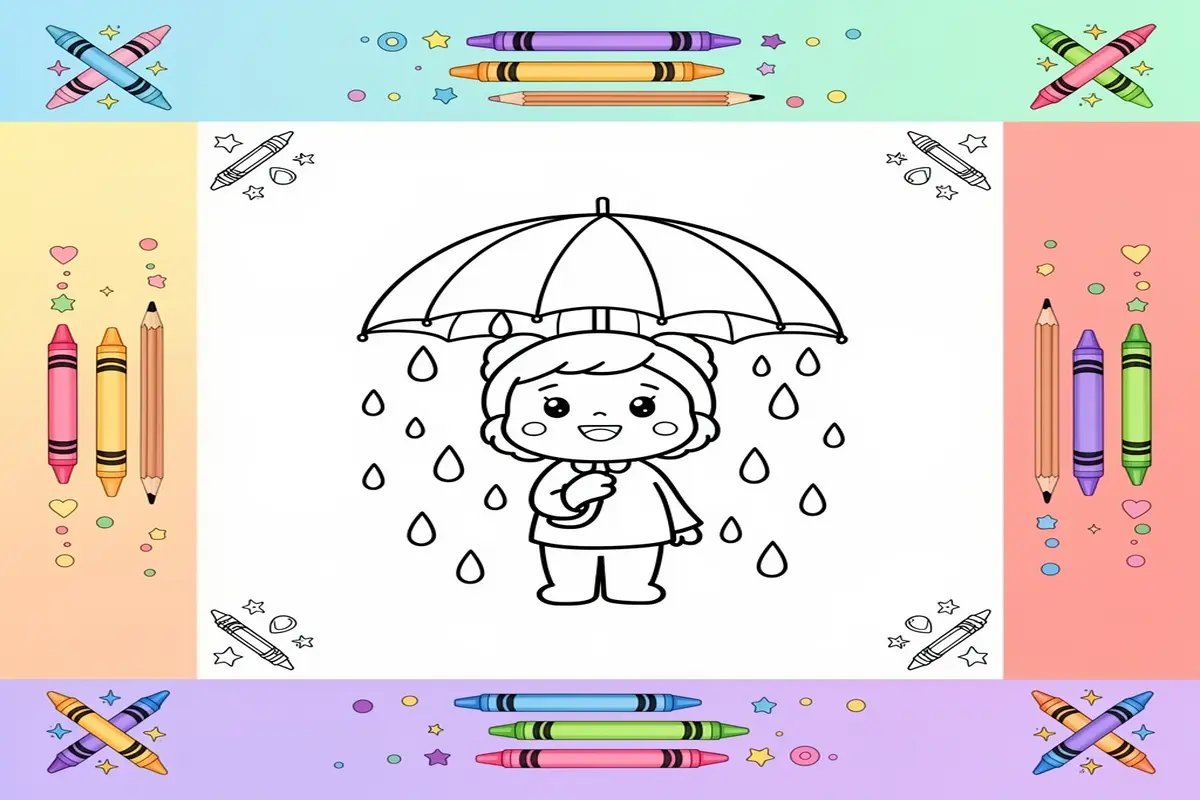
When the pitter-patter of rain replaces the sounds of outdoor play, a unique opportunity for creativity blooms indoors. rainy day coloring pages for kids are more than just a simple pastime; they are a portal to imaginative worlds, a tool for quiet focus, and a vibrant antidote to the gloom outside. This cherished activity turns confinement into concentration, allowing young minds to explore jungles, oceans, and fantastical landscapes from the comfort of a cozy table. The act of selecting colors and filling intricate shapes is a deeply engaging process that fosters mindfulness, fine motor skills, and artistic confidence. Whether your child is captivated by the majesty of the savanna or the mysteries of the deep sea, a curated collection of rainy day coloring pages for kids can transform a dull afternoon into an enriching adventure. For a journey beneath the waves, our collection of free dolphin coloring pages offers a perfect starting point.
The Alchemy of Art: Why Coloring Captivates on Cloudy Days
The Mindful Stroke: Cultivating Calm and Focus
At its core, coloring is a form of active meditation for children. The repetitive, focused motion of applying color within lines requires a gentle concentration that naturally quietens a restless mind. This mindful engagement is particularly potent on rainy days, when pent-up energy needs a constructive outlet. The simplicity of the task—choose a color, fill a space—provides a manageable challenge that builds executive function skills without the pressure of a blank page. rainy day coloring pages for kids serve as a structured creative exercise, guiding young artists toward a satisfying completion that boosts self-esteem and provides a tangible sense of accomplishment amidst the unstructured time.
A Historical Hues: From Scholarly Roots to Universal Joy
While modern coloring books are a staple of childhood, their origins are surprisingly academic. The practice can be traced back to the 17th and 18th centuries with the creation of “painting books” for adults, often used to teach botany or anatomy. It wasn’t until the 19th century, with advancements in printing technology, that coloring activities became widely accessible for children. Today, they are a global phenomenon, transcending language and culture. This evolution from educational tool to beloved leisure activity underscores its fundamental appeal: the universal human desire to create and bring order and beauty to a defined space, a need felt acutely on days when the world outside seems gray and formless.
A Spectrum for Every Age: Curated Engagement for All
One of the greatest strengths of rainy day coloring pages for kids is their inherent scalability. For toddlers and preschoolers, large, simple shapes like friendly animals or basic objects help develop grip and color recognition. School-aged children can tackle more detailed scenes, intricate patterns, or educational themes like maps or historical figures, turning a rainy day into a stealth learning session. Even older kids and pre-teens find satisfaction in sophisticated mandalas, elaborate nature scenes, or character-based art that aligns with their interests. This versatility ensures that every child, regardless of skill level, can find a page that offers the right balance of challenge and achievable fun, making it a perfect family activity where everyone can participate at their own pace.
Professional Materials & Preparation for rainy day coloring pages for kids
To transform a gloomy afternoon into a vibrant creative session, the right materials and a bit of preparation are key. Having a dedicated toolkit for your rainy day coloring pages for kids not only elevates the final artwork but also enhances the entire experience, making it more engaging and less messy. This section details the essential supplies and setup to ensure every indoor art day is a success.
The Foundation: Selecting Premium Paper for rainy day coloring pages for kids
The paper you choose is the single most important factor in coloring success. For standard rainy day coloring pages for kids printed at home, a bright white, smooth cardstock (around 160-200 GSM) is ideal. This weight prevents bleed-through from markers and can handle layered pencil work without tearing. For a more artistic project, consider mixing in specialty papers; watercolor paper can add texture for a unique effect, especially if you’re using our nature coloring pages for kids that feature landscapes and skies. Always have a stack of printer paper or a simple sketchpad for quick, casual coloring to encourage spontaneous creativity without pressure.
The Artist’s Palette: A Detailed Comparison of Coloring Mediums
The choice between markers, colored pencils, and crayons defines the artwork’s style and complexity.
Colored Pencils (Professional & Scholar Grade): The most versatile tool for detailed work. Scholar-grade pencils (wax or oil-based) offer good pigment at an affordable price, perfect for building fine motor skills. Professional artist-grade pencils have superior pigment concentration and blendability, allowing for advanced techniques like shading and gradients on more intricate pages. They are a clean, low-mess option ideal for sustained focus.
Markers (Alcohol vs. Water-Based): Alcohol-based markers (like brush pens) provide vibrant, blendable colors with a painterly effect but require bleed-proof paper. Water-based markers are the standard for children; they are washable and less prone to bleeding through heavier paper. They deliver bold, flat color perfect for filling larger areas quickly.
Crayons & Gel Sticks: Excellent for younger children, crayons build hand strength and offer a tactile experience. Gel sticks are a cleaner, highly pigmented alternative that glides on smoothly, covering large areas with brilliant color without the pressure needed for pencils.
Precision and Shine: The Role of Finishing Tools
Elevate the artwork from great to spectacular with detailing tools. Fine-line black markers (0.4mm or smaller) are perfect for redefining outlines or adding intricate patterns. Metallic or opaque white gel pens are indispensable for adding highlights, drawing raindrops, creating stars, or adding patterns to clothing. A set of glitter glue pens (used sparingly) can add a celebratory, tactile element to finished pieces. A quality pencil sharpener for colored pencils and a good eraser are non-negotiable for maintaining precision.
Crafting the Ideal Creative Environment: Ergonomics and Lighting
A proper workspace prevents fatigue and fosters concentration. Ensure the coloring surface is stable and at an appropriate height—elbows should rest comfortably at a 90-degree angle. Natural light is best; position the workspace near a window if possible. For evening or dark days, a bright, cool-white LED desk lamp that minimizes shadows is essential. Keep supplies organized in cups or caddies for easy access, and always protect the table surface with a large placemat or scrap paper. Having a damp cloth nearby for quick clean-ups of hands or tools keeps the focus on the fun of rainy day coloring pages for kids.
Part 3: Elevating the Experience: Advanced Techniques for Rainy Day Coloring Pages for Kids
When the rain is pouring and the coloring pages are spread out, it’s the perfect opportunity to move beyond simple filling and explore techniques that transform a fun activity into a true artistic adventure. These advanced methods not only produce stunning results but also build fine motor skills, patience, and a deeper understanding of art. Let’s unlock the full potential of your rainy day coloring pages for kids with some professional-grade techniques.
Harmonious Palettes: Color Theory for Rainy Day Scenes
Understanding basic color theory can turn a good picture into a great one. For rainy day coloring pages for kids, you often have scenes with water, skies, and reflections.
Complementary Colors: Use opposites on the color wheel to make elements pop. A yellow raincoat against a purplish-gray stormy sky creates vibrant contrast.
Analogous Colors: For a calm, cohesive look, use colors next to each other. Try different shades of blue and green for a serene, wet landscape. Exploring our nature coloring pages for kids can provide excellent practice for these harmonious outdoor palettes.
Mood Setting: Cool blues and grays naturally evoke a rainy, tranquil feel, while adding small spots of warm colors (like a red door or orange boots) adds focal points and visual interest.
From Flat to 3D: Mastering Simple Shading
Shading adds depth and dimension, making illustrations leap off the page.
1. Identify Your Light Source: Decide where the “sun” or light is coming from (e.g., the top corner of the page). This is rule number one.
2. Apply Basic Pressure: On the side of an object away from the light, press harder with your crayon or colored pencil. The side closer to the light should be lighter. For a puddle, the top might be lighter where it reflects the sky, while the edges are darker.
3. Blend for Smoothness: Use a lighter color or a blending stump (a rolled paper tool) to gently smooth the transition between dark and light areas. A white colored pencil can also soften and blend colors beautifully.
Adding Realism: Creating Texture in Rainy Settings
Texture brings tactile feel to a 2D page. Rainy days are full of textural opportunities!
Wet Surfaces: To show a slick, wet street or puddle, leave tiny white streaks or spots as highlights. Color around them, suggesting reflections.
Furry or Fuzzy Details: For animals like a cat caught in the rain, use very short, quick strokes in the direction the fur grows. Layer a darker shade for depth. Our cute bear coloring pages for kids offer a perfect subject to practice furry textures.
Raindrops Themselves: Draw tiny “C” shapes or dots with a white gel pen over a colored, gray sky to make raindrops appear to be falling in front of the background.
The Art of Correction: Gracefully Fixing Coloring Mistakes
Mistakes are part of the process. Here’s how to pivot creatively:
Turn a Smudge into a Feature: A stray mark outside the lines can become a leaf blowing in the wind, a distant bird, or a splash in a puddle.
Layer to Cover: Lightly colored mistakes can often be covered by layering a darker color on top. A blue streak on a gray cloud can be blended into a darker storm cloud shade.
Incorporate the “Error”: If a color looks out of place, use it elsewhere in small amounts to create balance, turning an accident into a deliberate part of your color scheme. The goal is creative expression, not perfection.
By integrating these techniques, your next session with rainy day coloring pages for kids becomes a masterclass in creativity, transforming a quiet indoor pastime into a vibrant storm of artistic discovery.
Showcasing Your Rainy Day Coloring Pages for Kids: Creative Display Ideas
The fun doesn’t stop when the last crayon is put down! Transforming your child’s completed rainy day coloring pages for kids into home décor or gifts celebrates their effort and creativity, turning a simple activity into a lasting memory.
Preserving Your Masterpiece: Archival Tips
To ensure your child’s artwork stands the test of time, consider simple preservation methods. For a professional look, use a spray fixative to prevent wax crayon smudging. Laminating pages is perfect for pieces that will be handled often, like placemats. Alternatively, invest in inexpensive clip frames or create a rotating gallery on the refrigerator or a dedicated string with clothespins. Storing flat portfolios protects a whole collection of masterpieces.
Beyond Display: Creative DIY Projects
Take those colorful creations to the next level with easy DIY projects. Turn them into custom greeting cards, bookmarks, or gift tags. You can decoupage them onto a plain box or tray for a personalized keepsake. For a collaborative family project, combine several colored pages to create a unique “art book” or a vibrant patchwork banner to brighten up any room. These projects extend the creative joy and make wonderful, heartfelt gifts for family members.
Your Rainy Day Coloring Pages for Kids Questions Answered
What are the benefits of coloring for kids?
Coloring is far more than just play. It significantly boosts fine motor skills and hand-eye coordination as children practice staying within lines. It serves as a calming, screen-free activity that fosters focus and reduces anxiety. Furthermore, it’s a powerful outlet for creative expression and color recognition, making it a key tool for holistic child development during indoor days.
How to print coloring pages from Google?
Search for your desired theme, like “free rainy day coloring pages for kids,” and click ‘Images.’ To find high-quality, printable pages, use the ‘Tools’ button below the search bar, select ‘Size,’ and choose ‘Large.’ Always click through to the original website (like our collection at Safari Coloring) to ensure you’re downloading a print-ready PDF or high-resolution image, not just a web preview.
Where to find free coloring sheets?
Numerous educational and parenting websites offer vast libraries of free coloring sheets. For a wide variety of themes—from farm animals to fantasy scenes—our own archive provides endless options. You can find fantastic themed collections, like our Farm Animal Coloring Pages, perfect for expanding your child’s rainy day activity repertoire with just a few clicks.
Why is coloring important for child development?
Coloring is a foundational activity that supports multiple developmental areas. It strengthens the hand muscles needed for writing, enhances concentration, and encourages patience. By making choices about colors and techniques, children build decision-making skills and confidence. Engaging with rainy day coloring pages for kids also provides a safe space to process emotions and express their unique perspective on the world.
What can children do on a rainy day?
Beyond coloring, rainy days are perfect for indoor forts, baking simple treats, or family board games. Combine activities by having your child draw their own rainy day picture first, then bring it to life with a themed storytime or puppet show. Keeping a stash of new rainy day coloring pages for kids on hand ensures you’re always prepared with a quick, engaging, and creative option.
Final Thoughts: Your Rainy Day Coloring Pages for Kids Journey Begins
A rainy day transforms from a limitation into an opportunity—an invitation to slow down, create, and connect. By providing these simple pages, you’re offering more than just an activity; you’re gifting moments of calm, bursts of creativity, and tangible proof of your child’s growing abilities. Each finished page is a story of focus and imagination, a bright spot against the grey sky.
So, embrace the next downpour. Gather your brightest crayons, print a fresh stack of pages, and watch as your living room becomes a studio. The benefits will linger long after the clouds have cleared, building a treasure trove of art and happy memories. Ready for your next adventure? Explore our Ocean Coloring Pages to dive into a whole new world of creativity!