We offer a wide collection of free, high-quality printable coloring pages for kids and adults. From cute animals to intricate mandalas, our designs bring creativity and relaxation to everyone. Download, print, and start coloring today!

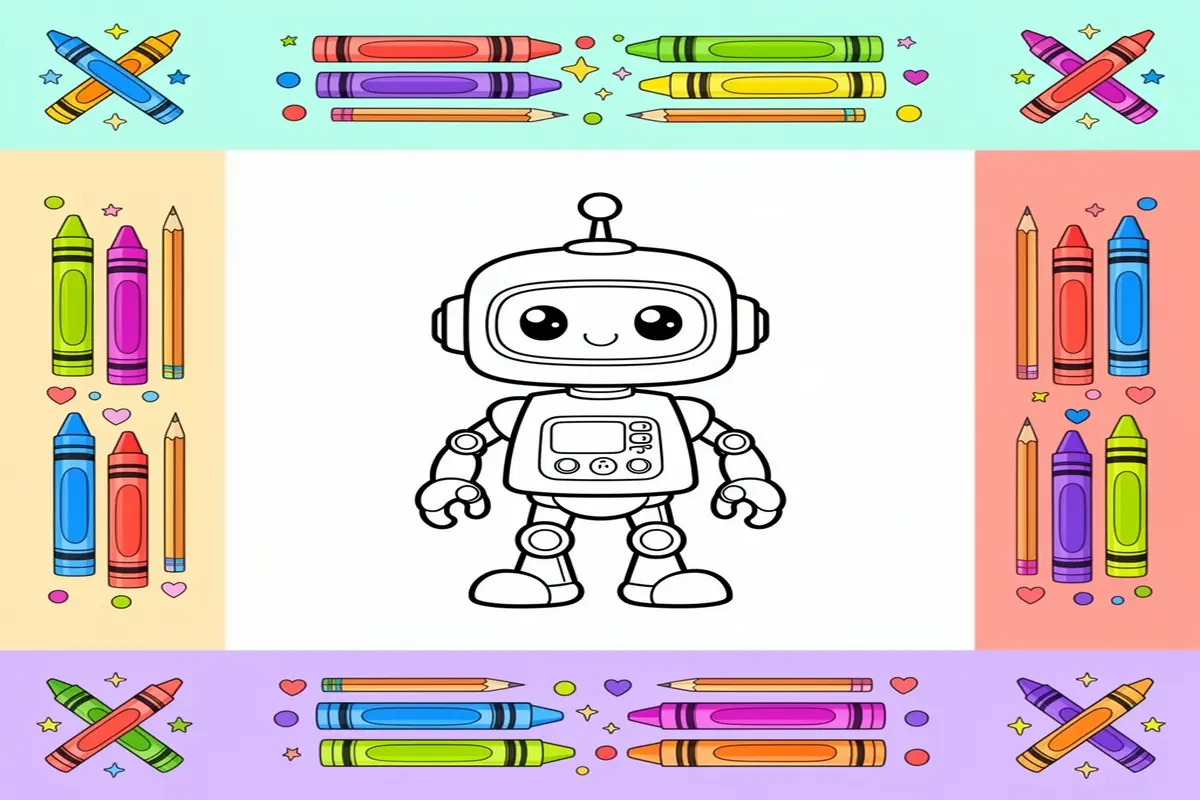
In a world increasingly shaped by technology, the simple act of coloring remains a timeless portal to imagination and calm. Yet, when that canvas features the gears, circuits, and sleek forms of robots, it unlocks a uniquely modern creative adventure. robot coloring pages for kids blend the wonder of futuristic innovation with the foundational benefits of artistic play, offering a dynamic activity that engages both logic and fantasy. Unlike traditional subjects, these pages invite young minds to ponder mechanics, design, and the boundless possibilities of tomorrow, all while developing fine motor skills and color theory understanding. For children fascinated by how things work or who dream of their own mechanical companions, this theme provides the perfect creative outlet. It’s a fantastic complement to other STEM-inspired activities, much like the exploration found in our outer space coloring pages. The journey through robot coloring pages for kids is more than filling in shapes; it’s about constructing a personalized vision of the future, one vibrant color at a time.
Part 1: Beyond the Lines: The Cognitive Spark of Mechanical Art
Engaging with robot coloring pages is a deceptively rich exercise that fires up multiple areas of a child’s developing brain. It’s where art meets engineering in the most accessible way.
The STEAM Connection: Coloring as Foundational Learning
At its core, coloring a robot is a lesson in basic engineering and design thinking. Children unconsciously analyze the robot’s structure: Where are the joints? What does that antenna do? Could those panels be solar powered? This observational process encourages analytical thinking and curiosity about real-world mechanics. Choosing colors becomes a decision-making exercise in form and function—should the armor be metallic grey or camouflaged? Is this a friendly helper bot or a powerful explorer? This narrative-building transforms the page into a problem-solving playground, laying early groundwork for principles in science, technology, engineering, art, and mathematics (STEAM) in a pressure-free, enjoyable format.
A Canvas for Emotional Expression and Control
Robots, while mechanical, often possess humanoid or animal-like features that children can project emotions onto. The act of selecting colors for a robot’s “eyes” or designing its exterior allows kids to explore feelings and personalities. They create characters that can be strong, kind, silly, or brave. This externalization is a powerful tool for emotional literacy. Furthermore, the structured yet open-ended nature of robot coloring pages for kids provides a sense of control and predictable outcome within safe boundaries—a comforting balance for young minds navigating a complex world. The focus required to color within intricate mechanical details promotes mindfulness, helping to quiet anxiety and improve concentration.
From Novice to Visionary: Scalable Complexity for All Ages
The beauty of this theme lies in its incredible range. Simple, bold-outline robots with large spaces are perfect for preschoolers learning grip and boundary recognition. For older children and even adults, highly detailed pages featuring intricate circuitry, layered armor, and complex backgrounds offer a satisfying and lengthy creative challenge. This scalability ensures that robot coloring pages for kids can grow with the artist, continually offering an appropriate test of skill and patience. Whether a child is taking their first creative steps or is a seasoned young artist, the robot theme meets them at their level, promising achievement and the pride of bringing a unique mechanical marvel to life.
Part 2: Essential Materials & Professional Preparation for Robot Coloring Pages for Kids
To transform your robot coloring pages for kids from a simple activity into a rich, skill-building experience, the right materials and preparation are key. This section outlines a professional toolkit that empowers young artists to explore textures, metallic sheens, and intricate details often found in robotic designs, fostering both creativity and fine motor development. Proper setup not only enhances the final artwork but also makes the session more enjoyable and focused for the child.
The Foundation: Selecting Premium Paper for Robot Coloring Pages for Kids
The paper you choose is the single most important factor in the coloring experience. For detailed robot coloring pages for kids, standard printer paper often bleeds and warps. Opt for a heavier weight: look for “marker paper” or “mixed-media paper” with a GSM (grams per square meter) of 120 or higher. This density prevents bleed-through from markers, allows for layering with colored pencils, and handles erasing without pilling. A smooth vellum finish is ideal for precise marker work and fine lines, while a slight tooth can help colored pencils adhere and blend better, perfect for adding shadow and depth to metallic robot parts. For a special project, consider printing on cardstock to create stand-up robot models.
Advanced Coloring Mediums: Markers vs. Pencils for Robotic Details
The choice between markers and pencils dictates the final look of the artwork. For vibrant, solid blocks of color on a robot’s armor or glowing energy cores, alcohol-based markers (like Copic or Ohuhu) provide seamless, bleed-free blends. However, for children, high-quality water-based markers with fine and broad tips offer excellent control and are easier to manage. For intricate circuitry, mechanical joints, and textured metal, colored pencils are superior. Wax-based pencils (like Prismacolor) offer soft, blendable pigment for smooth gradients, while oil-based pencils (like Faber-Castell Polychromos) are excellent for sharp, fine details and layering. A hybrid approach often yields the best results: markers for large areas and pencils for detailed work.
Precision Detailing: Gel Pens, Highlights, and Metallic Finishes
The magic of bringing a robot to life lies in the details. This is where specialized tools shine. Gel pens, especially in white and metallic silver or gold, are indispensable for adding highlights to rounded surfaces, drawing tiny screws, or creating glowing eyes and power sources. Fine-line ink pens (size 0.3 or 0.5) are perfect for outlining or adding intricate mechanical hatch lines to suggest depth. For a truly futuristic feel, consider adding metallic wax pastels for a brushed-metal effect or even child-safe chrome-effect nail polish (with supervision) for specific components. These finishing touches elevate robot coloring pages for kids to a display-worthy piece of art.
Ergonomic Workspace Setup: Lighting, Seating, and Organization
A prepared environment prevents frustration and promotes sustained focus. Ensure the workspace is well-lit with natural or bright, white LED light to reduce eye strain and allow children to see true colors and fine lines. The chair and table height should allow the child’s feet to rest flat and forearms to be parallel to the table. Organize materials within easy reach using cups for pencils and markers. Placing a blank sheet of paper under the coloring hand prevents smudging, especially when working with pencils. Having a dedicated space for this creative work signals its importance. For inspiration from other detailed animal themes, explore our realistic lion coloring pages free printable, which also benefit from a thoughtful material selection. Finally, keep a soft cloth for wiping pencil dust and a pencil sharpener handy to maintain those fine points for the complex gears and wires in your robot coloring pages for kids.
Mastering robot coloring pages for kids: Advanced Coloring Techniques
Ready to take your child’s robot coloring pages for kids from simple to spectacular? This guide moves beyond basic filling to explore professional techniques that build artistic confidence and create stunning results. By mastering a few key methods, kids can transform flat robot illustrations into dynamic, metallic machines brimming with personality. Let’s unlock the secrets of color theory, shading, texture, and even graceful error correction to elevate every robot coloring pages for kids project.
Harmonious Palettes: Color Theory for Metallic Marvels
Choosing colors isn’t just about preference; it’s about creating harmony and mood. For robot coloring pages for kids, understanding simple color theory can make a robot look cohesive and intentional. Start with complementary colors (opposites on the color wheel), like blue and orange or purple and yellow. Using these for details on a robot creates exciting, high-energy contrast—perfect for laser eyes or power cores. For a more unified, calm look, use analogous colors (colors next to each other on the wheel), like different shades of blue, teal, and silver. This scheme is excellent for creating a sleek, futuristic body. Don’t forget that robots can be inspired by nature too! Exploring our realistic animal coloring pages can provide fantastic ideas for camouflaged or bio-mechanical robot color schemes.
From Flat to 3D: Shading for Depth and Dimension
Shading is the magic that makes a circle look like a sphere and a square look like a cube. Teach kids to imagine a light source (like a sun) in one corner of the page. The sides of the robot closest to that light are lightest, while the opposite sides are darkest. Start by coloring the entire robot part with a base color. Then, using a firmer pressure or a slightly darker shade of the same color, apply a second layer along the edges away from the light. Finally, leave a small highlight or use a very light touch on the edges closest to the imagined light. This simple three-step process—base color, shadow, highlight—instantly adds convincing 3D form to gears, bolts, and robot limbs.
Adding Realism: Rendering Metal, Glass, and Wires
Texture brings a robot to life. For shiny metal, use smooth, even coloring with sharp, crisp highlights and dark shadows. Leaving a thin white streak along a curved edge mimics a gleaming metallic surface. For glass or screens, try a light blue or gray base, then add a diagonal white “glare” streak. Wires and cables can be made to look rounded by shading along their length, not across. For rusty or battle-worn robots, experiment with light, dotted strokes of brown or orange over the base metal color. Looking at intricate subjects like our octopus coloring pages can inspire ways to add texture to robotic tentacles or flexible hydraulic hoses.
The Art of Correction: Graceful Fixes for Coloring Mistakes
Mistakes are part of the artistic process! A common issue is coloring outside the lines. Instead of seeing it as an error, turn it into a feature: use that color to create a glowing aura or a shadow on the ground beneath the robot. For small smudges or unwanted marks, a white gel pen can be a savior for precise cover-ups. If an area becomes too dark, gently lighten it by dabbing with a kneaded eraser. Most importantly, encourage a mindset of creative problem-solving. A stray mark can become a new bolt, a warning stripe, or a cool scuff mark on the robot’s armor. The goal is progress, not perfection.
Showcasing Your Robot Coloring Pages for Kids: Creative Display Ideas
Once the final bolt is colored and the last antenna shaded, the fun doesn’t have to stop! Transforming your child’s completed robot coloring pages for kids into cherished decor or heartfelt gifts is the perfect next step. These creative displays celebrate their artistic journey and build lasting confidence.
Preserving Your Masterpiece: Archival Tips
To ensure those metallic robots stay vibrant, consider simple preservation methods. For long-term display, use acid-free photo corners or a non-glare UV-protective spray to prevent fading. Laminating pages is a durable, kid-friendly option, making them spill-proof and perfect for repeated admiration. For a gallery wall, mount finished pages on colorful cardstock using double-sided tape and arrange them in a dynamic grid to create a stunning “Robot Revolution” exhibit in their bedroom or playroom.
Beyond Display: Creative DIY Projects
Take the artwork off the wall and into the world with easy DIY projects. Turn a favorite robot into a custom greeting card by folding cardstock and gluing the colored page to the front. Create unique bookmarks by laminating a narrow strip of the artwork and adding a tassel. For a memorable gift, decoupage several robot coloring pages onto a plain wooden tray or box. These projects extend the creative play and make wonderful, personalized presents for family members.
Your Robot Coloring Pages for Kids Questions Answered
How do you draw a robot step by step?
Start with simple geometric shapes: squares for the body, rectangles for limbs, and circles for joints and eyes. Connect them to form a basic figure. Add fun details like antennae, control panels, bolts, and tools. Encourage kids to personalize their robot with unique features like rocket boosters or a friendly smile. The beauty of drawing robots is there are no wrong answers—every design is unique!
What are the benefits of coloring for kids?
Coloring is a powerhouse activity for development. It significantly enhances fine motor skills and hand-eye coordination as children practice staying within lines. It fosters creativity, color recognition, and focus. On an emotional level, it provides a calming, screen-free outlet for self-expression and can be a wonderful tool for mindfulness and stress relief for children of all ages.
How to color a robot to look like metal?
To create a metallic effect, use shades of gray, silver, and blue. Leave small, thin white spaces as “highlights” where light would hit. Use darker grays or blacks to add shadows along the edges of the robot’s parts. Lightly layering colors and using a blending technique can create a shiny, reflective look. Metallic gel pens or crayons are also fantastic for adding instant chrome-like accents to your robot coloring pages for kids.
What is the best paper for printable coloring pages?
For best results, use slightly heavier paper like cardstock (around 65-80 lb text weight). It prevents bleed-through from markers, handles layered crayon or pencil better, and feels more substantial for display. For everyday use with crayons or colored pencils, standard printer paper is perfectly fine. The right paper can elevate the entire coloring experience, especially for special projects.
Is coloring good for fine motor skills?
Absolutely. Coloring is an excellent exercise for developing the small muscles in the hands, fingers, and wrists. The precise grip and controlled movements required to maneuver a crayon or pencil directly strengthen these muscles, which are essential for writing, buttoning clothes, and using utensils. This makes engaging with robot coloring pages for kids both fun and fundamentally beneficial for early childhood development.
Final Thoughts: Your Robot Coloring Pages for Kids Journey Begins
The journey through a world of gears, bolts, and imaginative robots is more than just an afternoon activity; it’s a launchpad for creativity, skill-building, and joyful connection. Each page your child completes is a testament to their growing abilities and unique perspective, blending artistic expression with the thrilling themes of technology and innovation. By displaying their work or transforming it into gifts, you validate their effort and fuel their passion for creation.
Remember, every colored page is a step toward stronger motor skills, greater focus, and wonderful shared memories. So, gather your brightest colors, print your favorite designs, and let the robotic adventures unfold on paper. Ready for your next adventure? Explore our outer space coloring pages to continue the journey among the stars!