We offer a wide collection of free, high-quality printable coloring pages for kids and adults. From cute animals to intricate mandalas, our designs bring creativity and relaxation to everyone. Download, print, and start coloring today!

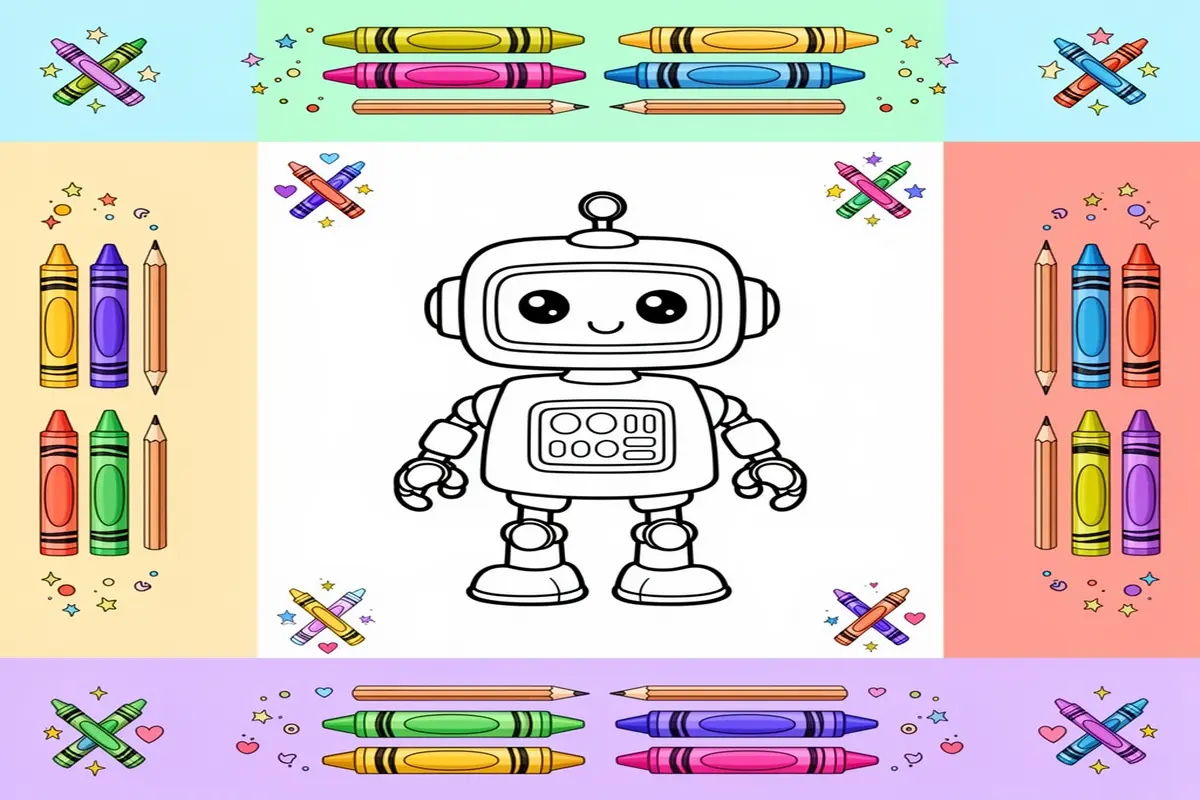
In a world increasingly shaped by technology, capturing a child’s imagination often requires a bridge between the digital and the tangible. Enter the captivating realm of robot coloring pages for kids, a creative medium where futuristic dreams meet the timeless joy of crayons and markers. These aren’t just outlines on a page; they are portals to innovation, inviting young minds to design, personalize, and breathe life into their own mechanical companions. The act of coloring these intricate or charming robotic forms does more than fill an afternoon—it fosters fine motor skills, encourages color theory experimentation, and sparks conversations about science, engineering, and the boundless possibilities of the future. Whether your child is fascinated by friendly helper bots or epic transforming mechs, robot coloring pages for kids offer a uniquely engaging artistic adventure, distinct from the organic forms found in our collection of sea creature printables.
Part 1: Beyond the Circuit Board: The Creative Power of Robot Art
At first glance, robot coloring pages for kids might seem like simple sci-fi fun. But delve deeper, and you uncover a rich tapestry of developmental and psychological benefits, framed within a theme that resonates powerfully with today’s youth.
The Psychology of the Machine: Fostering Focus and Control
Coloring, at its core, is a mindfulness exercise. The focused attention required to stay within lines and make color choices quiets the mind’s chatter. With robot-themed pages, this meditative quality is amplified by the subject matter. Robots often symbolize order, logic, and capability. For a child, meticulously coloring a complex robot provides a sense of mastery and control. They become the engineer, deciding if their creation is sleek and metallic or wildly colorful and expressive. This process builds patience, improves concentration, and offers a satisfying, screen-free zone of calm creativity.
A Cultural Canvas: From Gears to Galaxies
The robot as a cultural icon has evolved from clunky industrial machines to beloved characters in film, literature, and animation. Robot coloring pages for kids tap into this rich narrative history. They allow children to connect with stories of adventure, teamwork, and innovation. Is the robot they’re coloring a brave explorer from a distant galaxy, a helpful assistant in a city of the future, or a guardian with a heart of gold? This thematic depth transforms a coloring activity into a storytelling session, encouraging narrative thinking and emotional connection to the art they are creating.
Curated for Every Young Inventor
The beauty of this genre lies in its incredible range. Simple, bold-line robots with friendly faces are perfect for preschoolers developing grip and confidence. More detailed pages, featuring intricate mechanical interiors, hydraulic limbs, and futuristic cityscapes, challenge older children and even tweens. This scalability ensures that robot coloring pages for kids are not a passing phase but a growing creative pursuit. They cater to the budding artist, the curious scientist, and the dreamer alike, proving that artistic expression and technological curiosity are perfect partners in nurturing a well-rounded, imaginative mind.
Part 2: Essential Materials & Professional Preparation for Robot Coloring Pages for Kids
To transform your robot coloring pages for kids from a simple activity into an enriching creative experience, the right materials and setup are crucial. Proper preparation not only enhances the final artwork but also builds good habits and prolongs engagement. This section details the professional-grade supplies and environmental considerations that will help young artists achieve vibrant, detailed results on their robotic creations, from simple automatons to complex androids.
The Foundation: Selecting Premium Paper for Robot Coloring Pages for Kids
The paper is the canvas for imagination, especially for intricate robot coloring pages for kids featuring gears, circuits, and metallic surfaces. Standard printer paper (20-24 lb) is prone to bleeding and buckling. Opt for a heavier weight: 32 lb (120 GSM) bond paper offers excellent bleed resistance for most markers, while 60-80 lb (90-130 GSM) smooth Bristol board provides a superior surface for layering colored pencils. For advanced techniques like blending solvents with pencils, a dedicated mixed-media paper is ideal. A high-quality paper ensures crisp lines and allows children to experiment with pressure and blending without frustration, making their robot’s armor shine and their mechanical details pop.
Best Coloring Tools: A Detailed Comparison of Mediums
The choice between markers, pencils, and crayons dramatically affects the outcome of your robot coloring pages for kids.
Colored Pencils: The preferred tool for detail and control. Wax-based pencils (e.g., Crayola) are excellent for beginners, offering smooth application. For more advanced artists, oil-based pencils (e.g., Faber-Castell Polychromos) provide superior layering and blending, perfect for creating metallic gradients and shadow effects on robot armor. Look for pencils with high pigment concentration for vibrant colors.
Markers: Provide bold, saturated color perfect for large robot panels. Alcohol-based markers (e.g., Copic, Ohuhu) blend seamlessly and dry quickly, allowing for smooth gradients on robot exoskeletons. However, they require bleed-proof paper. Water-based markers are less prone to bleeding on standard paper but can leave streak marks on large areas. A dual-tip marker (fine and chisel) is versatile for both outlining and filling.
Crayons: Great for younger children for their durability and ease of use, though they lack the precision needed for finer details. They can be used for a textured, waxy effect.
Finishing Touches: Gel Pens, Highlights, and Metallic Accents
Elevate the final artwork with specialized tools that make robots look truly futuristic. Gel pens, especially in metallic silver, gold, and copper, are perfect for tracing circuit lines, adding bolt details, or creating glowing eyes and power cores. White gel pens or acrylic paint markers can add essential highlights to curved surfaces, simulating light reflection on metal. For a cosmic or holographic effect, consider using glitter glue pens sparingly on energy weapons or display screens. These details encourage children to think about light sources and material properties, adding a layer of STEM learning to the artistic process. For more creative ideas on using vibrant colors, explore our galaxy coloring pages for kids, which can inspire nebula-like backgrounds for space-faring robots.
Perfect Workspace: Optimizing Lighting and Ergonomics
A proper workspace is as important as the materials. Ensure the coloring area is well-lit with neutral white LED light (4500-5500 Kelvin) to reduce eye strain and show true colors, which is vital when shading the intricate parts of a robot. The seating should support good posture: feet flat on the floor, table at elbow height. For prolonged sessions, a slanted drawing board can improve posture and provide a better view of the artwork. Keep supplies organized in cups or caddies—this not only minimizes clutter but also teaches organizational skills. Having a dedicated, prepared space signals to the child that their creative time is valued and helps them focus on bringing their robot coloring pages for kids to life.
Part 3: Elevating Your Art: Advanced Techniques for robot coloring pages for kids
Ready to transform those fantastic robot coloring pages for kids from simple outlines into stunning, dimensional artworks? This section moves beyond basic filling to explore professional techniques that will build confidence and skill in any young artist. By mastering a few key concepts, children can bring their mechanical creations to life with realistic depth and dazzling detail.
Harmonious Palettes: Color Theory for Metallic Marvels
Understanding basic color relationships can make a robot design pop. For a cohesive look, use an analogous scheme—colors next to each other on the wheel, like blues, blue-greens, and purples for a cool, high-tech bot. For dynamic energy, try complementary* colors—opposites on the wheel. Imagine a robot with warm copper tones (orange) accented with glowing blue lights; the contrast is electrifying! Encourage kids to plan a palette before they start, thinking of their robot’s “personality.” For more practice with thematic color planning, our galaxy coloring pages for kids offer a perfect cosmic playground.
From Flat to 3D: Mastering Metallic Shading
Shading is the secret to making a robot look solid. First, choose a light source direction (e.g., top-left). The sides facing the light are lightest. Use gradual, gentle pressure to build color, leaving the brightest spots nearly white. The opposite sides are darkest. For rounded parts, shade in curved strokes following the shape; for sharp armor plates, use crisp, straight lines where shadows meet light. Teach kids to “see” their robot as a collection of simple 3D shapes—cylinders for limbs, cubes for the body—and shade each shape accordingly to create convincing volume.
Adding Realism: Texturing Metal, Glass, and Wires
Different materials reflect light differently. For a polished metal look, leave long, thin white streaks as highlights and use strong contrasts between light and dark. For brushed metal, use quick, directional strokes all going the same way. Robot eyes or screens can look like glass by adding a sharp white reflection spot and shading the rest a dark, solid color. Don’t forget details like rust (add speckles of orange and brown) or rubber hoses (use smooth, even shading). For intricate texture inspiration, exploring geometric coloring pages for kids can help with understanding patterns and surface details.
The Art of Correction: Graceful Fixes for Coloring Errors
Mistakes are part of the process! If color goes outside the lines, don’t panic. Often, once the background is colored, small slips won’t be noticeable. For a cleaner fix, use a white gel pen or a colored pencil to carefully redefine the line. If an area becomes too dark or muddy, try gently lifting color with a kneaded eraser. The best strategy is proactive: encourage kids to work from light to dark pressure and to color tricky edges first. Remind them that even professional artists make adjustments—the goal is creative problem-solving, not perfection.
Showcasing Your robot coloring pages for kids: Creative Display Ideas
The fun doesn’t have to stop when the last bolt is colored! Turning your child’s completed robot coloring pages into art fosters pride and extends the creative adventure. Here are inspiring ways to celebrate their hard work.
Preserving Your Masterpiece: Archival Tips
To ensure those metallic robots and vibrant circuits last, consider simple preservation methods. For pieces you truly love, use acid-free tape or a photo-safe spray adhesive to mount them on sturdy cardstock or foam board. Placing them in inexpensive frames with UV-protective glass shields them from sunlight. For a rotating gallery, create a dedicated display wall with colorful washi tape, allowing for easy swapping as new robot coloring pages for kids are completed.
Beyond Display: Creative DIY Projects
Transform colored pages into functional art and heartfelt gifts. Laminate and cut out your favorite robot designs to make unique bookmarks or personalized greeting cards. For a fun bedroom accessory, decoupage several pages onto a plain lampshade or a small storage box. You can also create a custom “Robotics Manual” by binding a collection of finished pages with ribbon, telling a visual story of your child’s artistic journey. For more creative animal-themed projects, check out our dolphin coloring pages for oceanic inspiration.
Your robot coloring pages for kids Questions Answered
How do you draw a robot step by step?
Start with simple geometric shapes: squares for the body, rectangles for limbs, and circles for joints and eyes. Connect them to form a basic bot. Add details like antennae, control panels, bolts, and tools. Encourage kids to get creative with treads, rocket boosters, or laser beams! Using a pencil first allows for easy erasing, making the process stress-free and fun.
What are the benefits of coloring for kids?
Coloring is a powerhouse activity for development. It significantly enhances fine motor skills and hand-eye coordination as children practice staying within lines. It fosters creativity, color recognition, and focus. On an emotional level, it provides a calming, screen-free outlet for self-expression and can build confidence as children complete their artwork, including their unique robot coloring pages for kids.
How to color a robot to look like metal?
To create a metallic effect, use shades of gray, silver, or cool blues. Leave a thin, white highlight along one edge of each part to mimic light reflection. Use a darker shade on the opposite side for shadow. Lightly layering colors and leaving some areas slightly uneven can give a textured, worn metal look. Metallic gel pens or crayons can add perfect shiny accents.
What is the best paper for printable coloring pages?
For best results, use slightly heavier paper. Bright white, 24-32 lb. printer paper or cardstock is ideal. It prevents bleed-through from markers, handles layered crayon or pencil better, and makes the colors pop. This is especially useful for detailed robot coloring pages for kids, giving their artwork a more professional and durable finish.
Is coloring good for fine motor skills?
Absolutely. Coloring is an excellent fine motor exercise. The precise grip and controlled movements required to maneuver a crayon or pencil strengthen the small muscles in the hands and fingers. This practice is foundational for later skills like handwriting, buttoning clothes, and using utensils, making it a fun and foundational developmental activity.
Final Thoughts: Your robot coloring pages for kids Journey Begins
Embarking on the world of robot coloring pages for kids opens a portal to creativity, learning, and quality time. From the first sketch of a friendly bot to mastering a metallic sheen, each page is a step in developing essential skills and boundless imagination. Displaying these creations celebrates your child’s effort and transforms their art into a source of daily pride and inspiration.
Remember, the journey is about the joy of creation, not perfection. Every colored page is a testament to focus, creativity, and fun. So gather your supplies, print your pages, and let the robotic adventures begin.
Ready for your next adventure? Explore our outer space coloring pages for more interstellar fun!