We offer a wide collection of free, high-quality printable coloring pages for kids and adults. From cute animals to intricate mandalas, our designs bring creativity and relaxation to everyone. Download, print, and start coloring today!

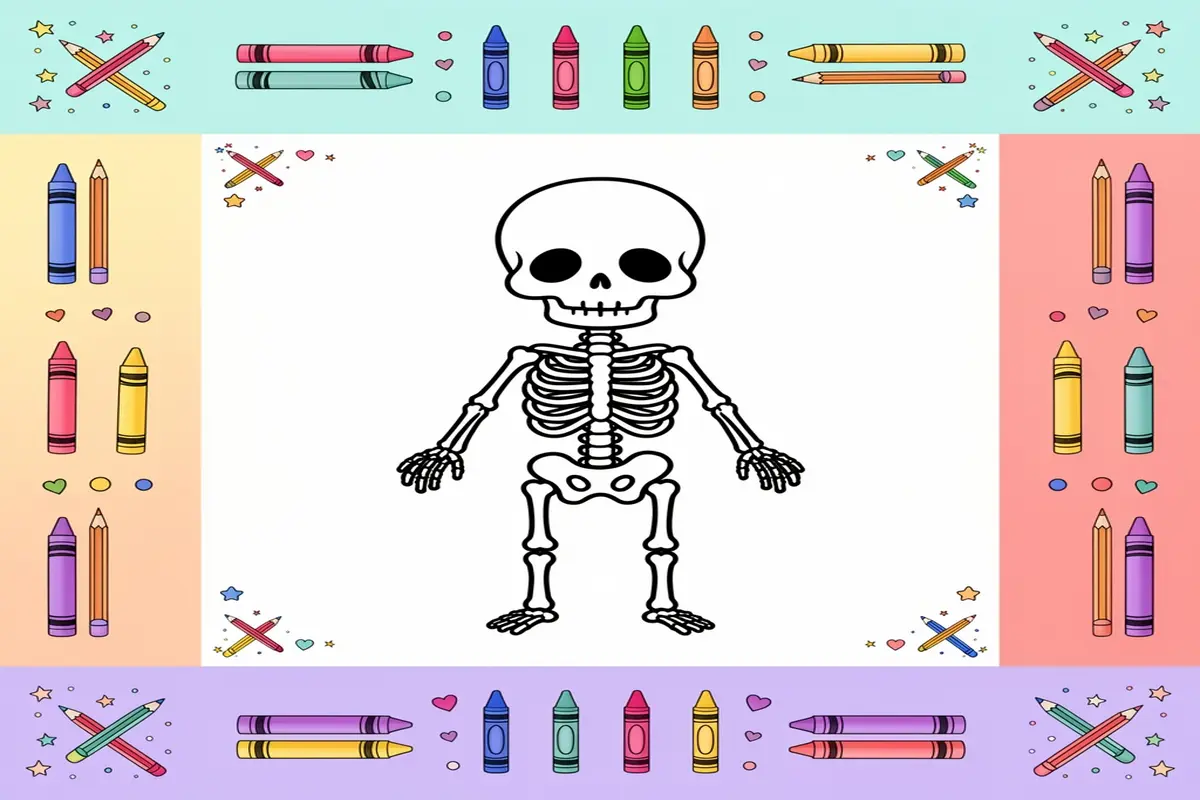
In a world where screens often dominate playtime, the simple act of coloring offers a profound return to tactile creativity and focused calm. It’s a portal to imagination, a quiet moment of achievement, and a surprisingly powerful educational tool. This is especially true when venturing beyond the familiar, into the fascinating realm of skeleton coloring pages for kids. Far from being spooky, these pages invite young learners on an exciting journey of discovery, transforming the complex framework of life into an engaging artistic adventure. By blending science with art, skeleton coloring pages for kids provide a unique, hands-on way to explore biology, develop fine motor skills, and conquer any apprehension about anatomy in a fun, approachable manner. It’s a creative pursuit that stands proudly alongside other educational themes, such as exploring the majestic forms found in our collection of free whale coloring pages.
Beyond the Bones: The Surprising Allure of Anatomical Art
Why would a child be drawn to coloring a skeleton? The appeal is multifaceted, tapping into natural curiosity, a love for puzzles, and the satisfaction of mastering something that looks intricate and “grown-up.” These pages demystify the body, turning the hidden structure within us all into a canvas for personal expression.
The Mindful Framework: Focus, Fine Motor Skills, and Fearlessness
Coloring within the delicate lines of a ribcage or the curves of a spinal column requires a level of concentration that naturally cultivates mindfulness. This focused attention can be incredibly calming. Simultaneously, navigating the small, detailed spaces of a skeletal diagram is an excellent workout for developing fine motor control and hand-eye coordination. Perhaps most importantly, engaging with skeleton coloring pages for kids in a positive, creative context helps dismantle any cultural unease surrounding skeletons, replacing fear with fascination and knowledge.
A Historical Palette: From Leonardo’s Notebooks to Classroom Walls
The intersection of art and anatomy is a tradition centuries old. Think of Leonardo da Vinci’s meticulous skeletal studies, which were both scientifically groundbreaking and artistically masterful. Today’s skeleton coloring pages for kids are a direct descendant of that legacy—making foundational scientific concepts accessible. They serve as a cultural bridge, connecting the awe of historical discovery with modern, child-friendly learning, proving that understanding our own structure is a timeless pursuit.
Designed for Discovery: From Preschoolers to Budding Biologists
The beauty of this theme lies in its scalability. For younger children, cute, cartoon-style skeletons with friendly smiles introduce the basic idea of bones. For older kids and even pre-teens, more realistic, labeled diagrams of human or animal skeletons offer a genuine introductory anatomy lesson. This range ensures that every child, regardless of age or skill level, can find a page that challenges them appropriately, fostering a sense of accomplishment and sparking a potential lifelong interest in science and art.
Professional Materials & Preparation for skeleton coloring pages for kids
Before your young anatomist begins their artistic exploration, proper preparation is key. Having the right materials on hand for skeleton coloring pages for kids will elevate the experience from a simple activity to an engaging, educational craft. This section details the essential toolkit and setup to ensure vibrant results and a comfortable, focused coloring session.
The Foundation: Selecting Premium Paper for skeleton coloring pages for kids
The choice of paper is critical, especially for intricate designs like those found in skeleton coloring pages for kids. Standard printer paper (20-24 lb) is prone to bleeding and warping. For superior results, opt for a heavier weight. Cardstock (65-80 lb) provides a sturdy, bleed-resistant surface ideal for most mediums. For a truly professional result with markers, use dedicated marker paper (around 70 GSM), which has a smooth, quick-drying coating. If using wet mediums like paints, watercolor paper (140 lb cold-press) will handle the moisture without buckling. Thicker paper also makes finished pieces durable for display or educational use, such as alongside other learning tools like our detailed anatomy coloring pages for kids.
Best Coloring Tools: A Detailed Medium Comparison
The choice of coloring medium dramatically affects the final look and the child’s experience.
Colored Pencils: Offer excellent control for fine details like rib cages and spinal vertebrae. Look for pencils with soft, pigmented cores that blend easily. Wax-based pencils provide vibrant layers, while oil-based offer smoother blending. They are less messy and ideal for developing fine motor skills.
Markers: Deliver bold, saturated color perfect for making designs pop. For skeleton coloring pages for kids, fine-tip markers are indispensable for outlining and small bony structures, while brush tips allow for filling larger areas. Alcohol-based markers (like Copic or similar) blend seamlessly and don’t bleed through on marker paper, but water-based options are more economical and child-friendly. Always test for bleed-through on your chosen paper.
Gel Pens & Highlighters: These are not primary coloring tools but are essential for adding brilliant accents, creating shiny highlights on skulls or bones, and drawing fine white details on darker backgrounds. Metallic gel pens (silver, gold, white) can simulate bone texture or medical hardware beautifully.
Finishing Touches: Precision Tools and Enhancements
Beyond base colors, a few specialized tools can add depth and professionalism. A good quality white eraser is necessary for cleaning up pencil stray marks. A colorless blender marker (for alcohol-based sets) can smooth gradients and correct small mistakes. For artists wanting to add realistic shading, a paper stump or tortillon helps blend pencil strokes seamlessly. Consider keeping a ruler or straight edge handy for coloring long, straight bones like femurs or tibias if a crisp look is desired.
Perfect Workspace: Optimizing Lighting and Ergonomics
A proper workspace ensures comfort and allows for prolonged focus. Prioritize natural light or a bright, white LED desk lamp to reduce eye strain and reveal true color tones. The chair and table height should allow the child’s feet to rest flat on the floor with their forearms parallel to the tabletop. A clean, hard surface is best; consider using a clipboard or a portable drawing board if working at a kitchen table. Protect the surface with a large scrap paper or a self-healing cutting mat. Organize materials within easy reach—a simple cup for pencils and markers prevents frustration and keeps the focus on the fun of completing their skeleton coloring pages for kids.
Part 3: Elevating the Art: Advanced Techniques for Skeleton Coloring Pages for Kids
Ready to transform those bony outlines into stunning, gallery-worthy art? Moving beyond basic fills, this section explores professional techniques that will add depth, realism, and a whole new dimension to your skeleton coloring pages for kids. These methods are perfect for older children, teens, and adults looking for a creative challenge, turning a simple activity into a masterclass in artistic skill. For foundational practice with simpler animal forms, our realistic animal coloring pages are a great starting point.
Harmonious Palettes: Color Theory for Skeleton Coloring Pages for Kids
Color choice is everything. Instead of defaulting to plain white bones, consider the mood and setting. Use analogous colors (neighbors on the color wheel like blues, blue-greens, and greens) for a cool, ethereal, or underwater skeleton scene. For a dynamic, high-contrast look, employ complementary colors (opposites like orange and blue). Imagine a vibrant sunset behind a dark skeleton—the contrast makes both elements pop. For a Halloween-themed piece, a monochromatic scheme using different shades of purple and orange can create spooky cohesion. Don’t forget the background! A thoughtfully colored setting, perhaps using techniques from our galaxy coloring pages for kids, can make your skeleton stand out dramatically.
From Flat to 3D: Mastering Shading and Depth
This is the key to making your skeleton look rounded and solid. Identify your imaginary light source (e.g., top-left). The areas of bone directly facing that light will be lightest. As the bone curves away, gradually add more pressure or switch to a slightly darker shade. The deepest recesses—like inside the eye sockets, nasal cavity, and rib cage—should be your darkest areas. Use smooth, gradual gradients rather than hard lines. For long bones like femurs, imagine them as cylinders. Add a streak of highlight down the center facing the light and shade the edges. This step-by-step approach to light and shadow is what brings your skeleton coloring pages for kids to life.
Adding Realism: Creative Texture Techniques
Bones aren’t perfectly smooth! To add texture, try stippling (tiny dots) around joints to suggest porosity or a weathered, ancient look. For a cracked or fossilized effect, use fine, irregular lines with a sharp pencil or pen over your colored base. Consider the environment: is your skeleton buried in sand? Use light, speckled coloring around its base. Is it underwater? Add wavy, light-blue lines over parts of the bones to suggest algae or distortion. For skeletons of furry animals, you might leave remnants of fur at the joints; soft, short strokes with a brown or grey can hint at this. Texture tells a story beyond the bones themselves.
The Art of Correction: Gracefully Fixing Coloring Errors
Mistakes are part of the process. For small slips outside the lines, a white gel pen is a savior for precise cover-ups. If an area becomes too dark, you can often gently lift color using the edge of a kneaded eraser. For larger areas you wish to adjust, try turning the “error” into a feature. A too-dark background can become intentional shading if you blend it outwards. If a color isn’t working, layer a new color over it—many colored pencils are translucent and will mix to create a new hue. Remember, art is adaptable. The goal is creative problem-solving, which is a valuable lesson for anyone tackling skeleton coloring pages for kids and beyond.
Showcasing Your Skeleton Coloring Pages for Kids: Creative Display Ideas
Once your young artist has finished their masterpiece, it’s time to celebrate their work! Moving beyond the coloring book, displaying their art boosts confidence and transforms their effort into a cherished keepsake. Here are inspiring ways to give those skeleton coloring pages for kids a second life.
Preserving Your Masterpiece: Archival Tips
Before displaying, consider protecting the artwork. For pieces colored with markers, a light spray of fixative (used in a well-ventilated area) can prevent smudging. Laminating is a fantastic, durable option for placemats or bookmarks. For a classic look, simply mount the page on slightly larger construction paper with a colorful border. Storing flat in a portfolio or large folder, like those used for our realistic animal coloring pages, keeps them pristine for years.
Beyond Display: Creative DIY Projects
Turn colored pages into meaningful projects. Cut out the skeleton and glue it to a popsicle stick for a puppet show, or attach it to a string for a spooky mobile. Create unique greeting cards by folding cardstock and mounting the colored skeleton inside with a fun message. For a festive touch, incorporate them into Halloween decorations or use smaller skeletons as creative, personalized gift tags.
Your Skeleton Coloring Pages for Kids Questions Answered
How do you explain the human skeleton to a child?
Keep it simple and positive! Explain that our skeleton is a framework of bones inside us, like the frame of a house. It holds us up, protects our soft organs (like our heart and lungs), and helps us move. You can say, “Without your skeleton, you’d be like a wobbly jellyfish!” Using skeleton coloring pages for kids is a perfect visual aid for this lesson.
What are the benefits of coloring for child development?
Coloring strengthens fine motor skills and hand-eye coordination, essential for writing. It fosters creativity, color recognition, and focus. The calm, repetitive motion is excellent for emotional regulation, reducing anxiety and providing a sense of accomplishment. It’s a fun, screen-free activity that builds patience and pride in one’s work.
How to draw a simple skeleton for kids?
Start with basic shapes. Draw a circle for the head, a rectangle for the chest, and lines for the spine, arms, and legs. Add circles at joints (shoulders, elbows, knees) and simple oval ribs. For hands and feet, use small circles or “mitten” shapes. Keep it playful! Once the outline is done, kids can add details while coloring their skeleton coloring pages for kids.
What colors should be used for Day of the Dead skulls?
Day of the Dead (Día de los Muertos) skulls, or calaveras*, are vibrant and celebratory. Traditional colors include bright pinks, purples, oranges, blues, and yellows. Intricate patterns like flowers, swirls, and dots are common. While white is often the base, the design is anything but plain—it’s a joyful explosion of color and pattern honoring loved ones.
What are the best markers for coloring pages?
For kids, washable markers are a must for easy cleanup. Look for broad-tip markers for large areas and fine-tip for details. Brands like Crayola are reliable and affordable. For older kids, alcohol-based markers (like Copic or Ohuhu) offer beautiful blending but can bleed through paper, so place a scrap sheet underneath to protect surfaces.
Final Thoughts: Your Skeleton Coloring Pages for Kids Journey Begins
From the first stroke of color to the proud display on your wall, the journey with skeleton coloring pages for kids is packed with discovery. It’s more than just an activity; it’s a gateway to learning about the amazing human body, a canvas for boundless creativity, and a quiet moment of focus in a busy world. These pages blend science and art, making education an engaging, hands-on adventure.
We hope these ideas inspire you to create, display, and explore the wonderful benefits together. Remember, every finished page is a celebration of your child’s growing skills and imagination. Ready for your next adventure? Explore our dinosaur coloring pages for kids to continue the prehistoric fun!