We offer a wide collection of free, high-quality printable coloring pages for kids and adults. From cute animals to intricate mandalas, our designs bring creativity and relaxation to everyone. Download, print, and start coloring today!

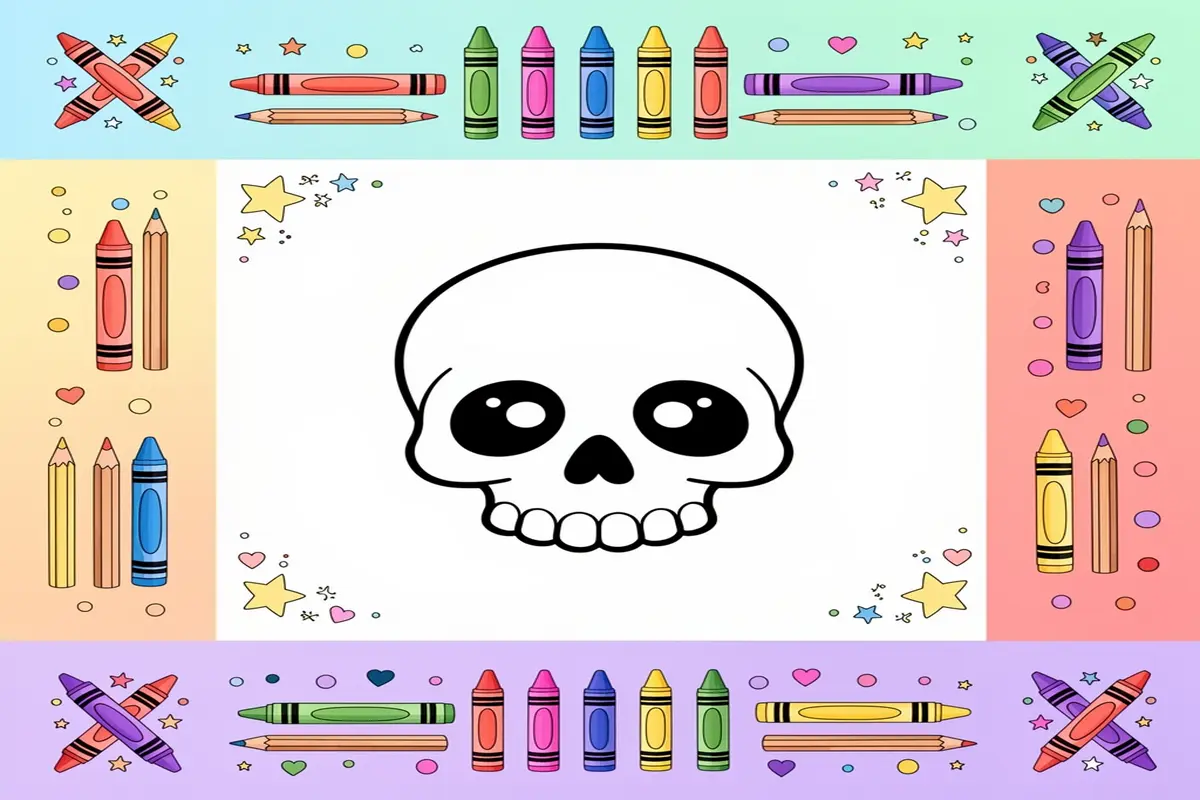
In the vibrant world of children’s art, where crayons meet imagination, there exists a uniquely powerful and surprisingly versatile theme: skull coloring pages for kids. Far from being macabre, these designs offer a fascinating gateway for young minds to explore themes of anatomy, cultural symbolism, and personal expression in a safe, controlled environment. Coloring, at its core, is a mindful practice that reduces anxiety and enhances focus, providing a quiet refuge from digital overload. When children engage with skull coloring pages for kids, they are not just filling in shapes; they are demystifying a universal symbol, transforming it with color, pattern, and life. This creative journey builds fine motor skills and confidence, allowing kids to tackle a subject often deemed ‘scary’ and make it their own. It’s a creative exercise parallel to exploring the majestic forms found in our free whale coloring pages, where structure and artistry beautifully intersect.
Beyond the Bones: The Unexpected Appeal of Skull Art for Young Minds
The Psychology of Mastery: Coloring as a Tool for Courage
Why are children drawn to themes that skirt the edges of the spooky or unknown? The answer lies in the psychology of mastery. Engaging with skull coloring pages for kids allows them to confront a symbol often associated with fear in a context they control completely—their artwork. This process of taking something intimidating and beautifying it with rainbows, flowers, or intricate patterns is an act of empowerment. It transforms anxiety into artistry, providing a tangible way to discuss larger concepts of life, history, and biology in an age-appropriate manner. The focused, repetitive motion of coloring within the lines of a complex skull design induces a state of flow, calming the nervous system and building resilience alongside creativity.
A Cultural Canvas: From Dia de los Muertos to Pirate Lore
Skull imagery is a rich tapestry woven through human culture, and kid-friendly coloring pages offer a gentle introduction to this heritage. Think of the vibrantly decorated calaveras of Mexico’s Day of the Dead, which celebrate loved ones with joy rather than sorrow. Or consider the playful Jolly Roger of pirate stories, symbolizing adventure on the high seas. When a child colors a skull adorned with marigolds or wearing a pirate hat, they are connecting to stories and traditions from around the world. This makes skull coloring pages for kids an unexpected educational tool, opening dialogues about history, festivals, and how different cultures perceive and represent life and legacy.
Curated for Every Explorer: From Simple Silhouettes to Ornate Mandalas
The beauty of this niche lies in its incredible range. For the youngest artists, simple, cartoonish skulls with friendly smiles provide a non-threatening starting point. As skills develop, more detailed pages await—skulls intertwined with geometric patterns, nature scenes, or designed as complex mandalas. This variety ensures that every child, whether a tentative beginner or a detail-oriented enthusiast, can find a page that matches their skill level and interest. It’s a theme that grows with the artist, offering endless possibilities for creative expression and ensuring that the journey with skull coloring pages for kids remains engaging and rewarding over time.
Part 2: Essential Materials & Preparation for skull coloring pages for kids
To ensure a successful and enjoyable coloring session with skull coloring pages for kids, proper preparation is key. Having the right materials on hand transforms a simple activity into an opportunity for artistic expression and skill development. This section details the professional-grade supplies and setup that will help young artists achieve vibrant results and build confidence with every page they complete.
The Foundation: Selecting Premium Paper for skull coloring pages for kids
The paper you choose directly impacts the final artwork. For standard printing, opt for a bright white, smooth cardstock (around 160-200 GSM). This weight prevents bleed-through from markers and provides a sturdy surface for repeated pencil layering. If your young artist is exploring mixed media or water-based tools, consider a dedicated mixed-media or watercolor paper. Its textured surface holds pigment beautifully and allows for interesting effects, especially on designs with large areas to color, like those found on many skeleton coloring pages for kids. A good-quality paper elevates the experience and makes children feel like true artists.
Best Coloring Tools: A Detailed Medium Comparison
The choice between colored pencils and markers is fundamental. Professional-grade colored pencils (wax or oil-based) offer superior blendability and control, perfect for teaching shading and gradient techniques on the intricate details of a skull. They are also mess-free and ideal for younger children. Alcohol-based markers, like those used by illustrators, provide vibrant, streak-free color and are excellent for bold, graphic results. However, they require bleed-proof paper. For a versatile starter kit, we recommend a set of high-pigment colored pencils paired with a few fine-tip markers for outlining. This combination allows kids to experiment with texture and depth on their skull coloring pages for kids.
Finishing Touches: Gel Pens, Highlights, and Detailing
This is where artwork truly comes to life. A set of white and metallic gel pens is indispensable. They are perfect for adding highlights to bone structures, creating shimmering patterns in eye sockets, or drawing fine, decorative lines. Gel pens work wonderfully over both pencil and marker, offering a pop of opacity. Additionally, keep a quality vinyl eraser for cleaning up pencil smudges and a sharpener dedicated to colored pencils to maintain a fine point for detailed work. These tools empower kids to add personal flair and finalize their masterpieces with a professional touch.
Perfect Workspace: Optimizing Lighting and Ergonomics
A well-prepared workspace fosters focus and creativity. Ensure the coloring area is illuminated by bright, natural light or a daylight-simulation lamp to reduce eye strain and allow for accurate color perception. The seating should support good posture; the child’s feet should rest flat, with the table at elbow height. Organize supplies within easy reach using cups or trays. Having a clean, dedicated space signals that the activity is valued. For inspiration and to explore other detailed anatomical themes, you can also explore our collection of anatomy coloring pages for kids, which complement the educational aspect of skull designs. Proper preparation with the right materials and environment turns the activity of completing skull coloring pages for kids into a rewarding and professional artistic endeavor.
Part 3: Elevating Your Art: Pro Techniques for skull coloring pages for kids
Ready to transform a simple outline into a stunning piece of art? This section moves beyond basic filling to explore professional techniques that will bring your skull coloring pages for kids to life with depth, realism, and creativity. These methods are perfect for older children, teens, and even adults looking to elevate their coloring game.
Link: For more intricate anatomical fun, explore our skeleton coloring pages for kids. If your young artist loves a spooky challenge, our scary coloring pages for kids offer great practice for dramatic techniques.
Harmonious Palettes: Color Theory for skull coloring pages for kids
Choosing colors isn’t just random—it’s strategic. For skull coloring pages for kids, you can either go realistic with bone whites, creams, and browns, or get wildly creative.
Complementary Colors: Use opposites on the color wheel (like blue & orange or purple & yellow) to make details pop. Imagine a purple-shadowed skull with bright yellow accents in the eyes—it’s instantly dynamic.
Analogous Colors: For a more harmonious, eerie feel, use colors next to each other on the wheel, like blues, greens, and teals. This creates a cohesive and often calming or mystical look, perfect for a mystical crystal skull.
Monochromatic Magic: Stick to various shades of a single color. A skull done entirely in different blues, from navy to sky blue, can look incredibly sophisticated and focused.
From Flat to 3D: Mastering Light and Shadow
Shading is what gives a flat drawing volume. Decide where your imaginary light source is (e.g., top-left).
1. Identify the Planes: On a skull, the forehead (frontal bone) is a rounded plane, the eye sockets are deep cavities, and the cheekbones (zygomatics) are protruding ridges.
2. Apply Base Mid-Tone: Color the entire skull with your main “bone” color lightly and evenly.
3. Add Shadows: Apply more pressure or a darker shade (like a soft gray or tan) in areas farthest from the light: inside the nose cavity, the underside of the cheekbones, the back of the jaw, and the inner depths of the eye sockets.
4. Highlight: Leave the areas closest to the light source (the top of the cranium, the high point of the brow) the lightest, or add a touch of white gel pen or colored pencil at the very end.
Adding Realism: Techniques for Texture and Detail
Texture makes your skull look tangible.
Bone Texture: Avoid solid, smooth white. Use tiny, subtle circular strokes or fine, irregular lines to simulate the porous, slightly rough quality of bone. A very light, speckled effect with a brown or gray can add age and realism.
Cracks and Weathering: For an ancient skull, use a sharp pencil to draw fine, jagged cracks. Darken one side of the crack to create depth. Add moss or vine textures creeping over the bone using greens—this is where you can link to nature themes found in our forest coloring pages for kids for inspiration.
Smooth Surfaces: For a polished, sugar skull or a metallic look, strive for ultra-smooth, blended color. Use blending pencils or gentle, circular pencil strokes to eliminate any visible lines, creating a glossy, hard surface.
The Art of Correction: Gracefully Fixing Coloring Mistakes
Even pros make mistakes. Here’s how to recover:
Over-Coloring: Accidentally went outside the lines? Use a sharp white eraser or a specialized “click” eraser with a fine point to clean up edges carefully.
Color Bleed: If wax from a colored pencil has built up and won’t let new layers stick, gently “lift” color by dabbing with sticky tack or a specialized colored pencil “color lifter.”
Turning a Mistake into a Feature: A stray dark mark can become the start of a new shadow, a crack, or a decorative element. Incorporate it into your design rather than fighting it. The beauty of skull coloring pages for kids is their versatility—they can be scientific, spooky, or spectacularly decorative, so there’s always room for creative adaptation.
Showcasing Your Skull Coloring Pages for Kids: Creative Display Ideas
Once the coloring is complete, the fun continues! Transforming your child’s artwork from a simple page into a cherished keepsake is a rewarding final step. Here are inspiring ways to celebrate their creativity and give their skull coloring pages for kids the spotlight they deserve.
Preserving Your Masterpiece: Archival Tips
Protect those vibrant creations from fading and wear. For long-term display, consider using acid-free photo albums or clear sheet protectors in a binder. A simple and effective method is to laminate the pages, making them durable for repeated handling. For framed pieces, use UV-protective glass to prevent sun damage. This care ensures that both realistic anatomy studies and festive sugar skull designs remain bright, turning a fun activity into a lasting record of their artistic growth.
Beyond Display: Creative DIY Projects
Take the artwork off the fridge and into the world of crafts! Turn colored pages into unique greeting cards for Halloween or Dia de los Muertos. Laminate and cut them into bookmarks or gift tags. For a group project, create a vibrant banner by stringing multiple pages together. You can even decoupage them onto a small box or picture frame. These projects not only showcase the art but also teach kids about repurposing and giving handmade gifts, extending the joy of their skull coloring pages for kids.
Your Skull Coloring Adventure: Questions Answered
How do you draw a skull step by step?
Start with a simple oval for the cranium. Draw a horizontal line across the center, then a vertical line down the middle. Below the oval, sketch a U-shape for the jaw, connecting it with slight curves. Add two large ovals on the horizontal line for eye sockets, a triangle between them for the nose, and a line of small rectangles below for teeth. Keep it simple for kids, focusing on basic shapes to create friendly skull coloring pages for kids.
What is the meaning of a sugar skull?
A sugar skull (or calavera*) is a vibrant folk art tradition from Mexico, primarily associated with the Dia de los Muertos (Day of the Dead) holiday. They are not meant to be scary but are joyful, decorative symbols used to honor and celebrate the lives of departed loved ones. The colorful, ornate designs represent the sweetness of life and the belief that death is a natural part of the human journey.
What do the colors on a sugar skull represent?
Each color on a sugar skull carries symbolic meaning. Purple often signifies mourning or grief. Pink represents celebration. White symbolizes purity and hope. Red stands for the blood of life and passion. Yellow is for the Mexican marigold, which guides spirits. Orange means the sun. Using these colors on skull coloring pages for kids can be a wonderful way to discuss cultural traditions and the symbolism of art.
What are the benefits of coloring for kids?
Coloring boosts fine motor skills and hand-eye coordination. It fosters creativity, color recognition, and focus. The act is also a fantastic, screen-free method for stress relief and emotional expression, allowing children to process feelings in a calm, mindful way. It’s a foundational activity that supports early writing skills and provides a great sense of accomplishment.
What are fun facts about the human skull?
The human skull is made up of 22 bones fused together! The only movable bone is the jawbone (mandible). Babies have soft spots called fontanelles because their skull bones haven’t fully joined, allowing for growth. Despite its strength, it’s surprisingly lightweight. Exploring these facts can make anatomy-themed skull coloring pages for kids an exciting, educational experience.
Final Thoughts: Your Creative Journey with Skull Coloring Pages
From understanding the fascinating bones of the head to celebrating life with colorful sugar skulls, this coloring adventure offers so much more than just art. It’s a gateway to learning, cultural appreciation, and quality creative time. Each page your child completes builds confidence, refines their skills, and leaves a tangible mark of their imagination and effort.
We hope these ideas for display, DIY projects, and newfound knowledge inspire you to see every finished page as a masterpiece worthy of celebration. The world of coloring is vast and wonderful, offering endless themes to explore.
Ready for your next adventure? Explore our realistic animal coloring pages for another educational and artistic journey!