We offer a wide collection of free, high-quality printable coloring pages for kids and adults. From cute animals to intricate mandalas, our designs bring creativity and relaxation to everyone. Download, print, and start coloring today!

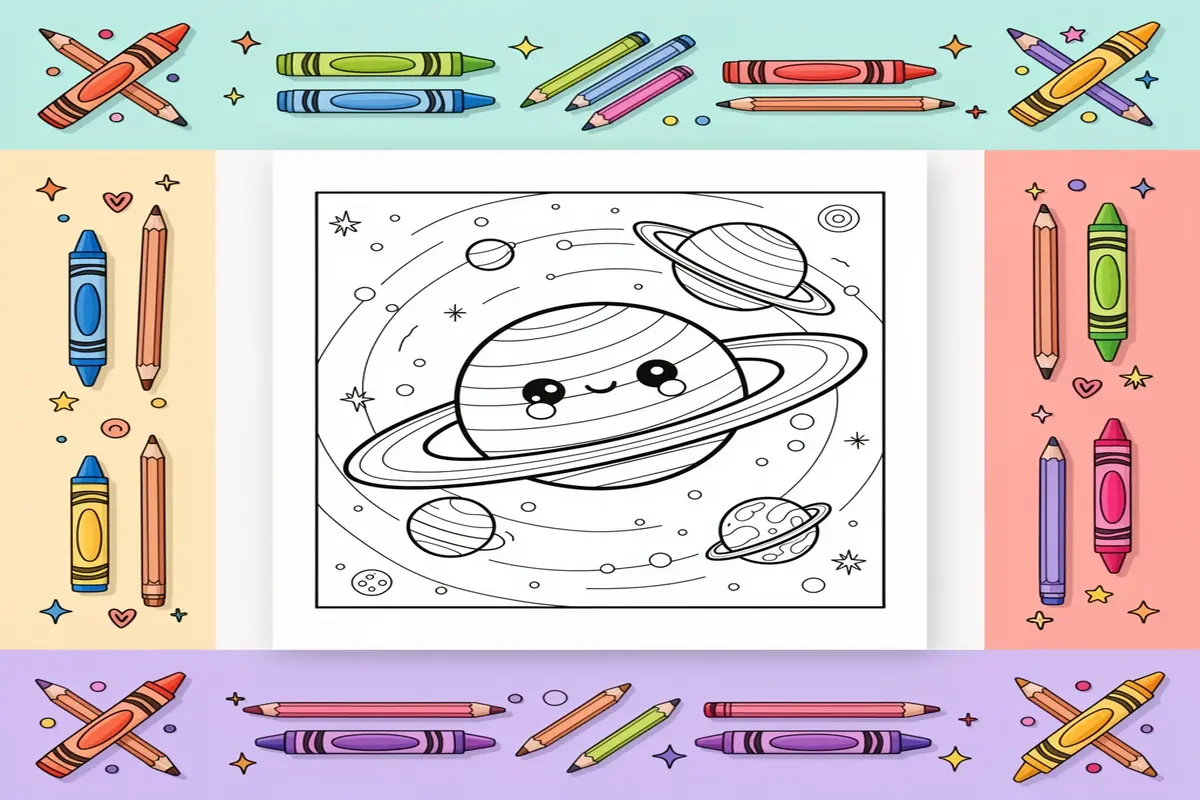
In the quiet concentration of a child bent over a page, a universe is born. The simple act of coloring, often seen as mere child’s play, is in fact a profound gateway to imagination, education, and calm. When that blank canvas depicts the swirling majesty of Jupiter’s storms or the serene orbit of Saturn’s rings, the experience becomes truly stellar. Solar system coloring pages for kids offer a unique fusion of artistic expression and cosmic discovery, transforming a quiet afternoon into an interstellar adventure. These pages do more than occupy little hands; they ignite curiosity about our place in the cosmos, encourage questions about planets and stars, and provide a calming, focused activity away from screens. From the fiery hues of Mars to the deep blues of Neptune, each planet presents a new palette to explore and a new fact to learn. It’s a wonderful way to complement other nature-themed activities, much like the serene exploration found in our ocean coloring pages. Whether used in a classroom to anchor a science lesson or at home for mindful play, solar system coloring pages for kids are a resource that educates as it entertains, proving that creativity and learning are a powerful combination.
The Cosmic Canvas: Where Art Meets Astronomy
Blending the precision of science with the freedom of art, solar system-themed coloring creates a special niche in educational play. It’s where facts about planetary composition and orbital paths meet the personal choice of cerulean or cobalt for an ocean world.
The Psychology of Color: Mapping Emotions in Space
The choice of color is never arbitrary, especially for a child. Selecting a vibrant orange for the Sun or a mysterious grey for Mercury’s craters is an exercise in decision-making and emotional expression. The focused, repetitive motion of coloring within the lines of a planet’s sphere promotes mindfulness, reducing anxiety and improving concentration. This meditative state allows the mind to absorb the accompanying educational tidbits—like why Venus is so hot or what gives Uranus its tilt—turning a relaxing activity into a subtle, stress-free learning session.
A Timeless Allure: From Cave Walls to Celestial Spheres
Humanity has always looked to the stars with wonder, mapping them in stories and on stone. Solar system coloring pages for kids are a modern continuation of this ancient tradition. They democratize astronomy, making the vast and intimidating cosmos accessible and personal. A child with a set of crayons can claim ownership over the asteroid belt, deciding which rocks are emerald green and which are rust red. This act of creation forges a personal connection to science, transforming abstract concepts into a completed masterpiece they can hold in their hands and display with pride.
Designed for Every Young Explorer
The beauty of these resources lies in their scalability. For a preschooler, a simple, bold outline of a smiling sun and a ringed planet builds fine motor skills and color recognition. For an older child, intricate pages featuring detailed planetary surfaces, constellations, and spacecraft encourage research and realistic color application. This range ensures that solar system coloring pages for kids grow with the learner, providing continuous challenge and engagement. They are equally valuable for the solo artist seeking quiet time and for group settings, where comparing finished galaxies can spark conversation and collaborative learning about the final frontier.
Professional Materials & Preparation for solar system coloring pages for kids
To ensure a stellar coloring experience that does justice to the wonders of our cosmic neighborhood, proper preparation is key. The right materials can transform your solar system coloring pages for kids from a simple activity into an immersive educational and artistic project. This guide details the essential supplies and setup needed for budding astronomers to bring planets, moons, and stars to vibrant life.
The Foundation: Selecting Paper for solar system coloring pages for kids
The paper you choose is the literal canvas for the universe. For standard crayon or colored pencil work, a smooth, bright white paper around 100-120 GSM (grams per square meter) provides excellent opacity and a surface that allows for fine detail on small planetary features. If your young artist prefers markers, especially alcohol-based ones, seek out heavyweight marker paper (around 160 GSM) or even bleed-proof paper to prevent colors from seeping through and ruining the page beneath. For a truly special project, consider printing your solar system coloring pages for kids on cardstock; its rigidity handles mixed media beautifully and allows for display-worthy finished art. This approach to quality materials is similar to what we recommend for other detailed subjects, like our realistic animal coloring pages.
Optimal Coloring Mediums: Precision vs. Vibrancy
The choice between colored pencils and markers defines the final artwork. Artist-quality colored pencils with soft, pigmented cores are ideal for blending the subtle gradients of a gas giant like Jupiter or creating the textured, rocky surface of Mars. They offer superior control for small celestial bodies and fine details like Saturn’s rings. Washable markers, on the other hand, deliver bold, flat areas of vibrant color perfect for the deep blacks of space or the brilliant glow of a sun. A hybrid approach often yields the best results: use markers for large, solid backgrounds and colored pencils for planetary details. For the most authentic representation, reference actual planetary photographs to guide color selection, encouraging both artistry and scientific observation.
Enhancing Cosmic Details: Specialized Tools
The magic of the cosmos is in the details, which can be elevated with a few specialized tools. White gel pens are indispensable for adding distant stars, highlights on a planet’s crescent, or the icy sheen of a moon. They pop brilliantly against dark marker backgrounds. A good quality pencil sharpener maintains a fine point for precise work, while a kneaded eraser can gently lift pencil mistakes without damaging the paper. For blending colored pencils seamlessly, paper blending stumps or a touch of odorless mineral spirits (used with adult supervision) can create smooth, professional-grade atmospheric effects on your solar system coloring pages for kids.
Creating an Ergonomic and Inspiring Workspace
A proper workspace fosters focus and comfort. Ensure the coloring area is well-lit with natural light or a bright, white LED lamp to reduce eye strain and allow for accurate color perception. The seating should support good posture, with the table at an appropriate height so the child’s arms can rest comfortably. Keep all materials—pencils, sharpeners, erasers, and reference images—within easy reach on a clear surface. Having a tablet or book open to photographs of the solar system not only inspires color choices but also sparks conversations about planetary science, turning the activity into a dynamic learning session. This thoughtful preparation maximizes both the enjoyment and educational value of exploring solar system coloring pages for kids.
Mastering solar system coloring pages for kids: Advanced Coloring Techniques
Ready to transform those planetary outlines into vibrant, dimensional masterpieces? Moving beyond simple flat color, these professional techniques will help you and your young artists unlock the full potential of solar system coloring pages for kids. This guide focuses on actionable methods to teach depth, realism, and creative problem-solving, turning a fun activity into a true artistic adventure. For more cosmic inspiration, explore our collection of galaxy coloring pages for kids and outer space coloring pages.
Harmonious Palettes: Color Theory for Cosmic Scenes
Choosing colors isn’t just about picking favorites; it’s about creating a mood. For solar system coloring pages for kids, teach the power of complementary colors (opposites on the color wheel) to make elements pop—like using deep blues and oranges for a fiery sun against a dark space backdrop. Analogous colors (neighbors on the wheel), such as blues, purples, and magentas, are perfect for creating serene, harmonious nebulas or the smooth gradient of a gas giant like Jupiter. Encourage thinking beyond “realism” to “artistic expression”—what if Mars was shaded with purples and pinks? This creative freedom builds confidence.
From Flat to 3D: Mastering Planetary Shading
The secret to a round planet is light. Pick a consistent light source (e.g., the top left corner). For a sphere like Earth or Mars, start with a medium base color. Apply heavier pressure or a darker shade on the opposite side from the light source to create the core shadow. Then, use a lighter shade or less pressure to create a bright highlight where the light hits directly. Blend gently where the shades meet. For craters on the Moon, shade the crater’s inner wall opposite the light and add a tiny highlight on the rim closest to the light. This step-by-step approach makes complex concepts tangible.
Adding Realism: Texturing Celestial Bodies
Each planet and space object has a unique surface. Stippling (tiny dots) is excellent for rendering the gritty, dusty texture of the Moon or an asteroid. Scumbling (small, tight circular scribbles) can create the swirling, chaotic clouds of Jupiter. For the sun’s fiery corona, use feathering strokes—quick, light lines radiating outward. To depict the smooth, icy sheen of a moon like Europa, aim for ultra-smooth, even layers of color with a subtle highlight. Discussing texture makes the solar system coloring pages for kids a multisensory learning experience about planetary science.
The Art of Correction: Gracefully Fixing Coloring Errors
Mistakes are part of the process! If color goes outside the lines, don’t panic. Use a clean, sharp white colored pencil to gently “push” the stray mark back toward the intended area—this often lightens it significantly. For small smudges, a click-eraser is precise. If a color turns out too dark, layering a lighter color on top can sometimes modify the hue (e.g., a light yellow over dark green can create a more luminous effect). The most important technique is a mindset shift: frame “errors” as opportunities to add a new star, an asteroid, or a unique planetary feature. This builds resilience and creative problem-solving skills that last far beyond the coloring page.
Showcasing Your solar system coloring pages for kids: Creative Display Ideas
Once your young astronomer has completed their masterpiece, it’s time to celebrate their work! Moving beyond the coloring book, displaying their art boosts confidence and transforms their learning into a visual part of your home or classroom decor. Here are inspiring ways to honor their interplanetary creations.
Preserving Your Masterpiece: Archival Tips
To ensure those vibrant planets shine for years, consider simple preservation methods. For flat displays, use acid-free sheet protectors in a binder dedicated to space art. For framing, opt for UV-protective glass to prevent fading from sunlight. A fun and easy alternative is to laminate finished pages; this makes them durable for repeated handling and allows kids to create their own “official” space mission posters or placemats for the dinner table.
Beyond Display: Creative DIY Projects
Turn colored pages into meaningful projects and gifts. Carefully cut out planets to create a stunning mobile, hanging them in order from the sun. Smaller planets can become unique gift tags or bookmarks. For a special card, glue a colored solar system onto folded construction paper for a stellar birthday greeting. You can even decoupage several pages onto a small tabletop or storage box, creating a custom piece of furniture that tells a cosmic story. For more creative animal-themed projects, our farm animal coloring pages offer endless inspiration.
Your Guide to solar system coloring pages for kids: FAQs Answered
What are the correct colors for the planets?
While artistic freedom is encouraged, typical colors are: Mercury (gray), Venus (yellowish-white), Earth (blue & green), Mars (red), Jupiter (orange & white bands), Saturn (pale gold with a brownish ring), Uranus (light blue), and Neptune (deep blue). Remember, these are based on spacecraft images, but a purple Jupiter or a polka-dotted Earth is perfectly valid in a child’s creative universe!
How do you explain the solar system to a child?
Explain it as our “space neighborhood.” The Sun is a giant, hot star in the center. Eight planets, along with moons, asteroids, and comets, all travel around (orbit) it. Use a fun mnemonic for the order, like “My Very Educated Mother Just Served Us Noodles.” Engaging with solar system coloring pages for kids makes this abstract concept tangible and memorable.
What is the order of the planets for kids?
Starting closest to the Sun, the order is: Mercury, Venus, Earth, Mars, Jupiter, Saturn, Uranus, and Neptune. A simple sentence to remember it is: “My Very Educated Mother Just Served Us Noodles.” Each word’s first letter matches a planet’s first letter (Mercury, Venus, Earth, Mars, Jupiter, Saturn, Uranus, Neptune).
What are the benefits of coloring for early childhood?
Coloring builds fine motor skills and hand-strength crucial for writing. It fosters focus, patience, and creativity as children make color choices. It’s also a calming activity that can help with emotional regulation and provide a non-verbal outlet for expression, making it a valuable tool for both learning and relaxation.
Where can I get free printable coloring pages?
You can find a vast collection of high-quality, free printable themes, including solar system coloring pages for kids, right here on our website! We offer countless options, from galaxies to animals, all designed for easy download and printing. Simply explore our categories to find the perfect page for your child’s next creative adventure.
Final Thoughts: Your solar system coloring pages for kids Journey Begins
The journey through the cosmos with crayons in hand is about so much more than staying inside the lines. It’s a launchpad for curiosity, a quiet moment of focus, and a shared activity that sparks questions about the vast universe we call home. Each completed page is not just art; it’s a milestone in developing fine motor skills, learning planetary facts, and building the confidence that comes from creating something unique.
We hope this guide inspires you to explore, create, and display these wonderful projects. Remember, every artist started with a single stroke of color. Ready for your next adventure? Explore our outer space coloring pages for even more galactic creativity!