We offer a wide collection of free, high-quality printable coloring pages for kids and adults. From cute animals to intricate mandalas, our designs bring creativity and relaxation to everyone. Download, print, and start coloring today!

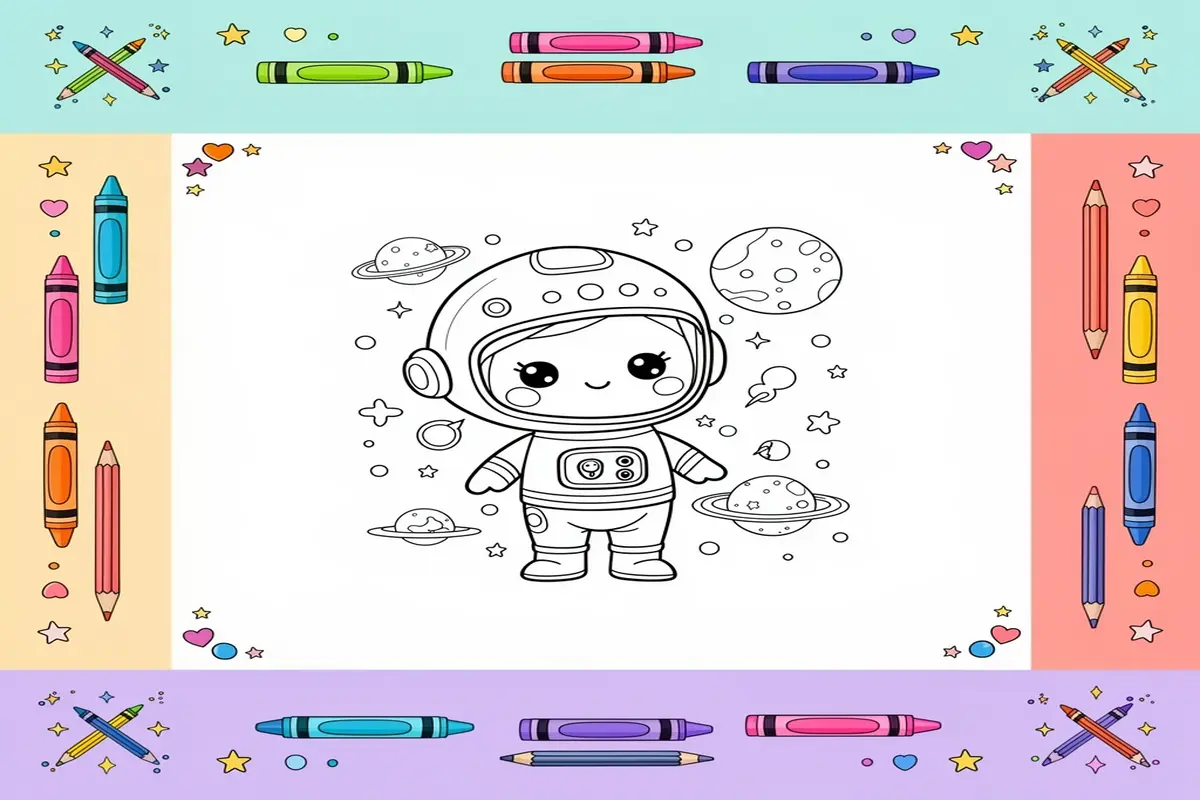
In a world saturated with screens and digital noise, the simple act of coloring offers a profound sanctuary. It’s a tactile, creative escape that quiets the mind and sparks joy. When that canvas becomes the infinite cosmos, the experience transforms into something truly magical. Space coloring pages for kids are not merely activities; they are portals to wonder, inviting young minds to explore distant galaxies, design their own alien worlds, and navigate the mysteries of the solar system with nothing but a pack of crayons. This unique genre blends artistic expression with scientific curiosity, making it a powerful tool for both relaxation and education. Whether your child is captivated by the rings of Saturn or dreams of meeting friendly extraterrestrials, these pages provide the perfect launchpad for creativity. For those who also find wonder in the depths closer to home, our collection of sea animals coloring pages offers another captivating aquatic universe to explore.
The Cosmic Canvas: Why Space Captivates Young Minds
What is it about the void of space that so thoroughly captures our imagination? For children, it represents the ultimate frontier—a realm of endless possibility, awe-inspiring scale, and beautiful, mysterious darkness waiting to be filled with color and light. Space coloring pages for kids tap directly into this innate sense of wonder.
The Psychology of the Final Frontier: Awe & Mindfulness
The theme of space naturally evokes a sense of awe, a psychological state linked to increased curiosity and a feeling of being part of something vast. As a child focuses on coloring a swirling nebula or a detailed rocket, their mind enters a state of flow. This mindful engagement is a calming antidote to overstimulation, encouraging focus and present-moment awareness. The act of choosing colors for planets and stars is not just playful; it’s a gentle exercise in decision-making and emotional expression, all within the safe, boundless context of the cosmos.
From Ancient Myths to Modern Missions: A Rich Tapestry
The allure of space is timeless, woven into the fabric of human culture through mythology, astronomy, and groundbreaking exploration. Modern space coloring pages for kids are the descendants of star charts and celestial maps, translating humanity’s age-old fascination into an accessible, interactive format. They allow children to connect with this heritage, whether they’re coloring a constellation inspired by Greek myths or a cutting-edge Mars rover. This fusion of art and science provides a subtle, engaging introduction to STEM concepts, building a foundational interest that can last a lifetime.
Designed for Every Young Explorer: From Toddlers to Tweens
The beauty of this theme lies in its incredible versatility. Simple pages with smiling planets and crescent moons are perfect for little hands developing fine motor skills. More intricate scenes featuring complex spacecraft, galactic landscapes, and realistic planetary surfaces challenge older children and even teens, offering a satisfying and detailed creative project. This ensures that space coloring pages for kids truly offer a universe of options, meeting every young artist exactly where they are on their developmental journey.
Professional Materials & Preparation for space coloring pages for kids: Your Complete Toolkit
Before your young astronaut begins their galactic journey, proper preparation is key. The right materials can elevate the experience of space coloring pages for kids from a simple activity to an immersive, skill-building adventure. This section details the essential toolkit and setup to ensure vibrant nebulas, crisp rocket ships, and smooth planetary surfaces, turning each printable into a masterpiece.
The Foundation: Selecting Paper for space coloring pages for kids
The paper you choose is the launchpad for creativity. Standard printer paper (20-24 lb) is sufficient for quick sessions with crayons or light colored pencils. However, for more detailed work or use with wet mediums like markers, upgrading to heavyweight paper (32 lb or higher, or 160+ GSM) is recommended. This paper resists bleeding and buckling, allowing for richer color application and layering. For a truly premium result, consider smooth Bristol board or mixed-media paper, which provides an excellent tooth for blending pencils while also handling fine liners and gel pens beautifully. Always perform a test print to ensure your printer feeds the chosen paper smoothly.
Best Coloring Tools: Markers vs. Pencils for Cosmic Art
The choice between markers and colored pencils defines the final look of your space coloring pages for kids.
Colored Pencils: Ideal for detail and realism. Wax-based pencils offer smooth application and are excellent for blending colors to create gradient nebulas or shaded planets. Oil-based pencils provide superior layering and vibrancy. Look for soft-core pencils with high pigment concentration for the best coverage on larger areas like the dark expanse of space.
Markers: Provide bold, flat areas of vibrant color perfect for making spacecraft and stars pop. Alcohol-based markers (like Copic or Ohuhu) are blendable and bleed-resistant, allowing for seamless gradients. Water-based markers are more child-friendly and easier to clean but can bleed through thinner paper. For the intricate details often found in space coloring pages for kids, fine-tip markers are indispensable for outlining and adding small cosmic elements.
Finishing Touches: Gel Pens, White Ink, and Highlights
The magic of the cosmos is in the details. No space scene is complete without the twinkle of stars and the glow of distant suns. Here, specialized tools come into play:
Gel Pens & White Ink: A white gel pen is non-negotiable for adding stars, constellations, and highlights on planets or astronauts. Metallic gel pens (silver, gold, bronze) are perfect for adding a shiny, futuristic sheen to rockets and satellites.
Blending Tools: For pencils, paper blending stumps or a colorless blender pencil can soften lines and create atmospheric effects. For a smooth, painterly look with pencils, a small amount of odorless mineral spirits applied with a cotton swab can blend colors professionally.
Perfect Workspace: Lighting, Ergonomics, and Inspiration
Setting up a dedicated, well-considered workspace enhances focus and enjoyment. Ensure ample, natural light or a bright, white LED desk lamp to reduce eye strain and reveal true colors. The seating surface should be flat and sturdy, with a hard surface underneath if using thin paper. For younger children, consider taping the corners of their space coloring pages for kids to the table to prevent slipping. Keep all materials within easy reach in cups or organizers. To spark imagination, have references on hand, such as images from NASA or illustrated books about the solar system. For related artistic adventures, consider exploring our galaxy coloring pages for kids, which offer a wonderful complement to more structured planetary scenes. Finally, protect your work surface with a craft mat or newspaper, especially when using permanent markers or inks.
Part 3: Elevating Your Art: Advanced Techniques for Space Coloring Pages for Kids
Ready to transform your child’s space coloring pages for kids from simple outlines into stunning, frame-worthy masterpieces? This section moves beyond basic filling to explore professional techniques that build artistic skill and confidence. With a few guided steps, young artists can learn to create depth, texture, and cosmic realism that makes their artwork truly pop.
Harmonious Palettes: Color Theory for Galactic Scenes
Understanding basic color relationships can turn a good picture into a great one. For space coloring pages for kids, encourage experimenting with two key schemes. Complementary colors (opposites on the color wheel), like deep blues and bright oranges, make planets and rocket flames vibrate with energy. Analogous colors (neighbors on the wheel), such as varying shades of purple, blue, and teal, create serene and harmonious nebulas or the void of space. Start with a base color and layer lighter and darker shades to add instant dimension, a technique also useful for creating realistic animal coloring pages for kids.
From Flat to 3D: Mastering Celestial Shading
Shading is the magic that turns a circle into a planet. Teach kids to imagine a light source (like a sun) in their picture. The side closest to the light is lightest, the opposite side is darkest. Use gentle, gradual pressure with their crayon or pencil to build up tone. For a gaseous planet like Jupiter, start with a mid-tone yellow, then add light pressure for highlights and heavy pressure for those iconic dark storm bands. This step-by-step approach to creating depth is a foundational art skill.
Adding Realism: Texturing Stars, Planets, and Rockets
Different space elements call for different texturing tricks. For a cratered moon, use small, tight circular scribbles to create rough, rocky areas. To render the smooth, metallic surface of a spaceship, color in one consistent direction with a sharp pencil for a sleek finish. For the vast, speckled night sky, use the tip of a white gel pen or a careful dotting technique with a crayon to create distant stars. Nebulas are perfect for gentle blending—layer light pinks and blues and use a fingertip to softly smudge the edges together.
The Art of Correction: Gracefully Fixing Coloring Errors
Mistakes are part of the creative process! If color goes outside the lines, don’t panic. Turn the stray mark into a distant star, a tiny asteroid, or part of a cosmic dust cloud. For small waxy crayon slips, gently scrape away the excess with a toothpick. With colored pencils, a good art eraser can lift light layers. Most importantly, encourage a mindset where “happy accidents” can lead to new creative ideas, much like the imaginative freedom found in abstract coloring pages for kids. The goal is joyful creation, not perfection.
Showcasing Your Space Coloring Pages for Kids: Creative Display Ideas
Once your young astronaut has filled their cosmic pages with color, it’s time to celebrate their artwork! Moving beyond the coloring book, displaying their masterpieces boosts confidence and transforms their room into a personal mission control center.
Preserving Your Masterpiece: Archival Tips
To ensure those vibrant galaxies and rockets last, consider simple preservation methods. For truly special pieces, use acid-free sheet protectors in a binder to create a “Mission Log.” Laminating pages makes them durable for play or repeated viewing. If framing, opt for UV-protective glass to prevent fading from sunlight, keeping the colors of their space coloring pages for kids as brilliant as the day they were completed.
Beyond Display: Creative DIY Projects
Transform completed pages into unique crafts and gifts. Cut out colored planets or rockets to glue onto homemade greeting cards or bookmarks sealed with clear contact paper. For a grand project, attach several pages to a large poster board to create a stunning solar system mural. Smaller artworks can be decoupaged onto a wooden tray or storage box, perfect for organizing space-themed toys. For more artistic inspiration, explore our collection of galaxy coloring pages for kids to expand their universe.
Your Space Coloring Pages for Kids Questions Answered
Where can I find free space coloring pages?
Numerous educational websites, museum sites, and parenting blogs offer fantastic free, printable options. Libraries and community centers sometimes have coloring sheets available. For a curated collection of high-quality, themed pages, check out dedicated sites like ours, which offer everything from simple rockets to detailed solar systems, ensuring you find the perfect space coloring pages for kids for any age and interest.
What are the benefits of coloring for children?
Coloring enhances fine motor skills and hand-eye coordination as children practice staying within lines. It fosters creativity and color recognition while providing a calming, focused activity that can reduce anxiety. It’s also a wonderful screen-free opportunity for self-expression and can serve as a gentle introduction to educational topics, like astronomy with space coloring pages for kids.
How do you color a galaxy with colored pencils?
Start with a dark background using blacks and deep purples. Layer colors lightly, using blues, pinks, and purples to create nebula clouds. Add tiny white dots for stars with a sharp pencil or gel pen. Blend colors smoothly using a colorless blender pencil or gentle circular strokes. The key is building up light layers for a rich, deep, and mystical cosmic effect.
What are the true colors of the planets?
Mercury is gray, rocky. Venus is yellowish-white with swirling clouds. Earth is blue with white clouds and green/brown land. Mars is reddish-brown. Jupiter is orange and white with a giant red spot. Saturn is pale gold with rings. Uranus is light cyan, and Neptune is vivid blue. These real colors can be a fun guide, but creativity always wins with kids’ space coloring pages!
How do I print coloring pages for free?
First, find a reputable website offering free PDFs or images. Click the download link or high-resolution image. Open the file on your computer and select “Print” from the file menu. Ensure your printer has paper and ink. In print settings, select “Fit to Page” for best results. Use standard printer paper for practice or cardstock for a sturdier, more premium feel.
Final Thoughts: Your Space Coloring Pages for Kids Journey Begins
The journey through the cosmos with crayons and colored pencils is about so much more than just filling in lines. It’s a launchpad for imagination, a quiet moment of focus, and a joyful way to learn about the incredible universe we live in. Each completed page is a testament to your child’s creativity and growing skills, a personal artifact from their own artistic mission.
We hope this guide has inspired you with new ideas for displaying artwork, answering questions, and fueling countless hours of creative exploration. Remember, there’s no wrong way to color a galaxy or design a rocket. The most important part is the fun and bonding experienced along the way. Keep encouraging those young explorers to reach for the stars—one colorful page at a time.
Ready for your next adventure? Explore our solar system coloring pages for a detailed planetary tour!