We offer a wide collection of free, high-quality printable coloring pages for kids and adults. From cute animals to intricate mandalas, our designs bring creativity and relaxation to everyone. Download, print, and start coloring today!

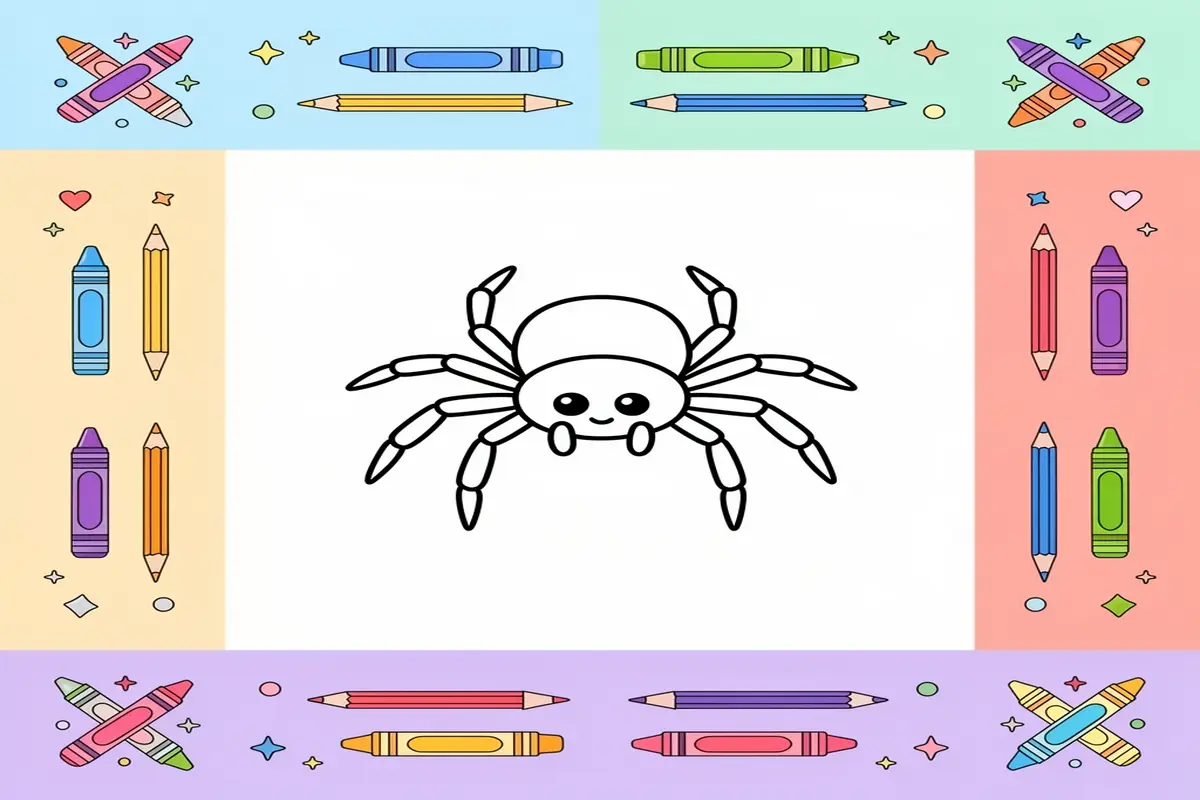
In the vibrant world of childhood imagination, few creatures spark such a potent mix of fascination and curiosity as the spider. Often misunderstood, these eight-legged architects of nature become gateways to learning and artistic expression through the simple, powerful medium of coloring. Spider coloring pages for kids offer more than just an afternoon activity; they are a canvas for confronting fears, exploring intricate patterns, and celebrating biodiversity. As children select colors for a jumping spider’s bold markings or a garden orb-weaver’s delicate silk, they engage in a tactile journey that builds fine motor skills and sparks conversations about the essential role these arachnids play in our ecosystems. This creative exploration fits beautifully within a broader menagerie of printable adventures, from the deep-sea wonders of our free dolphin coloring pages to the majestic creatures of the savanna. By providing a safe, controlled environment to interact with these fascinating subjects, spider coloring pages for kids transform potential apprehension into artistic achievement and informed wonder.
Beyond the Web: The Psychology and Universal Appeal
What is it about these particular pages that captivates young minds? The appeal is multifaceted, rooted in psychology, education, and the pure joy of creation.
Confronting the Creepy-Crawly: Art as a Tool for Courage
For many children, spiders inhabit a space between intrigue and fear. Coloring provides a powerful, therapeutic tool for managing these big emotions. By externalizing the spider onto paper, a child gains control. They decide if its expression is friendly or fierce, if its colors are realistic or fantastical. This process of personification and customization demystifies the unknown, transforming a source of anxiety into a project of personal triumph. Completing a detailed spider coloring page for kids can foster a sense of mastery and bravery, building confidence that extends beyond the art table.
A Tapestry of Patterns: Cultivating Focus and Mindfulness
The spider’s very form is a lesson in geometry and patience. From the symmetrical arrangement of eight legs to the mesmerizing, repetitive spirals of a web, these subjects are naturally conducive to mindful coloring. The act of carefully filling in complex, segmented bodies and intricate web designs requires sustained attention and fine motor control. This focused engagement acts as a form of active meditation, quieting a busy mind and promoting a state of flow. The repetitive motion of coloring within small, detailed areas can be remarkably calming, offering a screen-free sanctuary for relaxation and concentration.
Curated for Every Young Explorer: From Simple Silhouettes to Scientific Detail
The beauty of this theme lies in its incredible range. For the toddler or preschooler, a simple, cartoonish spider with big, friendly eyes and bold outlines provides a perfect starting point—easy to color and utterly non-threatening. For the school-aged child and budding naturalist, more realistic spider coloring pages for kids offer an educational deep dive. These pages might highlight the distinct shapes of different species, the structure of fangs and spinnerets, or a spider in its detailed habitat. This scalability ensures that every child, regardless of age or skill level, can find a page that challenges them appropriately, fostering both artistic growth and a respect for biological accuracy.
Part 2: Essential Materials for Stunning spider coloring pages for kids
To transform your spider coloring pages for kids from a simple activity into a vibrant masterpiece, having the right materials is crucial. Proper tools not only enhance the final artwork but also make the coloring process more enjoyable and less frustrating for young artists. This section details the professional-grade supplies that will help children capture the intricate details of spider webs and the unique textures of different spider species.
The Foundation: Premium Paper for spider coloring pages for kids
The paper you choose is the single most important factor in coloring success. For spider coloring pages for kids, which often feature fine lines and detailed patterns, standard printer paper is insufficient. It bleeds easily and can tear under pressure. Opt for a dedicated marker paper (around 70-80 GSM) for use with wet mediums, as it has a smooth, bleed-resistant coating. For colored pencils, a heavier weight paper (100-140 GSM) with a slight tooth, such as mixed-media or bristol board, allows for better pigment layering and blending. This is especially useful for creating realistic shading on a spider’s body or a dewy web. For a fun textural experiment, try placing a page under lightly textured surfaces, like a placemat, and rubbing with the side of a crayon to create a unique background before coloring the spider.
Best Coloring Tools: Markers vs. Pencils
The choice between markers and colored pencils defines the artwork’s style. Alcohol-based markers (like Copic or Ohuhu) offer vibrant, blendable colors with no streaks, perfect for creating smooth, dramatic gradients on a tarantula’s abdomen. However, they require bleed-proof paper. Water-based markers are more child-friendly and easier to clean, but can cause paper to warp. For ultimate control and detail, professional-grade colored pencils (wax-based like Prismacolor or oil-based like Faber-Castell Polychromos) are unbeatable. They allow for precise work on tiny spider legs and enable advanced techniques like burnishing to create a glossy, lifelike finish. A hybrid approach often yields the best results: using markers for bold base colors and pencils for intricate detailing and shadows.
Finishing Touches: Gel Pens & Highlighting Tools
This is where spider coloring pages for kids truly come to life. A set of fine-tip white gel pens is indispensable for adding highlights to a spider’s eight eyes or creating the illusion of light catching on a silken web. Metallic gel pens in silver or gold can be used to color orb-weaver webs for a magical effect. For adding subtle sparkle or texture to the spider’s body, consider clear glitter glue pens. A colorless blender marker (for alcohol-based sets) can be used to soften edges and fix small mistakes. To make their artwork pop, provide children with a fine black liner pen (0.3 mm or 0.5 mm) to carefully redefine any outlines that may have been obscured during coloring, ensuring their spider remains crisp and clear.
Perfect Workspace: Lighting & Ergonomics
A proper workspace maximizes comfort and minimizes fatigue, allowing kids to focus on their coloring. Ensure the area is well-lit with natural light or a bright, white LED desk lamp to reduce eye strain and reveal true color accuracy—vital when distinguishing between similar shades of brown or gray on a spider. The chair and table height should allow the child’s feet to rest flat on the floor with their forearms parallel to the tabletop. A slanted drawing board or a binder propped under the paper can improve posture and provide a better viewing angle. Keep supplies organized in cups or trays; this not only maintains order but also encourages careful tool selection. For inspiration and to connect their project to a broader theme, you might explore related activities like our insect coloring pages for kids, which can help children understand the spider’s place in the ecosystem.
Part 3: Elevating Your Art: Advanced Techniques for Spider Coloring Pages for Kids
Ready to transform a simple spider coloring page into a stunning piece of art? Moving beyond basic fills, these advanced techniques will help kids (and adults!) develop fine motor skills, understand artistic concepts, and create truly impressive work. Let’s explore how to add depth, realism, and professional flair to your spider coloring pages for kids.
* Link: For more intricate animal textures, explore our Cheetah Coloring Pages or the delicate patterns on Butterfly Coloring Pages.
Harmonious Palettes: Color Theory for Eight-Legged Friends
Color theory isn’t just for professionals! Teach young artists to create mood and focus. For a realistic garden spider, use analogous colors (colors next to each other on the wheel), like yellows, oranges, and browns, for a natural, cohesive look. Want the spider to pop? Use complementary colors. A bright green spider placed on a background with red accents (like tiny flowers) will create dynamic contrast. For a magical or spooky vibe, encourage a monochromatic scheme using different shades of purple or blue.
From Flat to 3D: Mastering Shading and Depth
Shading is the secret to making a spider look round and its web look silky. Start by choosing a light source direction (e.g., the top left). Color the entire spider with a base hue. Then, using a slightly darker shade of the same color, apply gentle pressure to add a shadow along the opposite side (e.g., the bottom right of the body and legs). For a glossy, rounded abdomen, leave a small white highlight where the light would hit directly. Blend the edges of the dark shade into the base color using light, circular strokes. This technique also works wonders for giving depth to intricate insect coloring pages for kids.
Weaving Realism: Advanced Texture Techniques
A spider’s body and web are all about texture. For a fuzzy tarantula, use very short, quick strokes or tiny dots with a sharp pencil or fine-tip marker, concentrating the texture around the joints and legs. A smooth, shiny spider (like a black widow) benefits from strong highlights and very smooth, even coloring. For the web, don’t just outline it—use a silver or gray to lightly shade one side of each thread, suggesting light catching the silk. Practice creating different surfaces on our Realistic Animal Coloring Pages to hone this skill.
The Art of the Rescue: Gracefully Fixing Coloring Mistakes
Mistakes are part of the process! If color goes outside the lines, don’t panic. Often, you can incorporate the stray mark into the background. If a darker color is needed to cover a light error, test it first. For waxy crayons, carefully scrape away excess wax with a blunt edge before coloring over it. With colored pencils, layering can cover many small slips. The best strategy? Turn a “mistake” into a feature—a stray mark can become a leaf, a dewdrop, or a tiny bug in the spider’s environment. This creative problem-solving builds confidence and makes every spider coloring pages for kids project a unique success.
Showcasing Your Spider Coloring Pages for Kids: Creative Display Ideas
Once your young artist has completed their eight-legged masterpiece, it’s time to celebrate their work! Moving beyond the coloring book, displaying their art boosts confidence and transforms their effort into a cherished part of your home.
Preserving Your Masterpiece: Archival Tips
To ensure those vibrant colors last, consider simple preservation methods. For a professional touch, use acid-free tape or photo corners to mount the page on a slightly larger piece of colored cardstock before framing. Laminating is a fantastic, kid-friendly option for a wipeable, durable finish perfect for fridge displays or playroom decorations. For a gallery wall, use uniform clip frames for an easy-to-update exhibit that honors every new creation.
Beyond Display: Creative DIY Projects
Turn completed spider coloring pages into delightful keepsakes and gifts. Carefully cut out the colored spider and glue it onto a folded cardstock to make a unique greeting card. Create custom bookmarks by laminating a strip featuring the spider and web. For a festive touch, string several pages together to make a one-of-a-kind Halloween banner. These projects extend the fun and teach kids about repurposing art, much like the creative potential found in our octopus coloring pages.
Your Spider Art Questions: A Helpful FAQ for Parents
How do you draw a cute spider?
Start with a large, friendly circle for the body. Add two big, expressive eyes on top. For cuteness, draw eight short, chubby legs curving outward. A tiny smile completes the look! This simple formula is perfect for kids to practice before they tackle their spider coloring pages for kids.
What are the benefits of coloring for kids?
Coloring enhances fine motor skills and hand-eye coordination. It serves as a calming, focused activity that boosts concentration and creativity. It’s also a wonderful, low-pressure way for children to express emotions and learn about color theory and boundaries.
What colors should I use for a spider?
While real spiders come in browns, blacks, and greys, encourage creativity! A spider coloring pages for kids adventure can feature rainbow legs, a polka-dotted body, or glittery webs. There are no rules—vibrant pinks, blues, and purples can make a surprisingly charming arachnid.
How to draw a spider web step by step?
Draw a small dot in the center. Add 3-4 straight lines crossing through the dot like an asterisk. Then, starting near the center, draw a spiral outward, connecting to each line. Practice on scrap paper first; it’s easier than it looks and makes a great addition to any spider scene.
How do I print free coloring pages?
Visit a trusted site like ours and navigate to your desired theme. Click the high-resolution image or “Print” button. Ensure your printer has paper and ink. For best results, select “Fit to page” in your printer settings. Then, you’re ready for a fun session with spider coloring pages for kids and more!
Final Thoughts: Embracing the Spider Coloring Journey
The path through creating and displaying spider coloring pages for kids is about so much more than just staying inside the lines. It’s a journey of building fine motor skills, unleashing boundless creativity, and conquering small fears with a splash of color. Each finished page, whether hung proudly on the wall or transformed into a gift, is a tangible reminder of your child’s focus and artistic vision.
We hope this guide inspires you to see these activities as opportunities for connection, learning, and decorative fun. Remember, every artist starts with a single stroke of color. Ready for your next adventure? Explore our insect coloring pages for kids for more tiny creatures to color and discover!