We offer a wide collection of free, high-quality printable coloring pages for kids and adults. From cute animals to intricate mandalas, our designs bring creativity and relaxation to everyone. Download, print, and start coloring today!

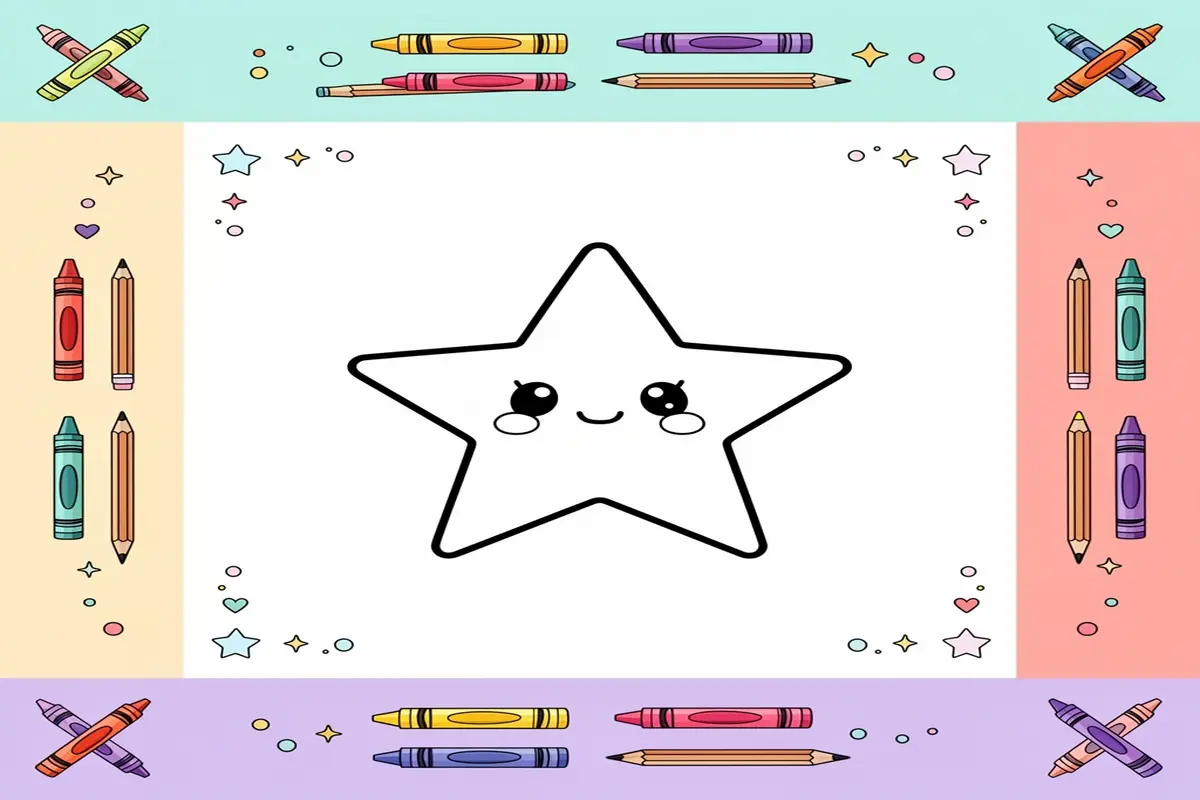
In a world saturated with screens and digital noise, the simple act of coloring offers a profound sanctuary for young minds. It’s a tactile, imaginative journey back to the basics of creative expression. Among the vast galaxy of themes available, star coloring pages for kids hold a unique, twinkling allure. They are more than just outlines on a page; they are gateways to cosmic wonder, encouraging children to dream big and color outside the lines of reality. Whether crafting a simple five-pointed star or designing an intricate celestial nebula, these activities foster focus, fine motor skills, and a peaceful sense of accomplishment. The appeal of star coloring pages for kids seamlessly bridges educational themes, like our solar system coloring pages, with pure artistic fantasy, making them a timeless resource for parents and educators seeking to ignite a spark of curiosity.
The Cosmic Canvas: Why Stars Captivate Young Imaginations
The Psychology of Shimmer: Calm, Focus, and Achievement
At its core, coloring is a mindfulness exercise for children. The repetitive, focused motion of filling a star’s shape with color acts as a gentle anchor, pulling a child’s attention into the present moment and away from anxiety or overstimulation. Star coloring pages for kids are particularly effective because the symbol itself is universally positive—associated with reward, guidance, and wonder. Successfully completing a page, whether with bold, solid colors or a rainbow gradient, provides a tangible sense of achievement, boosting confidence and reinforcing the joy of creating something beautiful from a blank slate.
A Symbol Through Time: From Ancient Myths to Bedroom Ceilings
The star is a cultural constant, a motif woven through human history. By engaging with star coloring pages for kids, children unconsciously connect to this rich tapestry. They can color a Star of David, a nautical star, or the stars representing states on a flag, opening doors to conversations about history, geography, and diversity. This thematic versatility makes stars an ideal artistic subject, allowing a single coloring session to evolve from a simple art project into a springboard for storytelling and learning about the world—and the universe—beyond.
Designed for Every Young Artist: From Toddlers to Tweens
The beauty of this theme lies in its incredible scalability. For tiny hands just learning to grip a crayon, large, simple star shapes are perfect for practicing control. For older children, intricate mandalas built from stellar patterns or detailed scenes of astronauts among the stars offer a satisfying challenge. This range ensures that star coloring pages for kids grow with the child, continually offering an appropriate level of engagement that nurtures their developing skills and keeps their interest shining bright.
Part 2: Essential Materials for Stunning star coloring pages for kids
To transform your star coloring pages for kids from simple outlines into vibrant masterpieces, having the right tools is crucial. The correct materials not only enhance the final artwork but also improve the child’s experience, making coloring more enjoyable and less frustrating. This section details the professional-grade supplies that will help young artists achieve beautiful results, whether they’re coloring a simple five-pointed star or a complex celestial scene.
The Foundation: Premium Paper for star coloring pages for kids
The paper you choose is the single most important factor in coloring success. Standard printer paper (20-24 lb/75-90 GSM) is prone to bleeding and warping. For star coloring pages for kids, upgrade to heavyweight paper (32 lb/120 GSM or higher). This paper withstands wet media like markers without bleed-through and allows for smooth pencil layering. For a special project, consider smooth Bristol board (100+ GSM) which offers a superior surface for blending colored pencils. If you’re printing designs from sources like our galaxy coloring pages for kids, high-quality paper will do the intricate details justice.
Coloring Mediums: Markers vs. Pencils Showdown
The debate between markers and colored pencils is central to planning your activity. Each has distinct advantages for star coloring pages for kids.
Alcohol-Based Markers (e.g., Copic, Ohuhu): These provide vibrant, blendable, streak-free color. They are ideal for larger star fields or creating smooth galactic nebulas. Their ink saturates the paper, offering a professional finish. However, they require specific bleed-proof paper and are a higher investment.
Water-Based Markers (e.g., Crayola Super Tips): These are the classic, child-friendly choice. They are washable, affordable, and come in vast color sets. While they can bleed on standard paper, using the recommended heavyweight paper mitigates this. They are perfect for bold, bright stars.
Colored Pencils: For detail and control, pencils are unmatched. Wax-based pencils (like Crayola) are soft and great for younger children. Professional artist-grade pencils (like Prismacolor) have a higher pigment concentration, allowing for rich blending and shading—perfect for adding dimension to a textured star or a distant planet. Pencils offer a less messy, more precise option.
Finishing Touches: Gel Pens & Highlighters
Elevate your star coloring pages for kids with special effects tools. White and metallic gel pens are indispensable for adding tiny, bright stars to a night sky, creating constellations, or adding sparkling highlights to larger stars. They write smoothly over dried marker or pencil. Fine-line black pens (like Micron) are excellent for redefining outlines that may have become obscured during coloring. A set of pastel or metallic highlighters can also be used to softly blend backgrounds or create aurora effects around celestial bodies.
Creating the Ideal Coloring Workspace
The environment impacts focus and enjoyment. Ensure ample, natural light or a bright, white LED desk lamp to reduce eye strain and reveal true color representation. A flat, hard surface is essential. For ergonomics, consider a slanted drawing board to improve posture and hand positioning. Keep supplies organized in cups or caddies—separating markers from pencils and gel pens. Always place a protective blotter sheet or scrap paper underneath the star coloring pages for kids to protect the table surface, especially when using markers. Having a dedicated, well-prepared space signals that this is a valued creative activity.
Part 3: Transforming star coloring pages for kids with Pro-Level Techniques
Ready to take your child’s star coloring pages for kids from simple sketches to stunning celestial art? This section moves beyond basic filling to explore professional techniques that teach real artistic skills. By mastering a few key methods, kids can add incredible depth, light, and realism to their galactic creations, building confidence with every page they complete. Let’s unlock the secrets to making those stars truly shine.
Link: For more cosmic inspiration, pair your starry scenes with our solar system coloring pages or dreamy galaxy coloring pages for kids.
Harmonious Palettes: Color Theory for Celestial Scenes
Understanding basic color relationships can transform a random selection into a purposeful masterpiece. For star coloring pages for kids, teach the power of complementary colors (opposites on the color wheel). A deep blue nebula pops when accented with tiny orange or yellow stars. Analogous colors (neighbors on the wheel), like blending purples, blues, and pinks, create serene and harmonious galaxy clouds. Encourage starting with a limited “space palette” of 3-4 key colors to maintain cohesion, adding white for highlights and black for deep space shadows.
From Flat to 3D: Mastering Stellar Shading
The secret to a star that looks like a glowing sphere instead of a flat shape is shading. Guide your young artist to:
1. Choose a Light Source: Decide where the light is coming from (e.g., the top corner).
2. Apply Base Color: Color the entire star with a medium tone (e.g., yellow).
3. Add Shadow: On the side opposite the light source, layer a slightly darker hue (e.g., gold or orange) and blend.
4. Highlight: On the side closest to the light, add a bright touch of a lighter color (e.g., light yellow or even white).
For planets or moons in the scene, use the same principle on a larger scale to create dramatic, rounded forms.
Adding Cosmic Realism: Texture and Sparkle Methods
A textured sky feels vast and mysterious. Use a stippling technique (tiny dots) with a white or light blue gel pen to create distant star fields. For nebulas, show kids how to layer and blend softly with colored pencils, using small circular motions to mimic gaseous clouds. To make the central star truly radiant, try burnishing: pressing hard with a white or pale yellow pencil over existing colors to create a smooth, waxy, and bright highlight. Don’t forget the power of a black background—coloring the space around a star darkly makes it appear to glow intensely.
The Art of Correction: Graceful Fixes for Coloring Errors
Mistakes are part of the creative process. A common issue is coloring outside the lines of a intricate star shape. Instead of frustration, teach these fixes:
Embrace the Nebula: Turn a stray mark into a wisp of cosmic gas extending from the star.
Create a New Star: A small dot outside the lines can become a distant, twinkling star.
Use the Background: If the error is on the space itself, it can often be covered by layering on more dark blue, black, or purple. The key is to work with the mistake, integrating it into the scene. This problem-solving builds resilience and creative thinking far beyond the coloring page.
Part 4: Showcasing Your Star Coloring Pages for Kids: Creative Display Ideas
Your child’s completed star coloring pages for kids are more than just paper—they’re masterpieces of imagination. Moving beyond the coloring book, these vibrant creations deserve a spotlight. Here are inspiring ways to celebrate their artistic journey and turn their work into cherished keepsakes or delightful gifts.
Preserving Your Masterpiece: Archival Tips
Protect those colorful creations from fading and wear. For long-term display, consider using acid-free photo corners or a simple laminator. Framing a favorite piece under UV-protective glass makes a stunning wall gallery in their bedroom or playroom. For a rotating gallery, a simple clothesline and clothespins in the craft corner allow for easy swapping of new artwork.
Beyond Display: Creative DIY Projects
Transform colored pages into functional art! Help your child create unique greeting cards by gluing their star art onto folded cardstock. Laminate and cut out shapes to make bookmarks, ornaments, or even decoupage them onto a treasure box. These projects not only extend the fun but also teach kids about repurposing art. For more oceanic inspiration, check out our solar system coloring pages to create a complete cosmic theme.
Part 5: Your Starry Questions Answered
How do you draw a star step by step?
Start by drawing an upside-down “V.” From its right tip, draw a straight line diagonally down to the left. From that endpoint, draw a line straight up to the right, creating a point. Finally, draw a line from that point back to the starting point of the “V.” Practice makes perfect, and soon you’ll be ready for detailed star coloring pages for kids.
What are the benefits of coloring for kids?
Coloring boosts fine motor skills, hand-eye coordination, and focus. It’s a powerful tool for emotional expression and stress relief, allowing children to process feelings through creativity. This mindful activity also builds color recognition and can spark a lifelong love for art, making star coloring pages for kids both fun and developmental.
How do I print coloring pages from Google?
Search for your desired image (e.g., “free star coloring pages”) and click “Images.” Select a clear, high-resolution image. Click on it to view the larger version, then right-click and choose “Save image as.” Save it to your computer, open the file, and select “Print” from your software’s menu. Ensure you use “Fit to page” for best results.
How do you make a 5 pointed star?
The simplest method is the one-line star. Draw a continuous line: start at the lower left, go up to a center peak, down to the lower right, up to the upper left point, across to the upper right point, and back down to your starting point. It takes practice, but it’s a magical skill to learn before tackling more complex star coloring pages.
Where can I get free coloring pages?
Numerous educational websites offer free, high-quality printables. For a vast and safe selection, explore themed collections on sites like ours, which feature everything from animals to alphabets. You can find a wonderful starting point with our galaxy coloring pages for kids, perfect for complementing a stellar artistic adventure.
Final Thoughts: Your Star Coloring Pages for Kids Journey Begins
The simple act of coloring a star can launch a universe of creativity, calm, and connection. From learning basic shapes to proudly displaying galactic artwork on the wall, this journey nurtures essential skills and builds beautiful memories. Every page completed is a testament to your child’s growing confidence and imagination.
We hope this guide has illuminated the wonderful possibilities that await with star coloring pages for kids. Remember, there’s no right or wrong way to create—only the joy found in the process. Keep encouraging those colorful explorations, and watch their creativity shine brighter each day.
Ready for your next adventure? Explore our astronaut coloring pages for kids to launch even more imaginative play!