We offer a wide collection of free, high-quality printable coloring pages for kids and adults. From cute animals to intricate mandalas, our designs bring creativity and relaxation to everyone. Download, print, and start coloring today!

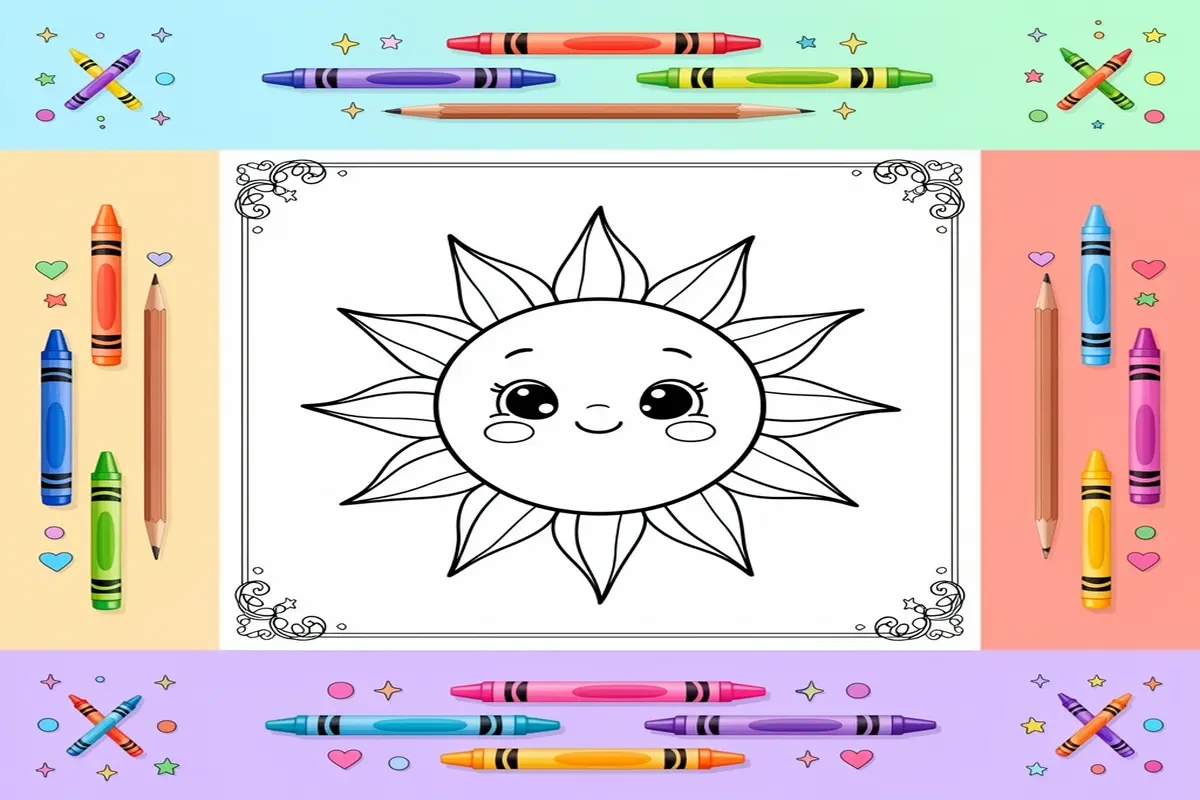
In a world of screens and digital noise, the simple act of coloring offers a profound return to tactile, imaginative play. It’s a quiet space where focus blossoms and self-expression takes center stage. Among the vast universe of themes, sun coloring pages for kids hold a special, radiant appeal. They are more than just an outline to fill; they are an invitation to capture the warmth of a summer day, the promise of a new morning, and the very source of light that sustains our world. These pages allow children to explore color theory in its most vibrant form, experimenting with gradients of yellow, orange, and red to create their own celestial masterpiece. Whether part of a larger solar system scene or a standalone smiling sun, this activity fosters both artistic confidence and a connection to nature. The enduring popularity of sun coloring pages for kids lies in this perfect blend of simplicity and symbolic power, making them a timeless resource for parents and educators seeking to spark joy and creativity.
The Radiant Appeal: More Than Just a Yellow Circle
Why does the sun captivate a child’s imagination so completely? The answer lies at the intersection of psychology, culture, and developmental need. Sun coloring pages for kids serve as a versatile tool that goes far beyond keeping little hands busy.
The Psychology of Warmth: Color as Emotional Anchor
The very palette of the sun—yellows, golds, and corals—is psychologically linked to feelings of happiness, optimism, and energy. When children engage with sun coloring pages for kids, they are not just coloring; they are interacting with hues that can genuinely uplift mood. This makes the activity a subtle form of emotional regulation. The concentric circles and radiating lines common in sun designs also promote mindfulness, guiding a child’s focus inward and outward in a calming, rhythmic pattern. It’s a focused task that builds concentration while providing the satisfaction of creating something bright and positive.
A Symbol Across Cultures: Stories in the Rays
From ancient deities to modern weather symbols, the sun is a near-universal icon of life, power, and growth. Coloring a sun can be a gentle springboard into discussions about science, mythology, and different cultural celebrations. A child might color a fierce Aztec sun disk one day and a gentle, smiling sun for a preschool weather chart the next. This cultural depth adds an educational layer to the artistic fun, allowing sun coloring pages for kids to become a canvas for storytelling and learning about the world’s diverse heritage and our place in the natural order.
Designed for Every Young Artist: From Scribbles to Sunbeams
The beauty of this theme is its incredible accessibility. For a toddler, a simple circle with rays is a perfect shape to practice boundary recognition and gross motor skills. For an older child, a detailed mandala-style sun with intricate patterns offers a challenge in precision and color blending. This scalability ensures that sun coloring pages for kids remain engaging for years, growing with the child’s abilities. They are equally suited for a quiet solo activity, a collaborative mural, or a themed lesson plan about seasons, light, or astronomy, proving their utility in any setting.
Part 2: Essential Materials for Stunning sun coloring pages for kids
To transform your sun coloring pages for kids from a simple activity into a vibrant masterpiece, the right materials are crucial. Proper tools not only enhance the final artwork but also improve the child’s experience, allowing for better control, richer colors, and greater creative satisfaction. This guide details the professional-grade supplies that will make your sun coloring pages for kids truly shine.
The Foundation: Selecting Premium Paper for sun coloring pages for kids
The paper you choose is the single most important factor in coloring success. Standard printer paper (20-24 lb) is prone to bleeding, feathering, and tearing, especially with wet media. For superior results, opt for:
Heavyweight Paper (32 lb / 120+ GSM): This is the ideal minimum for markers and mixed media. It resists bleed-through and provides a sturdy surface.
Cardstock (65-110 lb / 176-300 GSM): Excellent for framing finished artwork. It handles layers of pencil, marker, and even light watercolor without warping.
Specialty Papers: For advanced projects, consider smooth Bristol board for impeccable blends or lightly textured mixed-media paper for added character. Printing your sun coloring pages for kids on quality paper ensures every ray and facial detail holds crisp definition.
The Artist’s Palette: Comparing Coloring Mediums
The choice between markers, pencils, and crayons defines the artwork’s texture and depth.
Alcohol-Based Markers: (e.g., Copic, Ohuhu) Provide seamless, bleed-free blends perfect for creating smooth sunsets and radiant gradients on a sun’s face. They require compatible marker paper to prevent bleeding. Their vibrant, translucent layers are unmatched for luminosity.
Colored Pencils: The most versatile and controllable tool. Wax-based pencils (Prismacolor) offer soft, blendable cores ideal for rich, layered color. Oil-based pencils (Faber-Castell Polychromos) are harder, allowing for sharp details like intricate sun rays and fine line work. Use a blending stump or colorless blender for professional transitions.
Hybrid Approach: For dynamic sun coloring pages for kids, layer pencils over marker base layers to add texture and correct small areas, combining the best of both mediums.
Precision and Sparkle: Detailing Tools and Embellishments
Elevate the artwork with tools designed for fine details and special effects.
Gel Pens & Acrylic Paint Markers: Essential for adding dazzling highlights to sunbeams, creating a sparkling corona, or outlining. Metallic gold, silver, and white gel pens instantly create a glowing, radiant effect.
Blending Tools: A paper stump (tortillon) or specialized pencil blender smooths pencil strokes into seamless skies. For markers, a colorless blender marker can lighten areas or create soft textures.
Erasers: A high-quality vinyl or kneaded eraser cleanly removes pencil mistakes or can be used to lift color for creating cloud effects around the sun, a technique explored in our galaxy coloring pages for kids.
Creating the Ideal Coloring Environment
A proper workspace promotes focus, comfort, and creativity.
Lighting: Natural daylight is best for color accuracy. Supplement with a bright, white LED desk lamp to eliminate shadows and reduce eye strain, ensuring every hue on the sun coloring pages for kids is true.
Ergonomics: Ensure the child’s feet are flat on the floor and the work surface is at elbow height. A slanted drawing board can improve posture and provide a better viewing angle.
Organization: Use cups or trays to organize tools by type. Keep a scrap paper sheet under the working hand to prevent smudging and a test sheet nearby for checking colors before applying them to the final page.
Part 3: Elevating Your Art: Advanced Techniques for Sun Coloring Pages for Kids
Ready to transform a simple sun coloring page into a radiant masterpiece? This guide moves beyond basic filling to explore professional techniques that will add depth, realism, and wow-factor to any sun coloring pages for kids. These methods are perfect for parents and teachers looking to guide young artists toward more impressive results.
Harmonious Palettes: Color Theory for Your Sun
Understanding basic color theory can turn a good picture into a great one. For a sun, think beyond plain yellow. Use analogous colors (colors next to each other on the wheel) like yellow-orange and orange-red to create a smooth, glowing transition from the sun’s core to its outer edges. For a dynamic, high-energy look, add pops of complementary colors. A touch of violet or blue in the shadows of sun rays or sun-themed backgrounds makes the yellows appear even brighter and more vibrant. This technique is also fantastic for creating stunning galaxy coloring pages for kids as a celestial backdrop for your sun.
From Flat to 3D: Mastering Shading and Highlights
Shading is what gives your sun a spherical, three-dimensional form. Imagine your light source (another, brighter sun off the page!). The area closest to this light source should be your lightest yellow. As the sun’s surface curves away, gradually layer with deeper tones like gold, amber, or even a soft red. Use the side of your pencil or crayon for smooth gradients. For highlights, leave a tiny sliver of the paper white or use a white gel pen to add a brilliant speckle at the brightest point. This step-by-step approach to depth makes your sun look like it’s bursting off the page.
Adding Realism: Texture and Atmospheric Effects
A sun’s surface isn’t smooth—it’s a churning ball of plasma! Create this texture with short, energetic strokes or tiny, overlapping circles in varying shades of orange and yellow. For rays, use long, confident strokes that vary in thickness. To create a sense of atmosphere, like a sun rising or setting, lightly blend oranges, pinks, and purples around the sun’s perimeter. This atmospheric technique is a cornerstone of beautiful landscape coloring pages for kids, where the sun interacts with the sky and environment.
The Art of Correction: Graceful Fixes for Coloring Errors
Mistakes are part of the creative process. If color goes outside the lines, don’t panic! Often, you can incorporate the stray mark into a background element, like a cloud or a sunbeam. For small wobbly lines on a ray, thicken the ray slightly to create a more solid, intentional shape. If using colored pencils, a white eraser can lighten areas for reworking. The key is to stay flexible—sometimes a “mistake” leads to a more creative and unique sun coloring pages for kids final product. Embrace the process and encourage young artists to see every mark as part of their artwork’s story.
Showcasing Your Sun Coloring Pages for Kids: Creative Display Ideas
Once your young artist has filled their sun coloring pages for kids with vibrant hues, it’s time to celebrate their work! Moving beyond the coloring book, displaying their art boosts confidence and transforms their creations into cherished decor. Here are inspiring ways to honor their sunshine masterpieces.
Preserving Your Masterpiece: Archival Tips
To ensure those bright yellows and oranges don’t fade, consider simple preservation methods. For long-term display, use acid-free photo corners in a frame, avoiding glue that can damage the paper. Laminating a favorite piece makes it durable for handling or even turning into a placemat. Storing flat artwork in a large portfolio folder protects it from creases and sunlight, creating a time capsule of their creative growth.
Beyond Display: Creative DIY Projects
Turn completed pages into joyful crafts and gifts. A colored sun can be carefully cut out, glued to a popsicle stick, and transformed into a cheerful puppet for imaginative play. For a beautiful window display, create a sun catcher by laminating the page and hanging it with clear fishing line. You can also fold multiple finished pages into a custom greeting card or a unique booklet, celebrating a series of artistic adventures. For more nature-inspired fun, pair your sun with our beautiful Ocean Coloring Pages to create a complete sunny scene by the sea.
Your Sun Coloring Pages for Kids Questions Answered
How do you draw a simple sun for kids?
Start with a perfect circle in the center. Then, draw simple, triangular rays around it—like a child’s drawing of a sun. For a friendlier look, add a big smiling face and cheerful cheeks inside the circle. This easy, happy sun is the perfect base for your sun coloring pages for kids.
Where can I find free printable sun coloring pages?
You can find a wonderful variety of free, high-quality printable sun coloring pages for kids right here on our website! We offer simple smiling suns, detailed mandala suns, and suns integrated into scenic landscapes, all available for instant download and printing.
What are the benefits of coloring for kids?
Coloring boosts fine motor skills and hand-eye coordination as children learn to stay within lines. It’s a fantastic calming activity that promotes focus and reduces anxiety. It also encourages color recognition, creativity, and self-expression, making it a valuable developmental tool.
What colors do you use to color the sun?
While classic yellow and orange are perfect, encourage creativity! Kids can use red for a setting sun, pink and purple for a dreamy sky, or even rainbow colors for a magical effect. There’s no wrong choice when bringing their sun coloring pages for kids to life.
How do you make a sun catcher with coloring pages?
Color your sun page vibrantly, then carefully cut out the shape. Laminate it or cover both sides with clear contact paper. Punch a hole at the top, thread through some string or ribbon, and hang it in a sunny window to catch the light beautifully.
Final Thoughts: Your Sun Coloring Pages for Kids Journey Begins
The journey with sun coloring pages for kids is about so much more than just filling in lines. It’s a bright path to developing essential skills, finding moments of calm, and unleashing boundless creativity. Each page completed is a celebration of your child’s unique perspective and a sunny burst of accomplishment. We hope these ideas for displaying, preserving, and crafting have inspired you to extend the joy far beyond the final crayon stroke.
Ready for your next adventure? Explore our Solar System Coloring Pages to let your child’s creativity shine across the entire galaxy!