We offer a wide collection of free, high-quality printable coloring pages for kids and adults. From cute animals to intricate mandalas, our designs bring creativity and relaxation to everyone. Download, print, and start coloring today!

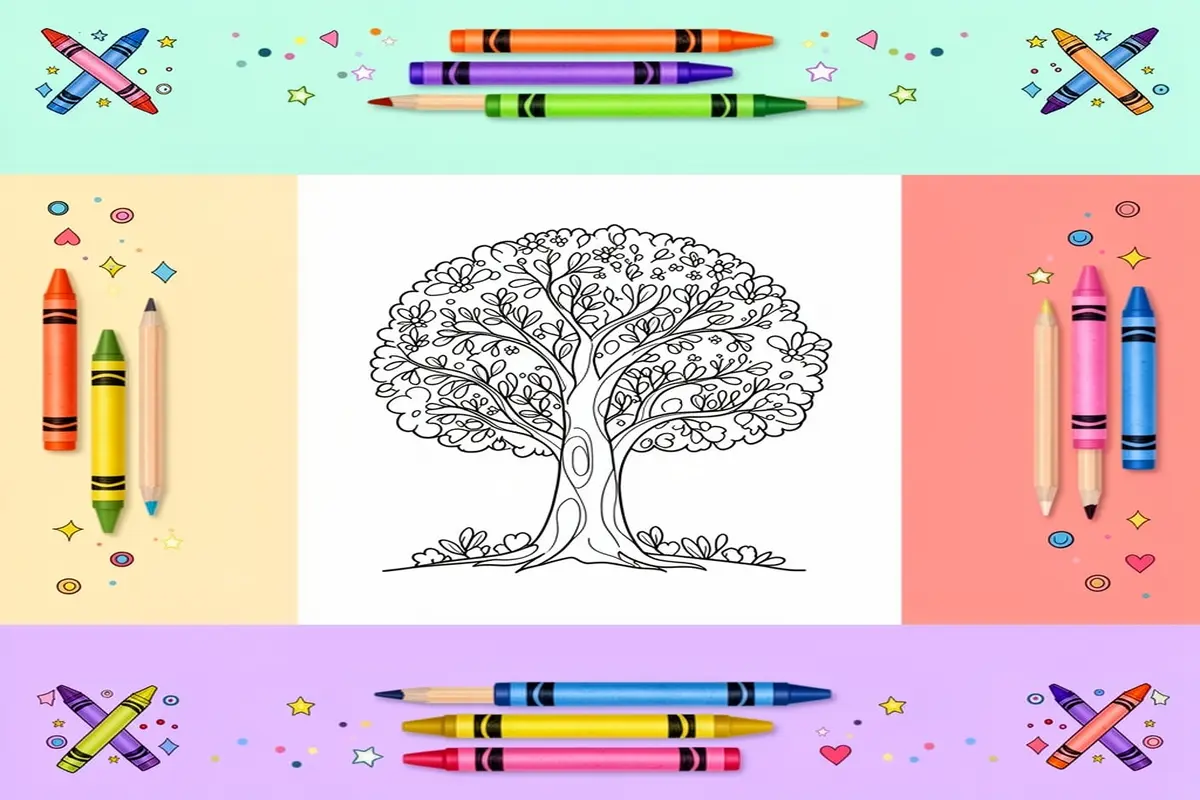
In a world of digital screens and fleeting entertainment, there’s a quiet, profound magic in the simple act of coloring. It’s a tactile, mindful practice that connects children to the fundamental joy of creation. Among the vast universe of printable art, tree coloring pages for kids stand as a uniquely powerful tool. They are more than just outlines on a page; they are gateways to understanding nature, exploring seasons, and expressing boundless creativity. From a single sapling to a sprawling, ancient oak, each tree becomes a personal canvas for a child’s imagination. This foundational activity builds fine motor skills, color recognition, and a deep-seated appreciation for the natural world. It’s a peaceful counterpoint to more animated subjects, like the dynamic scenes found in our free dolphin coloring pages, offering a different kind of serene engagement. Engaging with tree coloring pages for kids is an invitation to slow down, focus, and grow one’s artistic vision from the ground up.
Branching Out: The Psychology and Universal Appeal of Arboreal Art
What is it about the simple form of a tree that captivates and calms? The appeal of tree coloring pages for kids is deeply rooted in both psychology and our innate connection to the natural world.
The Canopy of Calm: Mindfulness in Every Leaf
Coloring, by its repetitive and structured nature, is a known mindfulness exercise. For children, focusing on the intricate branches and countless leaves of a tree requires a gentle, sustained attention that pushes aside distractions. This act of filling in a complex but familiar natural form can lower stress and anxiety, providing a meditative space. The organic shapes are forgiving and less rigid than geometric patterns, allowing for a flow state where the mind can rest while the hands create. It’s a therapeutic practice disguised as play, helping to build emotional resilience and focus.
An Ancient Symbol: The Tree in Culture and Story
Beyond psychology, the tree holds a sacred place in human culture across millennia. It is a universal symbol of life, growth, family (the family tree), and connection. When children color a tree, they are unconsciously engaging with this rich tapestry of meaning. They might be drawing the Giving Tree from a favorite story, the apple tree from a historical tale, or a magical tree from a fantasy realm. This activity becomes a subtle lesson in mythology, ecology, and literature, making tree coloring pages for kids an excellent interdisciplinary learning tool that sparks curiosity about the world’s stories and sciences.
From Sapling to Sage: Curated for Every Developmental Stage
The beauty of this theme is its incredible scalability. For a toddler, a simple apple tree with large, distinct areas is a perfect challenge for gross motor control. A school-aged child can tackle a detailed oak with textured bark and a complex canopy, experimenting with light, shadow, and seasonal colors. For the advanced young artist, a sprawling banyan tree or a surreal, imaginative tree from a dreamscape offers endless creative potential. This makes tree coloring pages for kids uniquely adaptable, providing an appropriate and satisfying creative outlet for every skill level, ensuring that no child feels overwhelmed or underwhelmed. It’s a growth-oriented activity that literally grows with the child.
Professional Materials & Preparation for tree coloring pages for kids
To ensure a successful and enjoyable coloring session with tree coloring pages for kids, proper preparation is key. Having the right materials on hand transforms a simple activity into an engaging artistic exploration. This section details the essential supplies and setup tips to help parents and educators create an optimal environment for young artists.
The Foundation: Selecting Paper for tree coloring pages for kids
The paper you choose directly impacts the final artwork and the child’s experience. For standard printing of tree coloring pages for kids, a bright white, medium-weight paper (around 100-120 GSM) is ideal. It provides a smooth surface for fine details like delicate leaves and bark textures, while being thick enough to prevent bleed-through from markers. For a more advanced project, consider cardstock (160+ GSM) or even watercolor paper if you plan to use wet mediums. This allows for techniques like blending sky backgrounds or creating lush, multi-green canopies without the paper warping. Always print a test page to ensure your printer’s ink is compatible and dries quickly to avoid smudging.
Best Coloring Tools: A Detailed Medium Comparison
The choice between crayons, colored pencils, and markers defines the artistic outcome. Wax Crayons are excellent for younger children, offering bold, opaque coverage perfect for filling large areas like tree trunks. However, they lack precision for intricate branches. Colored Pencils, especially those with soft cores, provide superior control for shading and detailing bark patterns and individual leaves. They encourage patience and fine motor skill development. Markers deliver vibrant, uniform color and are fantastic for creating dramatic, solid-color skies or grass. Opt for alcohol-based markers for professional, bleed-free blends on thicker paper, or use water-based varieties for safety and ease. A hybrid approach often yields the best results—using markers for large areas and pencils for detail work on your tree coloring pages for kids.
Finishing Touches: Gel Pens, Highlighters, and Blenders
Elevate the artwork from simple to spectacular with specialty tools. White or metallic gel pens are invaluable for adding highlights to dew on leaves, creating sunlight streaks through branches, or drawing fine details like birds or insects in the foliage. They work wonderfully over dried marker or pencil layers. A colorless blender pencil (for wax-based pencils) or a blending stump can help smooth pencil strokes and create realistic gradients for sunsets behind a silhouetted tree. For a fun, textural effect, consider using dot markers for leaves or sponges dipped in thin paint to create cloud effects in the sky. These tools encourage creative experimentation beyond flat coloring.
Perfect Workspace: Ergonomic and Lighting Setup
A well-prepared workspace prevents frustration and fosters focus. Ensure the coloring area has ample, natural light or a bright, neutral-white LED lamp to reduce eye strain and allow children to see true colors. The seating should support good posture, with the table at elbow height and feet flat on the floor or a stool. Use a clipboard or a hardback book under the coloring page for a stable surface if working at a soft table. Keep supplies organized in cups or trays, and always protect the work surface with a large piece of cardboard or a dedicated craft mat. Having related resources, like our detailed forest coloring pages for kids, on hand can inspire children to create entire ecosystems around their tree. Finally, keep damp cloths or wipes nearby for quick clean-up, ensuring the focus remains on the joy of creating.
Part 3: Elevating Your Art: Professional Techniques for tree coloring pages for kids
Ready to transform those simple outlines into stunning works of art? This section moves beyond basic coloring to explore professional techniques that will bring your tree coloring pages for kids to life. These methods are perfect for parents and teachers looking to guide young artists toward more advanced, satisfying results. For a foundational understanding of natural scenes, our nature coloring pages for kids offer excellent practice material.
Harmonious Palettes: Color Theory for Lush Landscapes
Choosing colors isn’t just about staying inside the lines; it’s about creating mood and harmony. For tree coloring pages for kids, teach the concept of analogous colors—colors next to each other on the wheel. For a summer oak, use a range of yellows, yellow- greens, and greens for a naturally cohesive look. For a stunning autumn maple, layer reds, oranges, and yellows. Introduce complementary colors (opposites on the wheel) for dynamic contrast, like using a touch of red-orange in the shadows of a green tree to make it pop. This technique also works beautifully for other natural subjects, as seen in our detailed forest coloring pages for kids.
From Flat to 3D: Mastering Light and Shadow
The secret to making a tree look solid is shading. First, decide where your light source is (e.g., the sun in the top corner). The sides facing the light are lighter. Use gentle, even pressure for these areas. For shadows on the opposite side of the trunk and under branches, apply heavier pressure or layer a second color (like a darker brown or green). For rounded tree trunks, add a curved shadow along one edge. Teach kids to “feel” the form with their crayon or pencil, pressing harder where the tree would recede. This step-by-step approach turns a flat circle into a dimensional apple on a branch.
Adding Realism: Texturing Bark, Leaves, and Sky
Texture gives your artwork a tactile feel. For rough bark, use small, sharp, scribbly circles and short jagged lines with a brown pencil, avoiding solid fills. For smooth birch bark, use long, vertical, light strokes with occasional thin, dark horizontal lines. Create fluffy leaf clusters by using small circular motions instead of coloring back and forth. For sky backgrounds, use the side of a blue crayon or colored pencil and apply a smooth, light gradient, leaving some white for clouds. Each texture tells a story about the object’s surface.
The Art of Correction: Graceful Fixes for Coloring Errors
Mistakes are part of the creative process! If color goes outside the line, don’t panic. Often, you can incorporate the stray mark into the background (e.g., turn it into a leaf on the ground). For small waxy crayon bleeds, gently scrape away the excess with a toothpick. With colored pencils, a good white eraser can lift light layers. The most powerful technique is to “cover and transform”: a dark green streak on a tree trunk can be layered over with browns and blacks to become natural bark shading. Encourage young artists to work with their “mistakes”—it often leads to more creative and unique tree coloring pages for kids.
Showcasing Your Tree Coloring Pages for Kids: Creative Display Ideas
Once your young artist has filled their tree coloring pages for kids with vibrant life, it’s time to celebrate their work! Moving beyond the coloring book, displaying their art boosts confidence and transforms their creations into cherished decor.
Preserving Your Masterpiece: Archival Tips
To ensure those beautiful trees last, consider simple preservation methods. For a professional look, use acid-free tape or photo corners to mount the page on a slightly larger piece of colored cardstock before framing. Lamination is a great, durable option for pieces that will be handled often, like on the fridge. For a gallery wall, clipboards or simple wooden frames offer an easy way to rotate new masterpieces regularly.
Beyond Display: Creative DIY Projects
Turn colored pages into meaningful gifts and keepsakes. A beautifully colored tree can become a unique greeting card when folded and glued onto cardstock. Create custom bookmarks by laminating a strip cut from the page. For a seasonal project, incorporate a colored tree into a homemade ornament or decoupage it onto a wooden box. These projects extend the creative fun and make wonderful gifts for family. For more nature-inspired crafting, explore our collection of leaf coloring pages.
Your Tree Coloring Pages for Kids Questions Answered
How do you color a realistic tree?
Start with a light base layer. For leaves, use various shades of green (light, medium, dark) and apply small, overlapping circular strokes to create texture. For the trunk, use browns and grays, coloring along the direction of the bark’s grooves. Add highlights with a lighter color or by gently erasing small areas. Realism comes from layering and observing how light hits different parts of the tree.
What are the benefits of coloring for kids?
Coloring is a powerhouse activity for development. It significantly improves fine motor skills and hand-eye coordination as children learn to control their strokes. It fosters creativity, color recognition, and focus. On an emotional level, it provides a calming, screen-free outlet for self-expression and can be a wonderful tool for stress relief and building patience.
Where to find free printable tree coloring pages?
You can find a wonderful variety of free, high-quality printable tree coloring pages for kids right here on our site! We offer everything from simple apple trees to detailed forest scenes, perfect for all ages and skill levels. Simply browse our nature-themed categories, download your favorites, and print them at home for instant creative fun.
What is the best paper for printing coloring pages?
For best results, use slightly heavier paper. Cardstock (65-110 lb) is ideal as it prevents bleed-through from markers and handles colored pencils and crayons beautifully without tearing. For a smoother finish that makes blending colors easier, look for “smooth” or “bright white” cardstock. This elevates the experience of any tree coloring pages for kids.
How does coloring improve fine motor skills?
The precise grip and controlled movement required to color within lines strengthens the small muscles in the hands, fingers, and wrists. This practice is fundamental for developing the dexterity needed for writing, buttoning clothes, and using utensils. Coloring is a fun, foundational exercise that prepares children for essential life tasks.
Final Thoughts: Your Tree Coloring Pages for Kids Journey Begins
The simple act of coloring a tree opens a world of growth, creativity, and connection for your child. From learning about nature’s intricate beauty to developing crucial motor skills and finding a peaceful moment of focus, these pages offer far more than just an activity. They become a canvas for imagination, a record of developing skill, and a source of pride for the whole family to enjoy.
We hope this guide inspires you to create, display, and cherish these artistic explorations. Remember, every page colored is a step in your child’s creative journey. Ready for your next adventure? Explore our forest coloring pages for kids to continue the woodland theme!