We offer a wide collection of free, high-quality printable coloring pages for kids and adults. From cute animals to intricate mandalas, our designs bring creativity and relaxation to everyone. Download, print, and start coloring today!

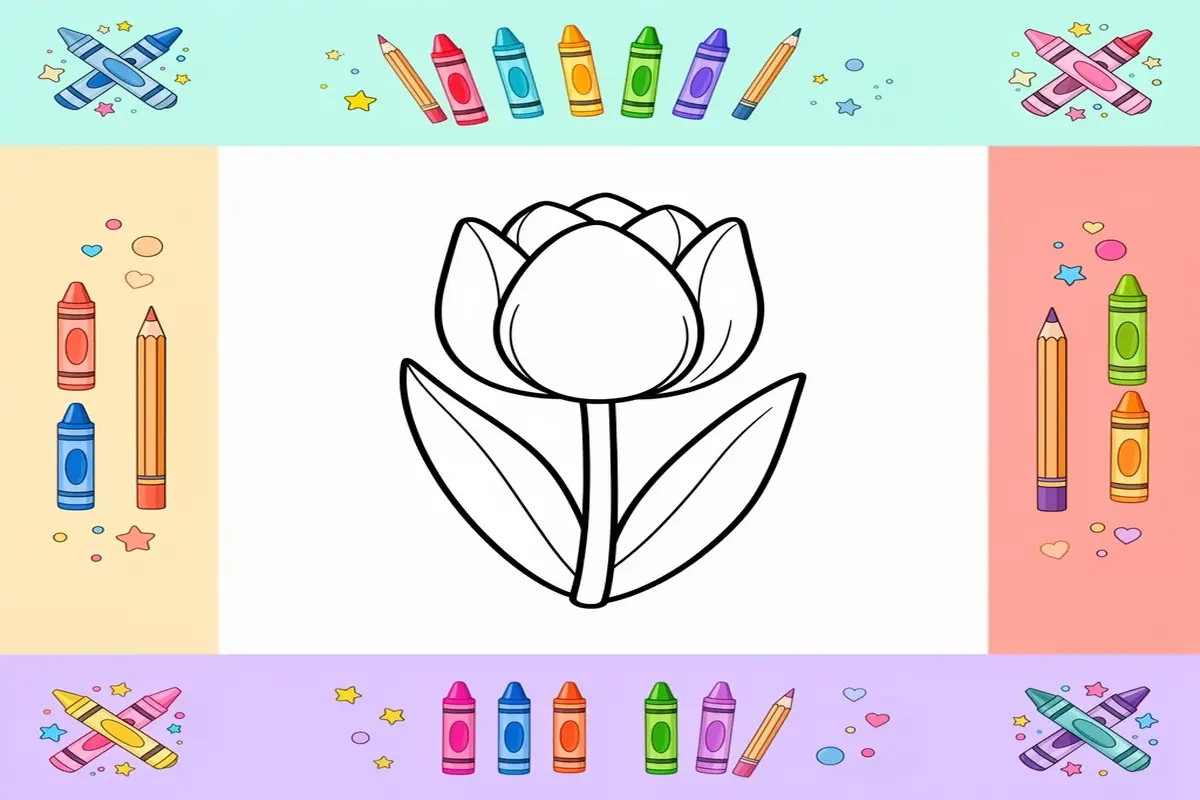
In a world saturated with digital screens, the simple act of coloring offers a profound return to tactile, imaginative play. It’s a quiet space where focus deepens, creativity flourishes, and a sense of calm naturally unfolds. For children, this creative exercise is more than just fun; it’s a foundational tool for developing fine motor skills, color recognition, and emotional expression. Among the myriad of themes available, tulip coloring pages for kids stand out as a particularly enchanting gateway into the wonders of nature and art. The tulip’s elegant, cup-shaped bloom and vibrant palette provide the perfect canvas for young artists to experiment with color theory and design. Whether depicting a single stem or a sprawling garden, these pages invite kids into a world of botanical beauty. While exploring floral themes, young learners might also enjoy the diverse aquatic life found in our collection of fish coloring pages, broadening their artistic horizons. The journey through tulip coloring pages for kids is one of discovery, where every colored petal is a step toward mastering a timeless and rewarding craft.
The Psychology & Universal Appeal of Floral Art
Engaging with tulip coloring pages for kids taps into deeper psychological benefits that extend far beyond the page. This creative activity is a powerful, accessible tool for growth and well-being.
The Mindful Bloom: Cultivating Focus and Calm
The structured yet open-ended nature of coloring a tulip requires a gentle focus that naturally quietens a busy mind. As a child selects a hue for each petal and carefully stays within the lines, they enter a state of flow. This mindful engagement is a form of active meditation, reducing anxiety and improving concentration. The repetitive motion of coloring and the pleasing, symmetrical shape of the tulip work in harmony to create a soothing, predictable, and satisfying experience, making these pages a wonderful resource for emotional regulation.
A Flower Through Time: Symbolism and Cultural Roots
The tulip is not just a pretty flower; it carries a rich history of symbolism across cultures. From its origins in Central Asia to the famous “Tulip Mania” of the Dutch Golden Age, this bloom has long represented perfect love, rebirth, and spring’s arrival. Introducing children to tulip coloring pages for kids opens a door to these stories. It’s an opportunity to discuss seasons, historical events, and how art and nature intertwine across the globe. Coloring becomes a subtle lesson in botany and history, enriching the artistic experience with context and meaning.
Designed for Every Budding Artist: Inclusivity in Complexity
The beauty of tulip coloring pages for kids lies in their versatility. Designs can range from simple, bold outlines perfect for toddlers working on grip and control, to intricate patterns with detailed stems and backgrounds that challenge older children and even adults. This scalability ensures that every child, regardless of skill level, can find a page that offers the right balance of achievement and challenge. Furthermore, the non-representational nature of color choice—a tulip can be red, blue, or rainbow-striped—empowers the artist, fostering confidence and reinforcing that their unique creative vision is valid and celebrated.
Part 2: Essential Materials & Preparation for Stunning tulip coloring pages for kids
Before your young artist begins, having the right materials transforms a simple activity into a rich, educational, and deeply satisfying experience. Proper preparation for tulip coloring pages for kids ensures vibrant results, minimizes frustration, and allows the focus to remain on creativity and fun. This guide outlines a professional toolkit that will help those beautiful spring blooms truly pop off the page.
The Foundation: Selecting Premium Paper for tulip coloring pages for kids
The paper you choose is the single most important factor in the final outcome. Standard printer paper (20-24 lb) is prone to bleeding and warping with most wet mediums. For tulip coloring pages for kids, upgrade to a heavier weight. Look for “marker paper” or “mixed-media paper” in the 60-80 lb (90-130 GSM) range. This weight provides a smooth surface for fine pencil detail while having enough density to prevent bleed-through from markers. For a luxurious feel and exceptional blendability with colored pencils, a bright white, acid-free cardstock (100+ lb) is ideal. It allows for multiple layers of pigment, crucial for capturing the delicate gradients in a tulip’s petals.
Best Coloring Tools: Markers vs. Pencils for Floral Art
The choice between markers and colored pencils defines the artwork’s texture and style.
Alcohol-Based Markers (e.g., Copic, Ohuhu, Sharpie): These are excellent for achieving smooth, vibrant, and seamless blends—perfect for the silky texture of tulip petals. They require the heavier paper mentioned above. Use a colorless blender marker to create stunning ombre effects from a deep pink at the petal edges to a soft white at the center.
Colored Pencils (Wax or Oil-Based): Prismacolor Premier or Faber-Castell Polychromos offer superior control for detailed shading and texture. They allow young artists to build color slowly, layer highlights, and add fine lines to depict veining on leaves and petals. For the best results with pencils, a slight tooth (texture) on the paper is beneficial. Pencils are also less prone to mistakes and are ideal for developing fine motor skills.
Finishing Touches: Gel Pens, Highlights, and Blending Tools
Elevate the finished piece with specialized tools for detail and shine.
White Gel Pens & Acrylic Paint Markers: These are indispensable for adding crisp highlights to dewdrops on petals, creating bright reflections, or correcting small errors. A subtle dot of white in the center of a tulip can make it look three-dimensional.
Blending Tools: For colored pencils, a colorless blending pencil or paper stumps (tortillons) can smooth layers seamlessly. For markers, using two shades from the same color family (e.g., a light and a dark crimson) and overlaying them creates natural depth.
Fine Liners: A black, waterproof fine liner pen (0.3 mm or 0.5 mm) can be used to redefine outlines after coloring, making the image crisp. This technique works wonderfully with our more intricate flower coloring pages for kids, adding a professional, inked look.
Perfect Workspace: Ergonomic Setup for Creative Focus
A well-prepared environment encourages prolonged engagement and comfort.
Lighting: Ensure the workspace is flooded with natural light or uses a bright, white LED desk lamp. Good lighting reduces eye strain and allows for accurate color perception, which is key when blending shades of red, yellow, or purple for unique tulip varieties.
Surface & Posture: Provide a hard, flat surface beneath the coloring page. A simple clipboard or a pad of paper works well. Ensure the child’s feet are flat on the floor and the table height allows for relaxed shoulders. This ergonomic attention is as crucial for a coloring session as it is for any other learning activity, like working on our detailed alphabet coloring pages for kids.
Organization: Use cups or trays to organize coloring tools by type and color family. This not only keeps the space tidy but also teaches color theory and makes the selection process part of the creative journey. Having all materials within reach allows the artist to stay immersed in bringing their tulip coloring pages for kids to life.
Part 3: Elevating Your Art: Advanced Techniques for tulip coloring pages for kids
Ready to transform those beautiful tulip outlines into stunning, vibrant works of art? This section moves beyond simple filling-in to explore professional techniques that will bring depth, realism, and creativity to your tulip coloring pages for kids. These methods are perfect for parents, teachers, and older children looking to elevate their coloring game and achieve impressive results.
Harmonious Palettes: Color Theory for tulip coloring pages for kids
Understanding basic color theory can turn a pretty picture into a masterpiece. For tulips, you have a wonderful opportunity to play with harmony. Analogous colors (those next to each other on the color wheel) create serene and natural looks—think pink, red, and orange for a stunning sunset tulip. Complementary colors (opposites on the wheel) make elements “pop”; imagine a vibrant purple tulip against a yellow-green stem. Don’t feel confined to red! Explore unexpected schemes like blue-tinted petals or a monochromatic page using various shades of a single color for an elegant effect. For more nature-inspired color practice, our flower coloring pages for kids offer a wide variety of botanical subjects.
From Flat to 3D: Mastering Shading Techniques
Shading is the magic that adds volume and makes your tulips look like they’re blooming off the page. Start by choosing a light source direction (e.g., the top left). The areas farthest from this light will be darkest. Step 1: Color your petal with a base layer of your lightest hue. Step 2: Apply a medium tone to the areas that would be in shadow, like the curves at the base of the cup-shaped petal or the side facing away from your light. Step 3: Use your darkest shade (or a complementary color like a deep purple in a red tulip) very sparingly in the deepest crevices. Blend gently by layering and smoothing with your coloring tool. The center of the tulip cup is often a deep, dark space perfect for dramatic shading.
Adding Realism: Creating Texture on Petals and Leaves
Tulips have a smooth, waxy texture that can be beautifully rendered. To avoid a flat, matte look, leave tiny streaks or spots of the paper white to mimic a subtle sheen where light hits the petal directly. For leaves, use short, directional strokes following the leaf’s veins to suggest a silky, linear texture. You can create the appearance of delicate veining by pressing lightly with a sharp pencil or using a slightly darker green to draw fine lines from the central vein outward. For textural inspiration from a different part of the garden, explore the intricate patterns in our rose coloring pages for kids.
The Art of Correction: Gracefully Fixing Coloring Mistakes
Even pros make mistakes! The key is not to panic. For waxy pencils, a kneaded eraser can lift color gently without damaging paper. If you’ve colored outside the lines, sometimes the best fix is to deliberately thicken the outline with a darker color to absorb the error. Turn a stray mark into a dewdrop, a tiny bug, or a background element. If using markers, plan your coloring order: work from lightest to darkest hues, as it’s easier to darken an area than to lighten it. Remember, perfection isn’t the goal; creative problem-solving is a valuable skill for any artist.
Showcasing Your Tulip Coloring Pages for Kids: Creative Display Ideas
The fun doesn’t stop when the last petal is colored! Transforming your child’s artwork into a beautiful display is a wonderful way to celebrate their creativity and build their confidence. Here are some inspiring ways to give those tulip coloring pages for kids a second life.
Preserving Your Masterpiece: Archival Tips
Before you display, consider protecting the artwork. Use acid-free tape or photo corners to mount the page on a slightly larger piece of colored cardstock, creating a professional matte effect. For a more permanent solution, a simple, inexpensive frame works wonders. You can also laminate the page to make it durable for repeated handling or even as a unique placemat for a spring-themed dinner.
Beyond Display: Creative DIY Projects
Turn colored pages into meaningful gifts and keepsakes. Carefully cut out the tulip blooms and glue them onto folded cardstock to create beautiful, handmade greeting cards for birthdays or Mother’s Day. Smaller tulips can be transformed into gift tags or bookmarks when laminated and adorned with a tassel. For a grand project, create a “Spring Garden” mural by coloring and cutting out multiple tulips and arranging them on a large sheet of paper, adding stems and leaves with green paper or paint. For more nature-inspired fun, pair your tulip garden with our delightful Frog Coloring Pages for Kids.
Your Tulip Coloring Pages for Kids Questions Answered
How do you color a realistic tulip?
Start with light layers of your base color, observing a reference photo. Use a darker shade of the same color (e.g., deep pink in the shadowed folds) to add depth and dimension inside the cup of the flower and along petal edges. Add a touch of yellow or white near the base of the petals and use green with hints of brown for a realistic stem.
What are the different colors of tulips?
Tulips boast a spectacular natural palette! While red, yellow, pink, and purple are classic, you can also find white, orange, and even deep, almost black varieties. Many tulips feature stunning multi-colored patterns with streaks or feathered edges, providing perfect inspiration for tulip coloring pages for kids who love to experiment.
What does a tulip symbolize?
Tulips most commonly symbolize perfect love. Different colors carry specific meanings: red tulips represent true love, purple symbolizes royalty, white conveys forgiveness, and yellow, once meaning hopeless love, now often signifies cheerful thoughts and sunshine. This rich symbolism can add a layer of storytelling to your coloring activity.
What are the benefits of coloring for kids?
Coloring enhances fine motor skills and hand-eye coordination. It serves as a calming, screen-free activity that boosts focus and patience. It’s also a fantastic outlet for creative expression and color recognition, making tulip coloring pages for kids both a fun and developmentally valuable pastime.
Are there naturally blue tulips?
True blue tulips do not exist in nature. While you can find tulips in shades of violet, lilac, and purple that may appear somewhat blue, a genetically pure blue tulip has not been cultivated. This is a fun fact to share, encouraging kids to use their imagination to create their own unique “blue” tulip masterpiece!
Final Thoughts: Your Tulip Coloring Pages for Kids Journey Begins
From the first stroke of color to the proud display on your wall, the journey with tulip coloring pages for kids is filled with creativity, learning, and joyful moments. These activities are more than just a way to pass the time; they are opportunities for growth, bonding, and celebrating the vibrant beauty of spring all year round. We hope these ideas have inspired you to see every finished page as a starting point for new adventures in art and imagination.
Ready for your next adventure? Explore our Sunflower Coloring Pages for Kids and keep building your beautiful garden of creativity!