We offer a wide collection of free, high-quality printable coloring pages for kids and adults. From cute animals to intricate mandalas, our designs bring creativity and relaxation to everyone. Download, print, and start coloring today!

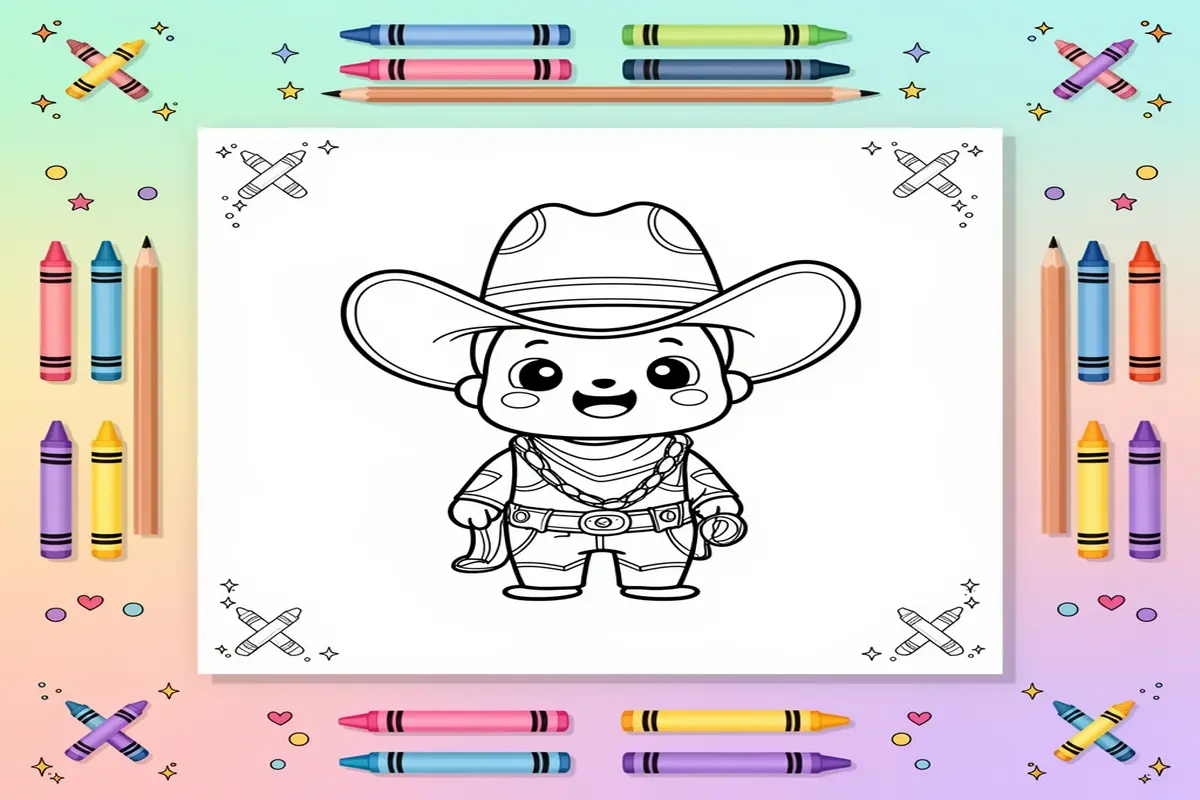
In a world saturated with digital screens, the simple act of coloring offers a profound return to tactile creativity and imaginative play. For young artists, western coloring pages for kids open a gateway to a legendary landscape of cowboys, vast deserts, and untamed wildlife. This genre is more than just an activity; it’s an invitation to explore a rich cultural tapestry through the stroke of a crayon. By engaging with these scenes, children don’t just fill in shapes—they embark on a narrative journey, developing fine motor skills and color theory understanding in a context brimming with adventure. The appeal of the Wild West, with its iconic imagery and themes of exploration, provides a uniquely compelling canvas for young minds. As they color a ten-gallon hat or a roaming mustang, they connect with stories of the frontier, making these western coloring pages for kids a dynamic tool for both education and entertainment. For those who also love exploring the animal kingdom, our collection of farm animal coloring pages offers a wonderful complementary adventure.
Part 1: The Psychology of the Plains: Why the Wild West Captivates
The enduring allure of the western theme for children is rooted in a powerful blend of psychology and storytelling. It taps into fundamental desires for adventure, heroism, and exploration of wide-open spaces, providing a perfect backdrop for creative expression.
The Frontier of Focus: Mindfulness in Monochrome
At its core, coloring is a mindfulness exercise. The structured yet open-ended nature of western coloring pages for kids demands a gentle focus. As a child concentrates on staying within the lines of a cactus or a cowboy’s boot, their mind enters a state of flow. This quiet engagement helps quiet the mental chatter of a busy day, reducing anxiety and promoting a sense of calm. The western scene, often depicting serene sunsets or peaceful campfires, visually reinforces this tranquil state, making the activity a subtle form of stress relief and emotional regulation.
A Canvas of Culture: History Through Hues
Western themes are a vibrant entry point into history and folklore. Each element—a covered wagon, a Native American headdress, a sheriff’s badge—carries a story. When children engage with these western coloring pages for kids, they naturally become curious about the symbols they are bringing to life. This curiosity can spark conversations about geography, historical periods, and diverse cultures, transforming art time into an informal, engaging learning session. It’s a way to introduce complex historical narratives in an accessible, visual format that empowers the child as the storyteller of their own colorful version of the past.
Ranging from Rookies to Seasoned Artists: Inclusivity in Design
The beauty of this genre lies in its scalability. Simple outlines of a horseshoe or a cowboy hat are perfect for little hands just learning to grip a crayon, building confidence with each completed page. For older children or those seeking a challenge, intricate scenes of bustling frontier towns or detailed portraits of wildlife like bison offer hours of immersive engagement. This range ensures that western coloring pages for kids are not a one-size-fits-all product but a versatile resource that grows with the artist, continually offering new levels of detail and complexity to master.
Part 2: Essential Materials & Workspace Setup for western coloring pages for kids
To ensure your young artists get the most out of their western coloring pages for kids, having the right materials and a prepared space is key. This professional toolkit will elevate the coloring experience from a simple activity to an engaging, skill-building session that brings those cowboys, horses, and desert sunsets to vibrant life. Proper tools not only improve the final result but also boost confidence and enjoyment.
The Foundation: Selecting Premium Paper for Durability
The paper you choose directly impacts the performance of your coloring tools and the longevity of the artwork. For printable western coloring pages for kids, standard printer paper (20-24 lb/75-90 GSM) is acceptable for pencils but will bleed and warp with most markers. Upgrade to a heavier weight paper (32 lb/120 GSM or higher) or dedicated marker paper for a superior experience. Smooth, bright white paper allows colors to appear true and vibrant, essential for capturing the bright blues of a cowboy’s bandana or the golden hues of a canyon. For a textured, artistic feel that mimics traditional sketching paper, a light cardstock or mixed-media pad provides a sturdy surface that can handle layering and erasing.
Best Coloring Tools: A Detailed Medium Comparison
The choice between colored pencils and markers defines the artwork’s style. For detailed western coloring pages for kids featuring intricate saddle patterns or distant mountain ranges, artist-quality colored pencils are ideal. Look for pencils with soft, pigmented cores that blend smoothly. Wax-based pencils (like Crayola or Prismacolor) offer vibrant layering, while oil-based options provide superior blending. For bold, graphic scenes like a sunset silhouette, alcohol-based markers deliver seamless, bleed-free color but require bleed-proof paper. Water-based markers are a more child-friendly option, though they can streak on larger areas. A hybrid approach often yields the best results: using markers for large areas like skies and plains, and pencils for adding detailed texture to animal fur and clothing.
Finishing Touches: Enhancing Details with Special Effects
Once the base colors are down, special tools can add professional polish and excitement. White gel pens are indispensable for adding highlights to spurs, sheriff badges, or the gleam in a horse’s eye, creating instant dimension. Fine-line black pens can be used to redefine outlines that may have become obscured during coloring, making scenes pop. For a touch of sparkle on a saloon sign or starry night sky, consider non-toxic glitter glue. Metallic colored pencils or pens can also be used to color metallic elements like buckles and rifles, adding a realistic sheen. These finishing tools encourage attention to detail and allow children to personalize their western scenes creatively.
Perfect Workspace: Optimizing Lighting and Ergonomics
A well-prepared workspace prevents fatigue and lets kids focus on creativity. Ensure the coloring area is flooded with natural light or supplemented by a bright, white LED lamp to reduce eye strain and allow for accurate color perception. The seating surface should support good posture; use a table and chair where the child’s feet can rest flat on the floor. Keep all materials within easy reach—a simple caddy can hold pencils, sharpeners, and erasers. Protecting the work surface is also crucial; a large cutting mat or a simple piece of cardboard underneath the page prevents marker bleed-through from damaging furniture and provides a smooth, stable base for detailed work on those exciting western coloring pages for kids. For related animal-themed fun, explore our collection of horse coloring pages free printable, perfect for expanding the western adventure.
Part 3: Elevating the Frontier: Advanced Techniques for Western Coloring Pages for Kids
Ready to transform your child’s western coloring pages for kids from simple outlines into vibrant, textured scenes that leap off the page? Mastering a few key artistic techniques can turn coloring time into a masterclass in creativity. This guide will equip parents and teachers with actionable methods to help young artists add depth, realism, and professional flair to their cowboy adventures.
Harmonious Palettes: Color Theory for the Wild West
Understanding basic color relationships can make any western scene more cohesive and dramatic. For the expansive skies and deserts, teach kids about analogous colors—those next to each other on the color wheel. A sunset can blend yellows, oranges, and reds seamlessly. For bold contrast on a cowboy’s bandana or a Native American blanket, use complementary colors (opposites on the wheel), like blue and orange or red and green. This makes key elements “pop.” For realistic animal fur on horses or cattle found in our farm animal coloring pages, encourage using 3-4 shades of the same color family to build richness.
From Flat to 3D: Mastering Shading and Depth
Shading is the magic that turns a flat circle into a cactus ball or a cowboy hat. Start with a simple light source rule: pick one direction (e.g., top-left) where the “sun” is. Step 1: Color the entire object with a base color lightly. Step 2: Apply a medium shade to the areas opposite the light source. Step 3: Use the darkest shade in the deepest shadows (under the hat brim, the far side of a horse). For smooth transitions, use the side of the crayon tip and blend by layering lightly. Practice this on simpler subjects like the rocks and landscapes in our nature coloring pages for kids.
Adding Realism: Texture Techniques for Western Scenes
Each element in your western coloring pages for kids has a unique feel. Here’s how to render them:
Fur & Hair: For a horse’s mane or buffalo hide, use short, quick strokes following the direction of growth. Don’t color smoothly—let the white paper peek through for a furry texture.
Wood & Leather: For a weathered barn or saddle, use uneven, crisscrossing lines and vary pressure. Add tiny dots and cracks for age.
Sky & Clouds: For a smooth desert sky, use the side of a colored pencil in small circular motions. Leave clouds pure white and shade only the very bottom with a light blue or gray.
Metal: For spurs or a sheriff’s badge, create a stark contrast. Leave a bright white highlight, use a medium gray around it, and a very dark gray or black for the opposite edge.
The Art of Correction: Gracefully Fixing Coloring Mistakes
Mistakes are part of the creative process! Here’s how to fix common issues without frustration:
Coloring Outside the Lines: Turn the “mistake” into a feature. A green stray mark can become a blade of grass. A brown smudge can be turned into a rock.
Too Much Pressure/Dark Color: Gently lift color using a white eraser or the edge of a craft knife (for parents only). Then, go over the area with a lighter color to blend and cover.
Wrong Color Choice: Incorporate it! If a blue streak appears on a brown horse, explain it could be a playful reflection from a nearby water trough. Encourage problem-solving over perfection.
Waxy Buildup (from crayons): Place a plain paper over the waxy area and gently rub with a warm spoon. The wax will transfer, allowing for a fresh start.
By integrating these techniques, children don’t just color—they learn to see light, shadow, and texture, building artistic confidence with every page.
Showcasing Your Western Coloring Pages for Kids: Creative Display Ideas
Your child’s Wild West masterpieces deserve more than a folder in a drawer. Transforming their artwork into home décor or gifts celebrates their creativity and boosts their confidence. Here are inspiring ways to give their western coloring pages for kids the spotlight they deserve.
Preserving Your Masterpiece: Archival Tips
Before displaying, consider preservation. For long-term keepsakes, use acid-free photo corners or a simple spray fixative to prevent crayon or marker smudging. Laminating pages is a fantastic, durable option for placemats or wall art in playrooms. For framed pieces, a simple mat board can make the artwork pop and protect it from touching the glass, ensuring those cowboys and cacti look crisp for years.
Beyond Display: Creative DIY Projects
Turn colored pages into meaningful projects. Create unique greeting cards by gluing the artwork onto folded cardstock. Laminate and cut out smaller designs to make bookmarks or gift tags. For a collaborative masterpiece, combine several colored pages into a Western-themed banner for a birthday party or bedroom wall. These projects extend the fun and make wonderful, personalized gifts for grandparents.
Your Western Coloring Pages for Kids Questions Answered
Where can I find free western coloring pages?
Many educational and parenting websites offer free, printable western coloring pages for kids. Look for sites that provide high-resolution PDFs with a variety of scenes featuring cowboys, horses, and desert landscapes. Always ensure you’re downloading from a reputable source to avoid poor-quality images or unwanted software.
How do you draw a cowboy for kids?
Start with simple shapes: an oval for the head, a rectangle for the body, and cylinders for arms and legs. Add the iconic hat with a curved brim and a tall crown. Don’t forget details like a bandana, boots, and a big belt buckle. Keep lines loose and encourage kids to add their own personality—a lopsided smile or a trusty steed beside him!
What are the benefits of coloring for children?
Coloring enhances fine motor skills and hand-eye coordination. It serves as a calming, focused activity that boosts concentration and reduces anxiety. Creatively, it allows children to experiment with color theory and self-expression. Working on western coloring pages for kids can also spark imaginative storytelling about frontier adventures.
How to color a cowboy hat?
A classic cowboy hat is often brown, tan, or black. Use light pressure for a base color, then add darker shades along the crease of the crown and under the brim to create depth and shadow. For a creative twist, suggest a patterned band or a unique color like deep blue or burgundy to make the character stand out.
What are common Wild West symbols?
The Wild West is rich with iconic symbols. Common ones include cowboy hats, boots, and bandanas; horses, cattle, and longhorn skulls; desert flora like cacti and tumbleweeds; and elements like sheriff badges, horseshoes for luck, covered wagons, and rustic saloons. These symbols create an authentic scene for any western coloring pages for kids.
Final Thoughts: Your Western Coloring Pages for Kids Journey Begins
The adventure through the colorful frontier is more than just an activity; it’s a gateway to creativity, learning, and precious moments of calm. From the first stroke of a crayon on a cowboy’s hat to the proud display of finished artwork on your wall, each page represents a story told and a skill nurtured. These western coloring pages for kids offer a wonderful blend of historical imagination and artistic development, providing endless hours of focused fun that both parents and children can cherish.
We hope these ideas for display and DIY projects inspire you to celebrate your young artist’s work in new ways. Remember, every colored page is a testament to their growing abilities and vibrant imagination. Ready for your next adventure? Explore our farm animal coloring pages for another themed coloring journey!