We offer a wide collection of free, high-quality printable coloring pages for kids and adults. From cute animals to intricate mandalas, our designs bring creativity and relaxation to everyone. Download, print, and start coloring today!

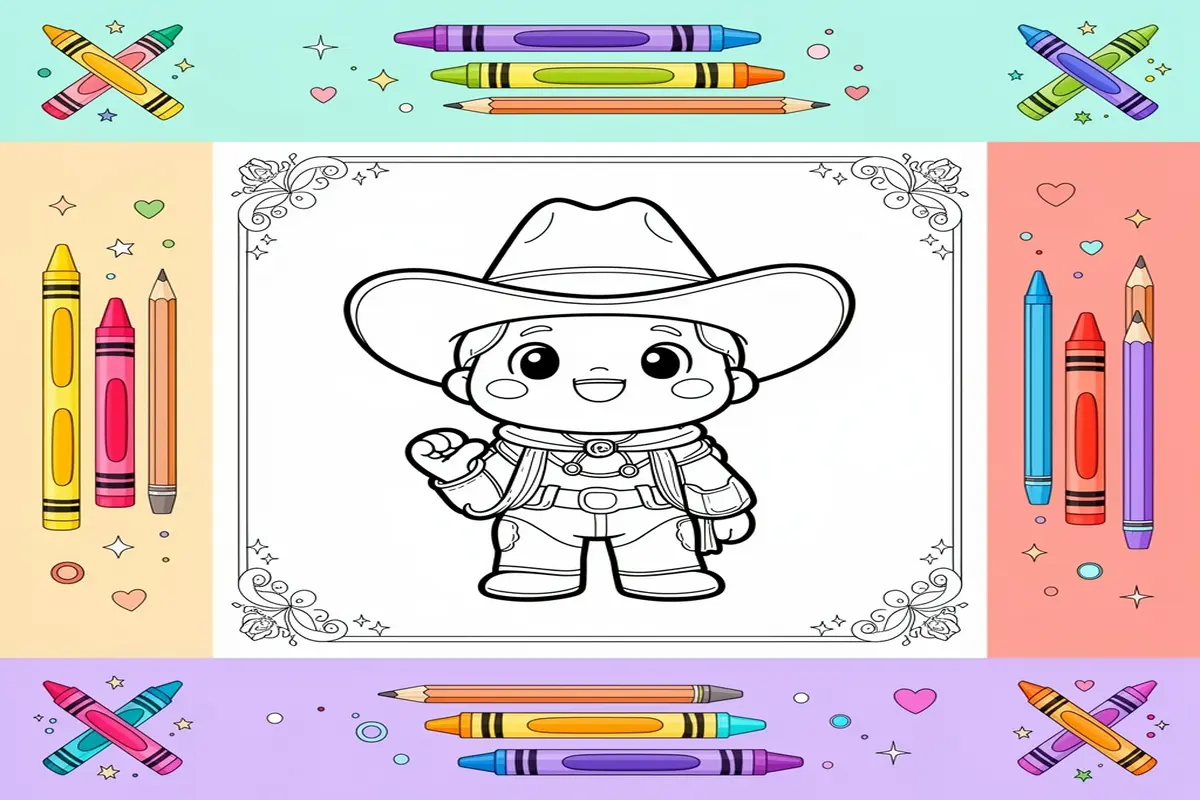
In a world saturated with digital noise, the simple act of coloring offers a profound return to tactile creativity and imaginative calm. For young artists, it’s more than just filling in lines; it’s a gateway to storytelling, fine motor skill development, and a mindful escape. When that creative journey is set against the vast, dramatic backdrop of the American West, the adventure truly begins. western coloring pages for kids unlock a unique realm where cowboys ride under endless skies, majestic wildlife roams free, and iconic landscapes beg to be brought to life with color. This thematic collection does more than entertain—it educates and inspires, connecting children to a rich tapestry of history, nature, and folklore. While our site offers a world of artistic exploration, from the deep blue sea with our free dolphin coloring pages to the African savanna, the rugged charm of the West holds a special place for fostering bold, adventurous expression through western coloring pages for kids.
Part 1: The Psychology & Timeless Appeal of the Wild West
The enduring fascination with the Western genre, from classic films to beloved books, taps into universal themes of exploration, resilience, and harmony with nature. Translating this into a coloring activity provides a powerful, multi-sensory experience for developing minds.
The Psychology of Color: Building Focus and Frontier Grit
Coloring is a recognized tool for enhancing concentration and reducing anxiety in children. The structured yet open-ended nature of a coloring page provides a “container” for big emotions, allowing focus to settle on the manageable task at hand. western coloring pages for kids amplify this by presenting compelling scenes—a lone cowboy by a campfire, a herd of galloping mustangs, a detailed Navajo pattern. These images naturally engage a child’s curiosity and narrative sense, encouraging them to persist, plan their color choices, and experience the deep satisfaction of completing a complex scene. This process builds patience and a quiet confidence, or what we might call a little bit of “frontier grit.”
A Cultural Canvas: More Than Cowboys and Cacti
The Western theme is a rich educational canvas. It’s an opportunity to discuss diverse ecosystems, from deserts to mountains, and the animals that inhabit them. It introduces historical concepts of pioneer life, Native American cultures, and westward expansion in an age-accessible way. Through western coloring pages for kids, parents and educators can spark conversations about geography, wildlife conservation, and the stories that shaped a nation. Coloring a detailed scene of a frontier town or a symbolic buffalo becomes an interactive history lesson, fostering a deeper appreciation for the past.
Curated for Every Young Buckaroo: From Preschool to Pro
The beauty of this theme lies in its incredible versatility. Simpler pages with bold outlines of cowboy hats, boots, and friendly horses are perfect for tiny hands just learning to grip a crayon. More intricate scenes featuring sprawling ranch landscapes, detailed horse tack, or wildlife portraits challenge older children and even teens, developing advanced shading and blending techniques. This range ensures that every child, regardless of skill level, can find a page that invites them in, builds their abilities, and leaves them feeling accomplished. It’s a creative frontier with no boundaries, where every young artist can find their stride.
Part 2: Essential Materials & Professional Setup for western coloring pages for kids
To bring the rugged landscapes and adventurous characters of western coloring pages for kids to life, having the right materials is as crucial as a cowboy having a trusty steed. This professional toolkit ensures that young artists can fully engage with the intricate details of saloons, cacti, and galloping horses, turning a simple activity into a rich, skill-building experience. Proper preparation prevents frustration and allows the vibrant stories of the Wild West to shine through every colored section.
The Foundation: Premium Paper for Lasting Western Art
The choice of paper is the bedrock of any coloring project. For detailed western coloring pages for kids, standard printer paper often leads to bleed-through and buckling. Opt for a dedicated marker paper (smooth finish, 70-80 GSM) for use with alcohol-based markers, as it prevents colors from seeping through. For a mixed-media approach, heavyweight cardstock (110-130 GSM) or even a smooth-surface bristol board is ideal. These thicker sheets withstand layering with colored pencils, light watercolor washes for sunsets, and vigorous erasing, ensuring your child’s masterpiece of a desert canyon or a detailed cowboy boot remains crisp and display-worthy. For a thematic connection, consider printing on tan or parchment-textured paper to give an instant antique, wanted-poster feel to the artwork.
Coloring Mediums Showdown: Pencils, Markers, and Crayons
Each coloring tool offers a unique effect, perfect for different elements of a western scene.
Colored Pencils (Professional Grade): The undisputed champion for detail and control. Prismacolor Premier or Faber-Castell Polychromos pencils offer soft, blendable cores with high pigment load. They are perfect for rendering the subtle gradients of a horse’s coat, the wood grain on a wagon, or the textured leather of a saddle. Their precision is key for the fine lines often found in western coloring pages for kids.
Alcohol-Based Markers (Vibrant & Smooth): Brands like Copic or Ohuhu provide seamless, bleed-free blends ideal for large areas like expansive skies, cowboy bandanas, and vibrant sunset backgrounds. Their quick-drying nature allows for layering without tearing the paper. Use a colorless blender for creating soft cloud effects over a mesa.
Wax Crayons & Gel Crayons: Excellent for younger children, they offer bold, opaque coverage. Gel crayons can be used for a “paint-like” effect on rugged terrain or to add a dusty, textured look to a desert floor. For a fun twist, explore our cowboy coloring pages for kids which pair perfectly with these bolder tools.
Finishing Touches: Gel Pens, Highlights, and Blending Tools
Elevate the artwork from great to exceptional with specialized tools. White and metallic gel pens are indispensable for adding highlights to spurs, sheriff badges, and starlit night skies. A good quality kneaded eraser can lift pigment to create realistic clouds or light reflections. For pencil work, paper blending stumps or a touch of odorless mineral spirits (used with extreme adult supervision) can create photorealistic shadows on a cowboy’s face or the dimensional folds of a horse’s blanket. A set of fine-line archival ink pens (e.g., Pigma Micron) is perfect for older kids to redefine outlines that may have been colored over, ensuring every cactus spine and lasso rope is sharp.
Creating the Perfect Western-Themed Workspace
A well-prepared environment fosters focus and creativity. Ensure ample, natural light or a high-CRI (Color Rendering Index) desk lamp to reduce eye strain and allow for true color perception. An adjustable chair and a flat, hard surface are ergonomic essentials. Use a clipboard or low-tack tape to secure the coloring page. Keep tools organized in cups or a caddy—this not only maintains order but also empowers the child to work independently. For an immersive experience, consider playing subtle ambient sounds of a western landscape and keep reference images of real western scenes nearby to inspire color choices for landscapes and wildlife.
Part 3: Elevate Your Art: Professional Techniques for western coloring pages for kids
Ready to transform those simple line drawings into vibrant, dynamic scenes? This section moves beyond basic filling and into the realm of artistic technique. By mastering a few key methods, you can help young artists add incredible depth, realism, and personality to their western coloring pages for kids. Let’s unlock the skills that turn a fun activity into a true artistic adventure.
Creative H3: Crafting Your Sunset Palette: Color Theory for the Wild West
The right colors set the mood. For western coloring pages for kids, understanding basic color relationships can make scenes pop. Teach young artists about complementary colors (opposites on the color wheel), like orange and blue, which are perfect for a classic desert sunset against a deep blue sky. For a more harmonious, dusty desert look, try analogous colors (colors next to each other), like yellows, oranges, and reds. Encourage them to plan a “color story” before they start—will it be a bright, high-noon scene or a muted, dusty trail? For more practice with natural landscapes, our landscape coloring pages for kids offer great terrain to experiment with these schemes.
Creative H3: From Flat to Form: Shading for Depth and Dimension
Shading is the magic that turns a flat cowboy hat into one that looks like you could grab it off the page. Start simple: choose a light source (like the sun in the top corner). Everything on the opposite side of that light gets darker. Use gentle, layered pressure with colored pencils. For a cactus, press harder on the shaded side and lighter where the “sun” hits. For a horse’s muscular legs, use curved strokes that follow the shape of the leg to make it look rounded. A step-by-step approach: 1) Color the area with a base layer. 2) Add a medium layer where the shadows fall. 3) Apply a darkest layer in the deepest creases (like under a saddle).
Creative H3: Texture Tales: Bringing the Frontier to Life
Each element in the West has a unique feel. Here’s how to render it:
Fur & Leather: For a horse’s coat or cowboy chaps, use short, quick strokes in the direction the hair or grain would go. Layer different shades of brown for richness.
Wood & Metal: For weathered barn wood, use uneven, streaky lines. For a sheriff’s badge or spur, use smooth, solid coloring with a sharp white highlight to show shine.
Sky & Clouds: Avoid solid blue. Use a light touch and gradient, lighter near the horizon and darker above. For clouds, color around them, leaving the paper white, and add light gray shading at their base.
Animal Textures: For more detailed practice on specific creatures found on a ranch, our horse coloring pages for kids provide perfect subjects for mastering fur and muscle texture.
Creative H3: The Art of the Do-Over: Gracefully Fixing Coloring Mistakes
Mistakes are part of the process! Here’s how to fix them without frustration:
Waxy Pencil Smudges: Use a white eraser or a specialized colored pencil eraser. Erase gently, then place a scrap paper under the page to prevent wax from sinking back in.
Color Outside the Lines: Turn the “mistake” into a feature! A little blue outside a cowboy shirt can become subtle shadow. If it’s too prominent, carefully use a sharp white colored pencil or a white gel pen to cover and redefine the line.
Muddy Colors: If layers get overworked and waxy, the paper won’t accept more color. The solution is to embrace it as a learning moment, or for next time, remind young artists to start light and build color slowly.
* The Best Tip: Sometimes, the best fix is creative storytelling. A stray mark can become a cactus needle, a flying bird, or a speck of dust on the trail. The frontier was imperfect, and their art can be too!
Showcasing Your Western Coloring Pages for Kids: Creative Display Ideas
Your child’s western coloring pages for kids are more than just paper—they’re stories of adventure and creativity. Once the coloring is complete, it’s time to celebrate their artwork with these inspiring display and project ideas.
Preserving Your Masterpiece: Archival Tips
To ensure those vibrant cowboys and sunsets last, consider simple preservation. Use acid-free sheet protectors in a binder to create a gallery book. For special pieces, a inexpensive document box keeps them flat and safe from sunlight. You can also lightly spray finished pages with a fixative or hairspray to prevent crayon or pastel smudging, turning their Wild West art into a lasting keepsake.
Beyond Display: Creative DIY Projects
Transform colored pages into meaningful gifts and decor. Laminate a favorite scene to make a unique bookmark or cut out shapes to create personalized greeting cards. For a fun room decoration, Mod Podge several pages onto a wooden tray or a simple storage box. Framing a collection in a multi-opening frame makes a stunning wall feature. These projects extend the joy and pride of creating, much like the fun found in our cowboy coloring pages for kids.
Your Western Coloring Pages for Kids Questions Answered
Where can I find free western coloring pages?
Many educational and parenting websites offer free, printable western coloring pages for kids. Look for sites that categorize themes like “cowboy,” “farm,” or “Wild West.” Always ensure you’re downloading from a reputable source to avoid malware. Our own collection provides a variety of free, safe options to kickstart the adventure right from your home printer.
How do you draw a cowboy for kids?
Start with simple shapes: a circle for the head, a rectangle for the body, and cylinders for arms and legs. Add a wide-brimmed cowboy hat (a oval with a dent in the middle) and a bandana around the neck. Boots can be simple U-shapes. Keep lines loose and encourage kids to add their own details, like a sheriff’s badge or a lasso.
What are the benefits of coloring for children?
Coloring boosts fine motor skills and hand-eye coordination as children practice staying within lines. It fosters creativity and color recognition while also serving as a calming, focused activity that can reduce anxiety. This mindful practice builds concentration and can be a wonderful screen-free way for families to bond over themes like western coloring pages for kids.
How to color a cowboy hat?
A classic cowboy hat is often brown, black, or tan. Use light pressure for a base color, then add darker shades along the crease of the crown and under the brim to create depth and shadow. For a textured look, try short, overlapping strokes. Don’t be afraid to get creative—a bright blue or patterned hat can add wonderful personality to the scene!
What are common Wild West symbols?
The Wild West is rich with iconic symbols. Common ones include cowboy hats, boots, and bandanas; sheriff badges and wanted posters; horses, cattle, and cacti; classic saloon doors and rolling deserts; and Native American motifs like feathers and teepees. These elements together create the exciting backdrop for western coloring pages for kids.
Final Thoughts: Your Western Coloring Pages for Kids Journey Begins
The journey through the Wild West with crayons in hand is about so much more than filling in lines. It’s an adventure in creativity, a lesson in history and storytelling, and a peaceful retreat into a world of imagination. Each completed page is a testament to your child’s growing skills and unique perspective, building confidence with every color they choose.
We hope these ideas for displaying, preserving, and creating with western coloring pages for kids have inspired you to see this simple activity in a whole new light. The benefits—from artistic development to quiet mindfulness—are gifts that keep giving. So saddle up, grab your coloring tools, and let the creative frontier unfold.
Ready for your next adventure? Explore our farm animal coloring pages to meet all the friendly critters from the ranch!